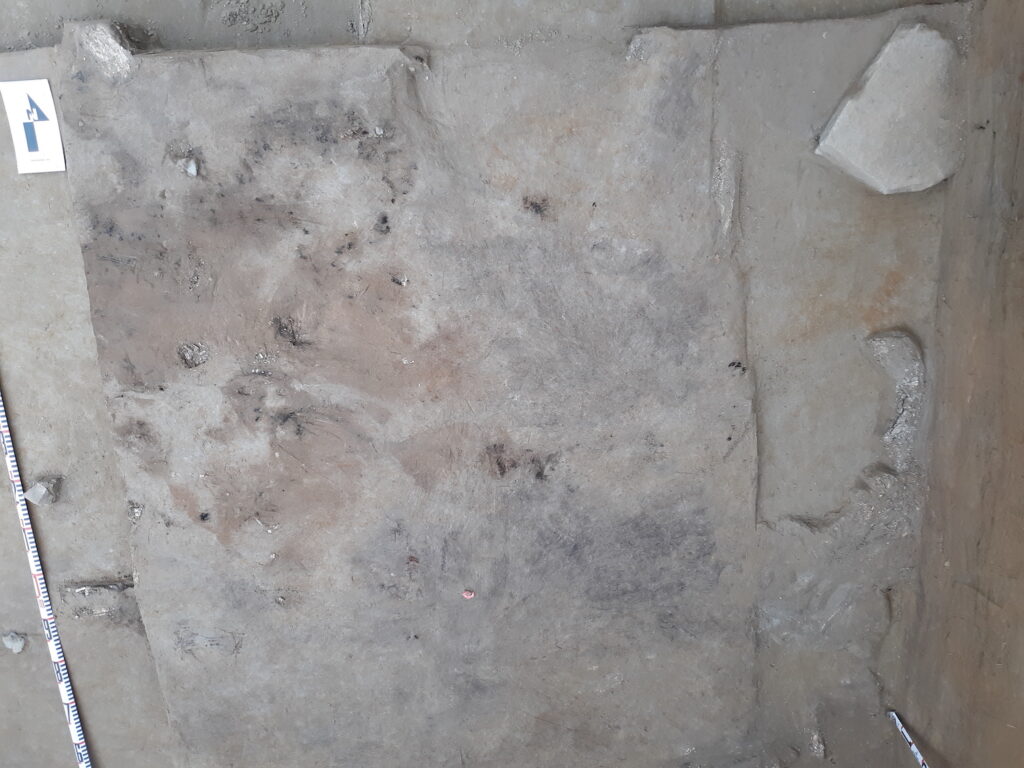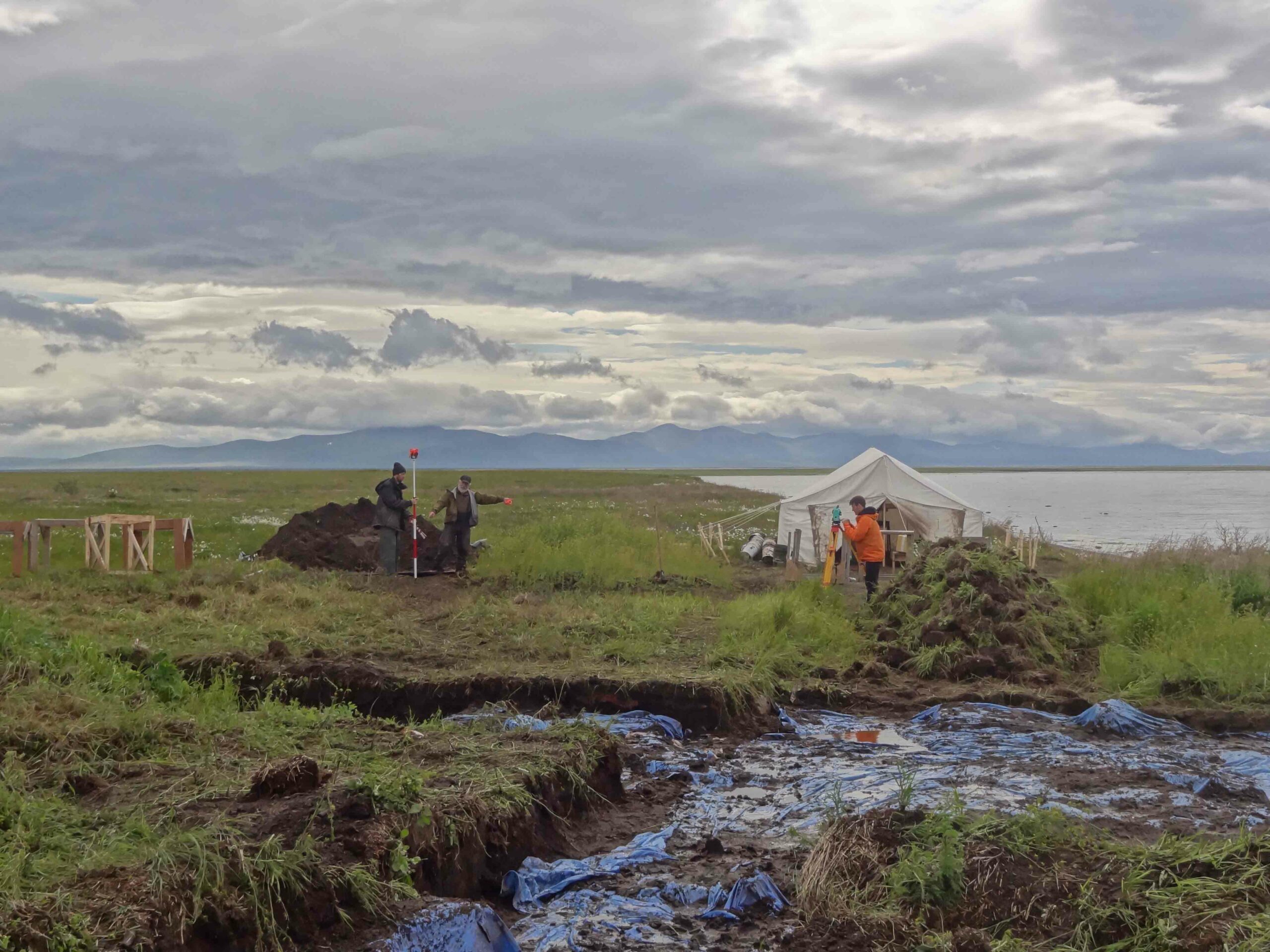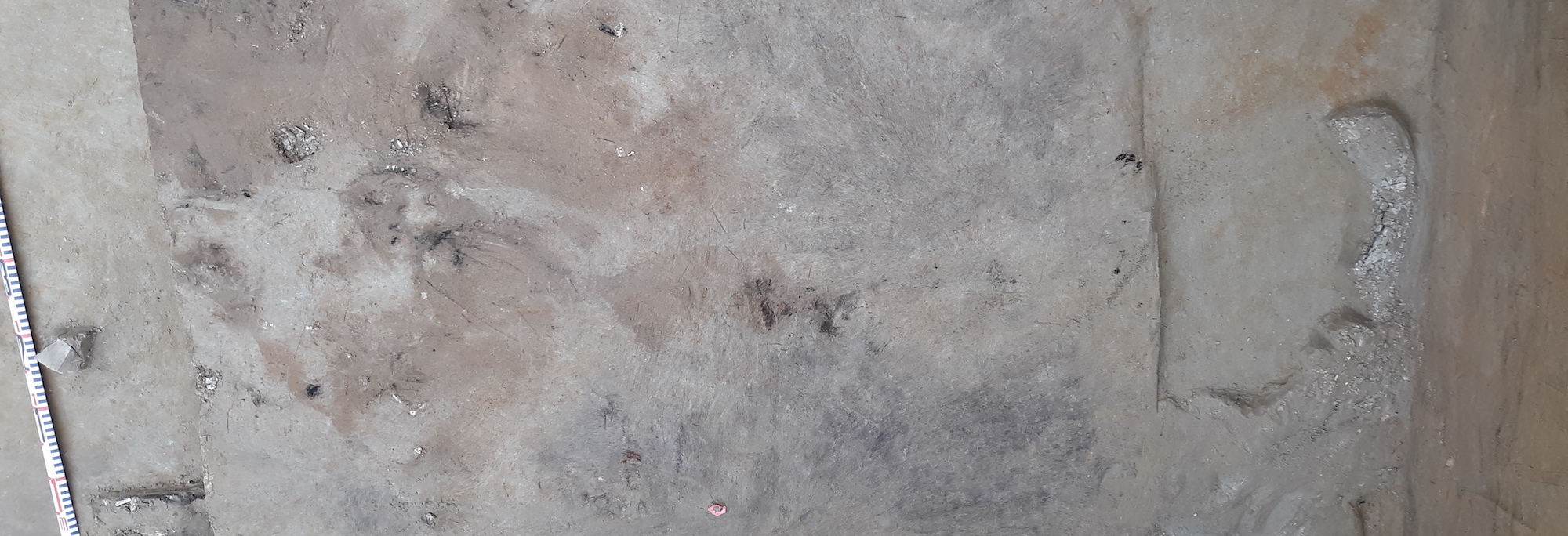
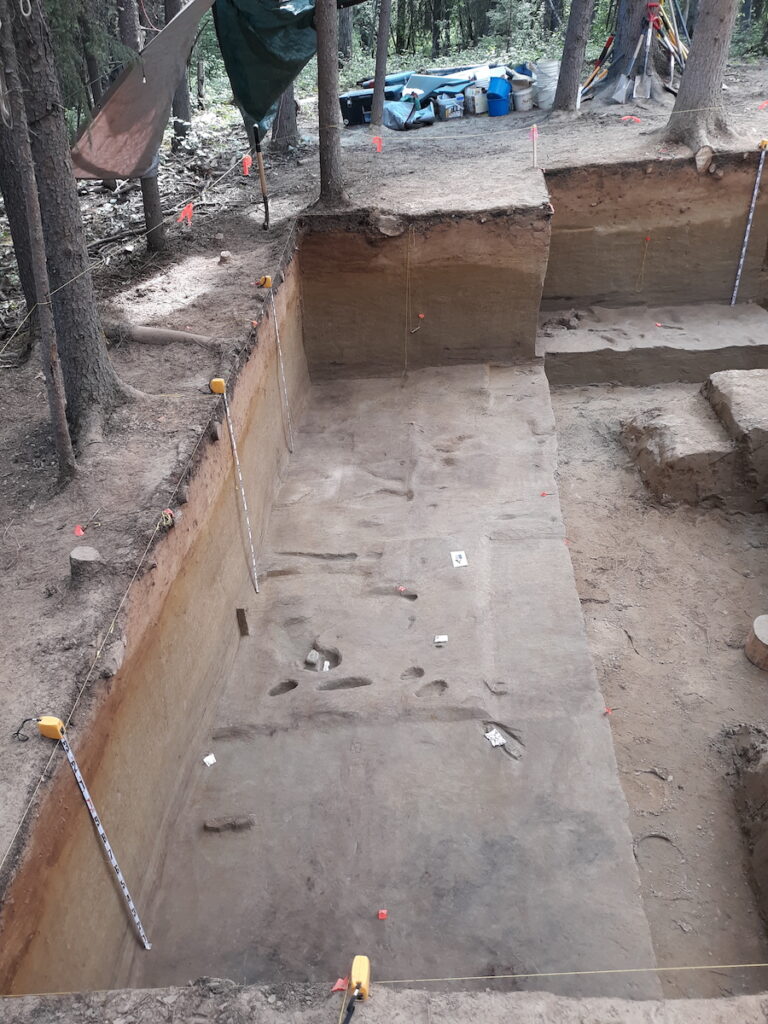
FAIRBANKS, ALASKA—Phys.org reports that an excavation at the Holzman archaeological site in central Alaska’s Tanana Valley has uncovered ivory tools resembling those made by the people of the Clovis culture, whose distinctive stone tools are usually found in North America and are dated to some 13,000 years ago. A team including Brian T. Wygal and Kathryn E. Krasinski of Adelphi University, Charles E. Holmes of the University of Alaska Fairbanks, and Barbara A. Crass of the Museum of the North found fragments of mammoth ivory, traces of campfires, and stone tools and debitage in a layer of earth dated to 14,000 years ago—the oldest archaeological evidence at the site. In a layer dated to 13,700 years ago, they found a nearly complete mammoth tusk, remnants of fires, and quartz tools that had been used to carve ivory rods. The researchers determined that the ivory rods had been made with the same carving techniques employed by the Clovis people, and suggest that people traveling from Asia, across the Beringia land bridge to North America, passed on their technology from generation to generation. “Mammoth ivory and lithic material appear to factor prominently in resource circulation throughout eastern Beringia and the eventual dispersal of people further south into the Rocky Mountains and Northern High Plains of North America,” they concluded. Read the original scholarly article about this research in Quaternary International. For more, go to "America, in the Beginning: Destination: The Americas."