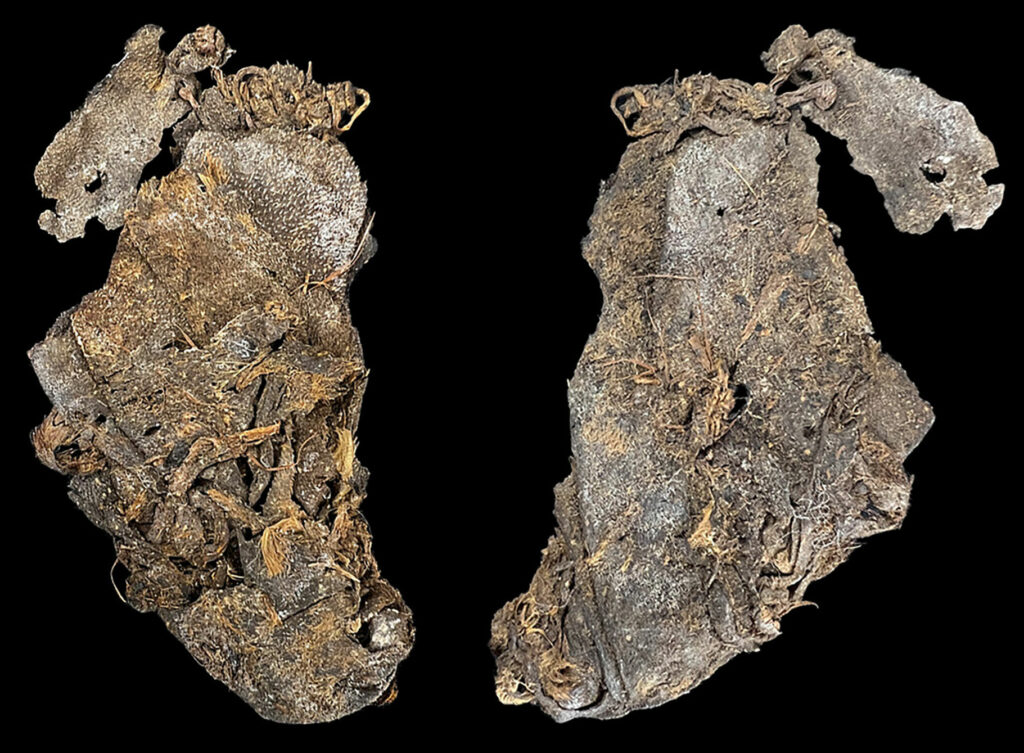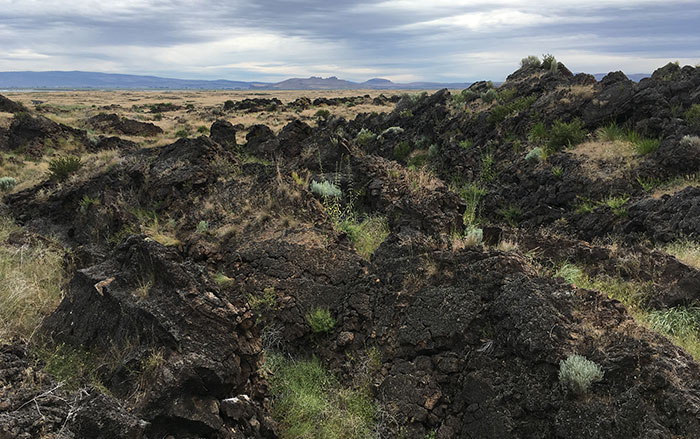
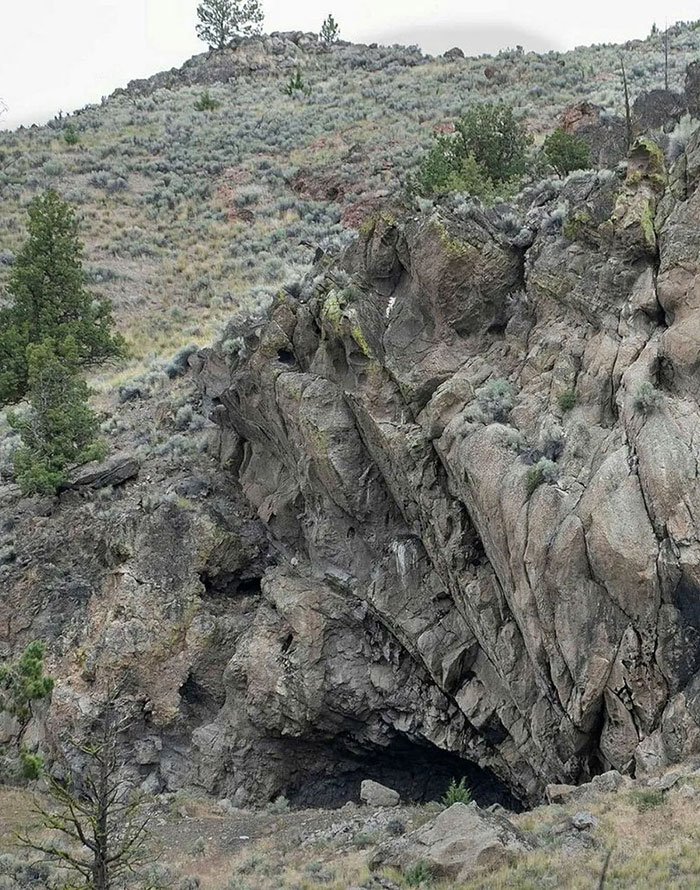
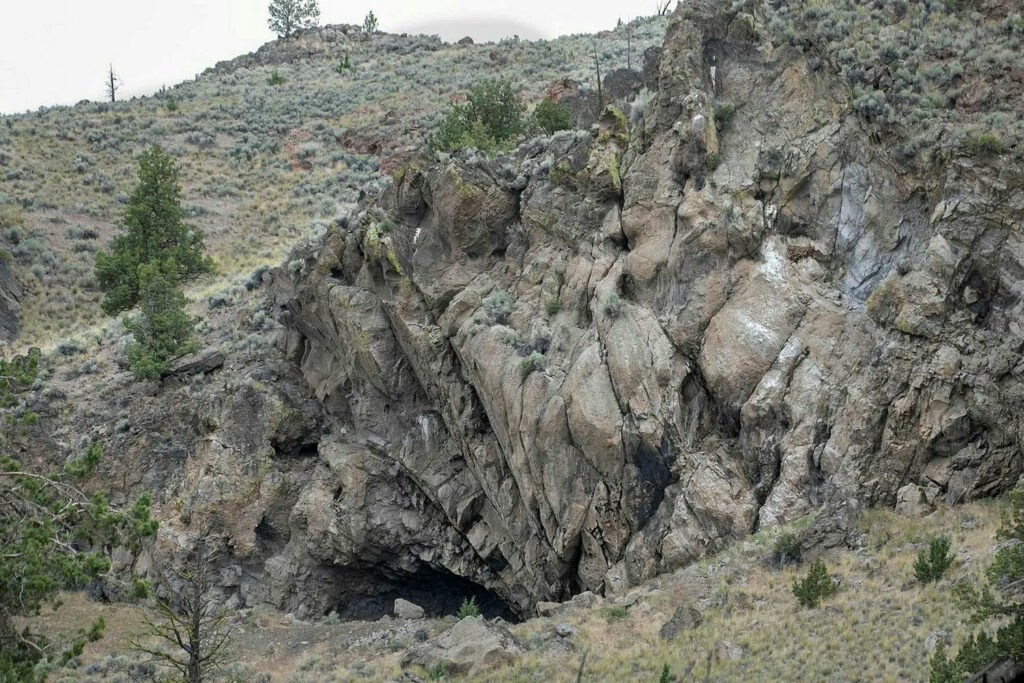
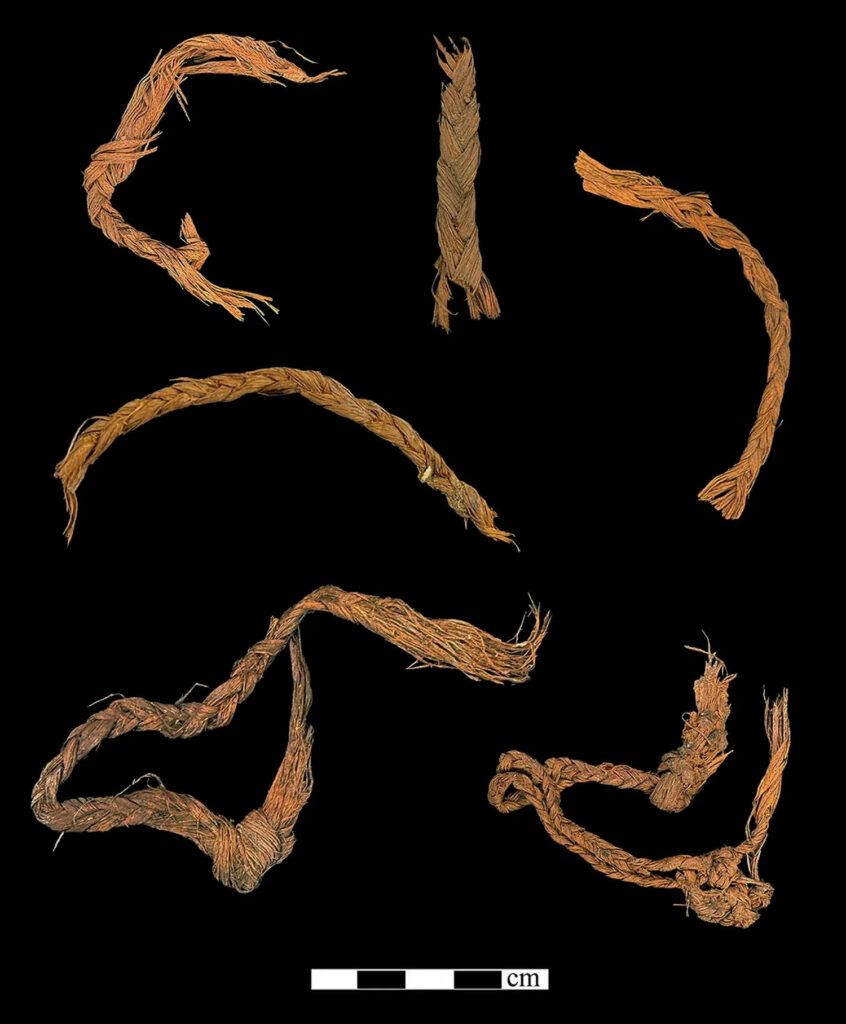
FORT ROCK BASIN, OREGON—According to a report in Haaretz, archaeologists have discovered two small pieces of hide connected by a cord in Cougar Mountain Cave rock shelter, which they believe is the earliest known evidence of sewn hide. It’s unclear exactly what the pieces of hide were used for, though they could have been part of a coat, a moccasin, or a tent. The artifacts date to between 12,900 and 11,700 years ago, when a warming trend reversed and the northern hemisphere grew colder and more arid, necessitating the development of warm garments. The researchers also found a great deal of cord made from plant fiber at Cougar Mountain Cave. The cord has varying diameters and qualities, suggesting that it was used for different purposes. And, at nearby Paisley Cave, the team recovered a strip of rabbit hide with fur still on it that is similar to rabbit-fur skirts with interwoven plant fiber that were used until recently by Northern Paiute people in Oregon. According to archaeologist Richard Rosencrance of the University of Nevada, Reno, this suggests that there may be a direct connection between the Paleolithic people who produced the items found in the caves and Native Americans living in the region today. Read the original scholarly article about this research in Science Advances. To read more about early settlement of the area, go to “Off the Grid: Fort Rock Cave, Oregon.”