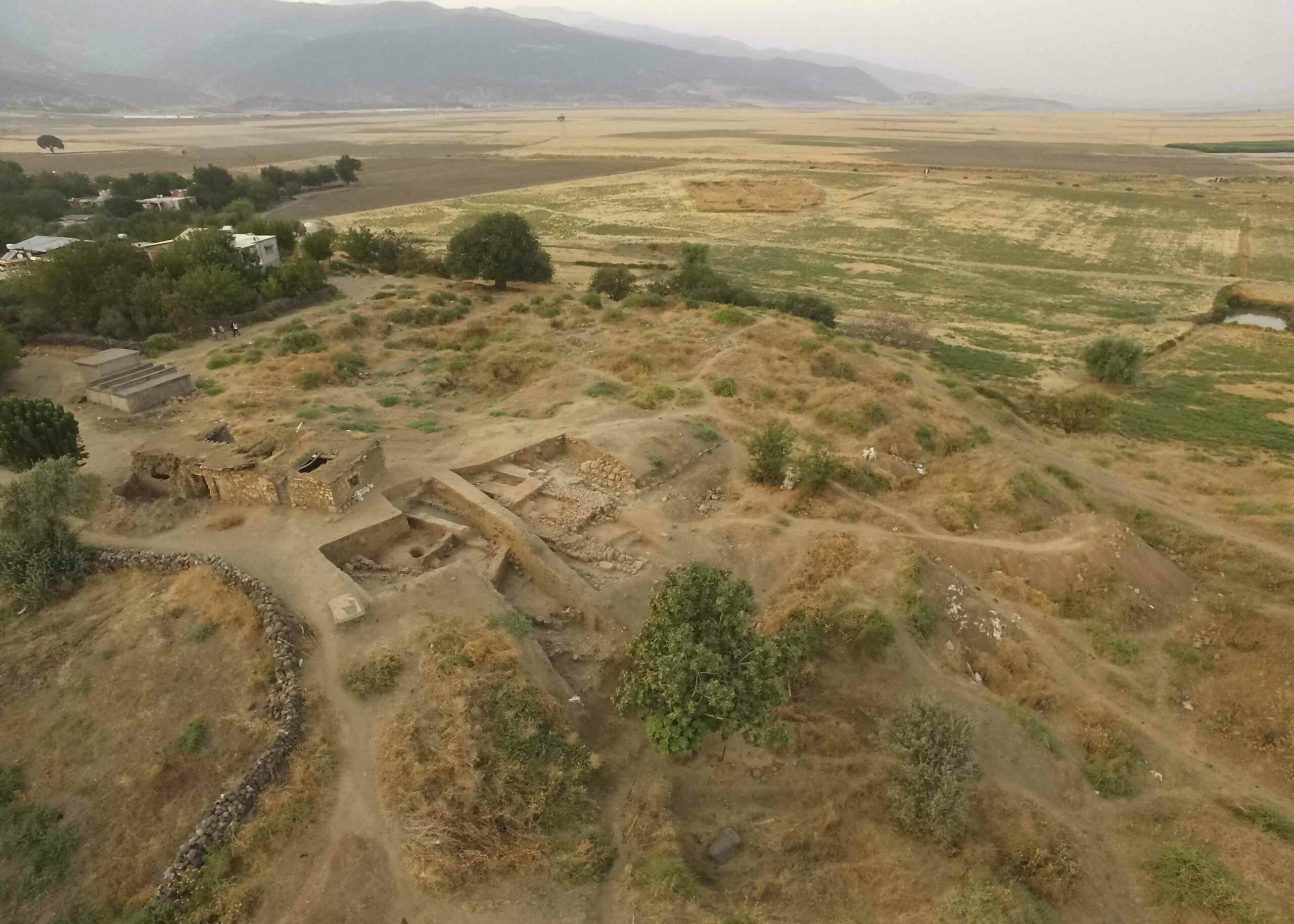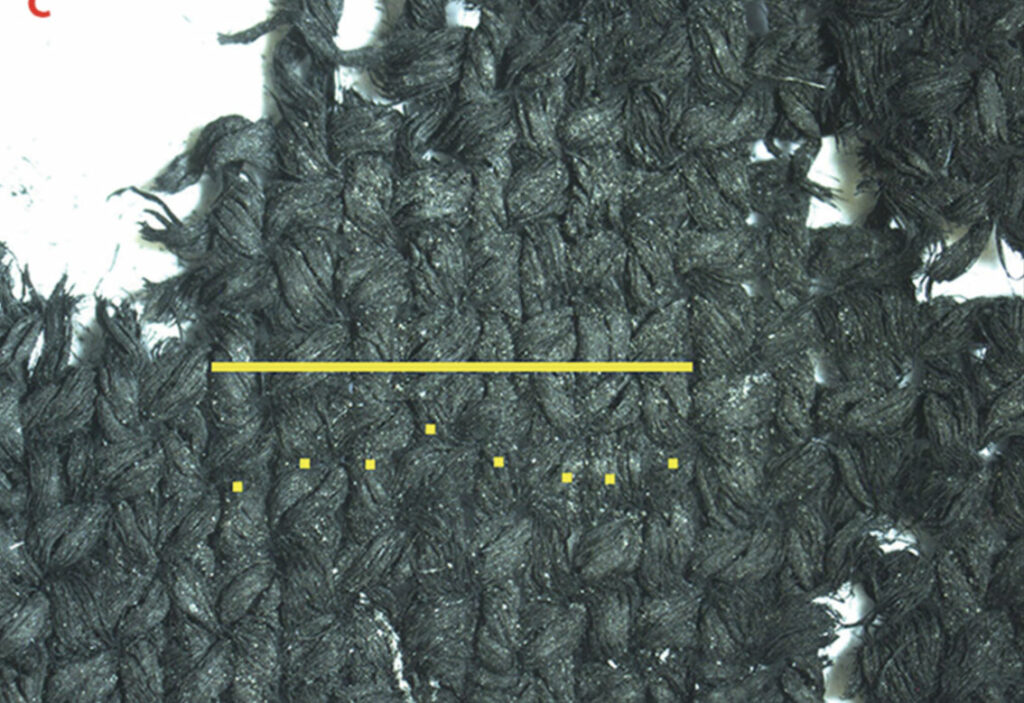
ISTANBUL, TURKEY—According to a statement released by Koç University, textile workshops at Beycesultan Höyük, a site in western Anatolia occupied from about 5000 B.C. through the Byzantine period, have yielded a piece of indigo-dyed woven fabric and a piece of knitted fabric. Çiğdem Maner of Koç University and her colleagues said that the dyed fabric, found under a disk-shaped stone weight, has been dated to between 1700 and 1595 B.C. Nearby postholes are thought to have supported a loom. The fabric is a plain tabby weave made of hemp and colored with indigo made from the woad plant. Spindle whorls, loom weights, needles, and other fabric tools were also found in the workshop. Cuneiform texts from Bronze Age Mesopotamia and the Hittite Empire state that blue fabrics were reserved for royalty and elites, suggesting that the people at Beycesultan may have manufactured such luxury goods. When examined with microscopic and chromatographic equipment, the older piece of fabric, dated to between 1915 and 1745 B.C., was found to have been made with a technique called nålbinding, or single-needle knitting, rather than woven on a loom. Maner said that it is the first time fabric made with this technique has been found in Anatolia. Read the original scholarly article about this research in Antiquity. To read about an indigo-dyed woolen sock from Roman Egypt, go to "A Lost Sock's Secrets."