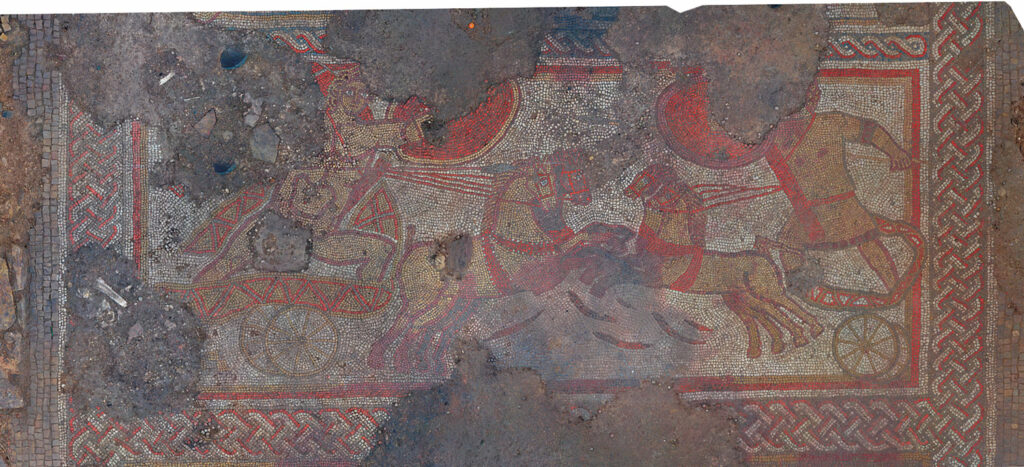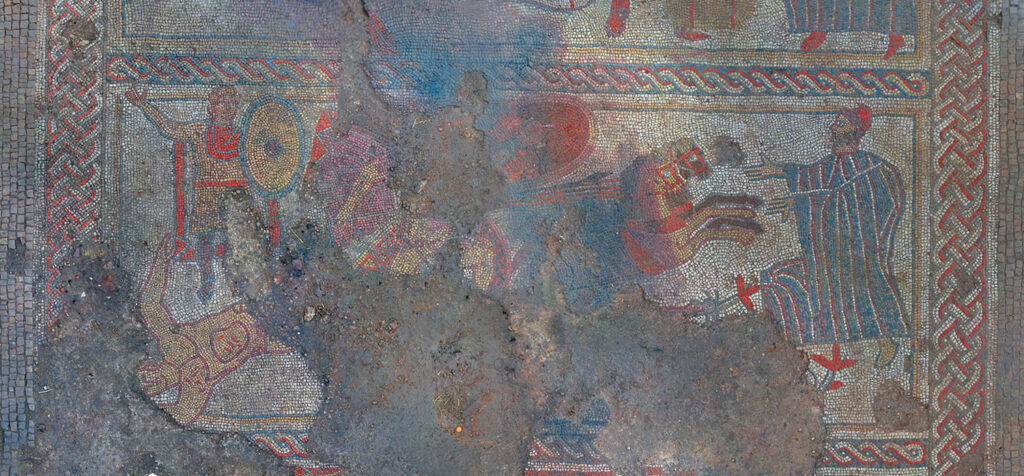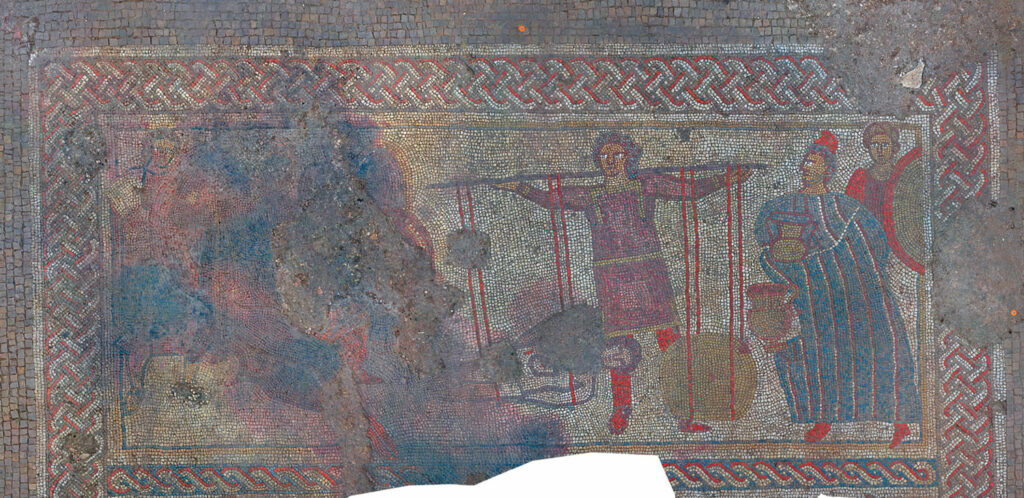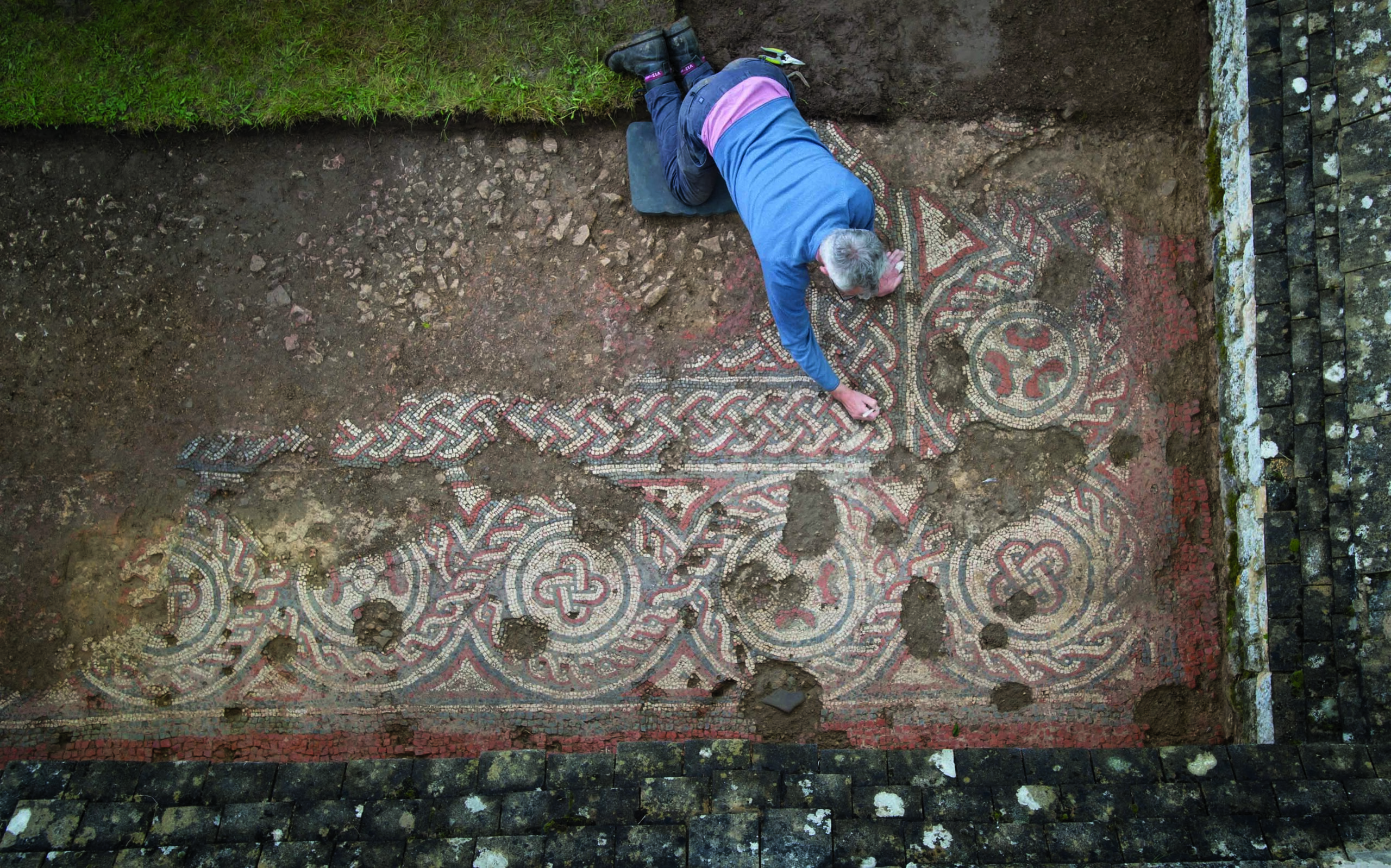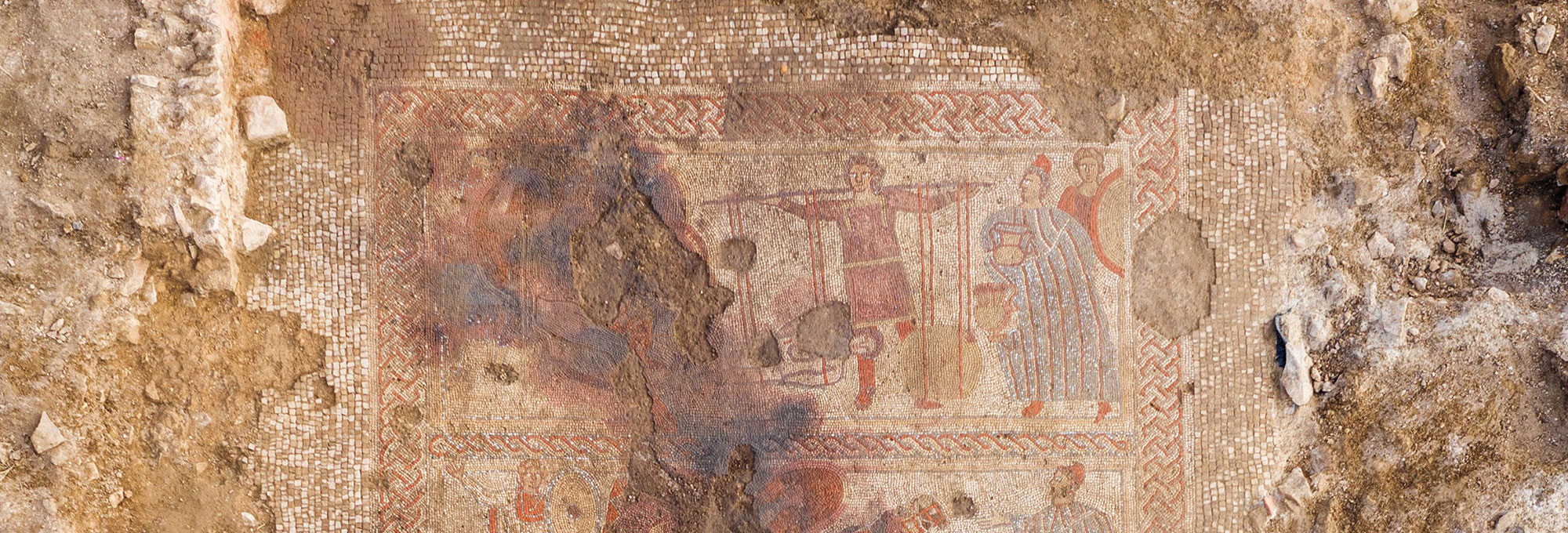
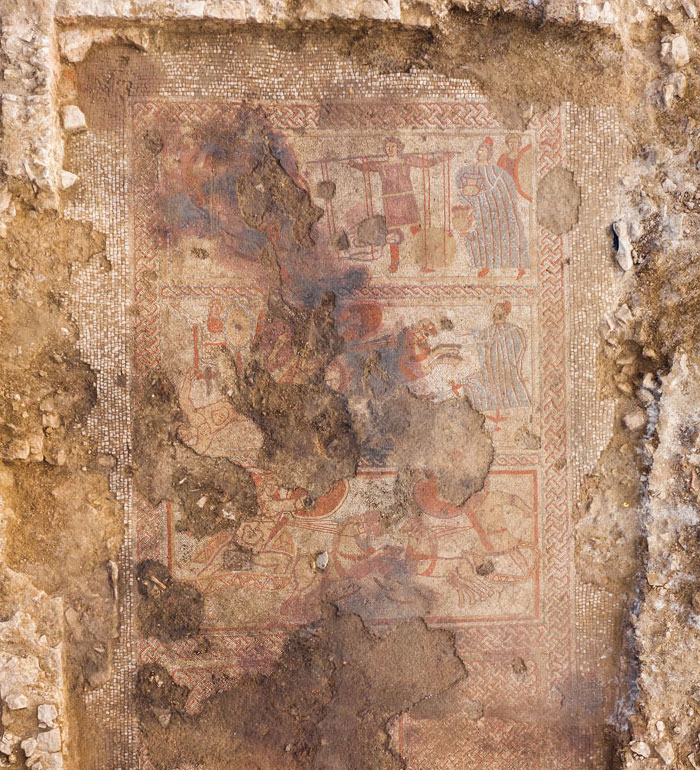
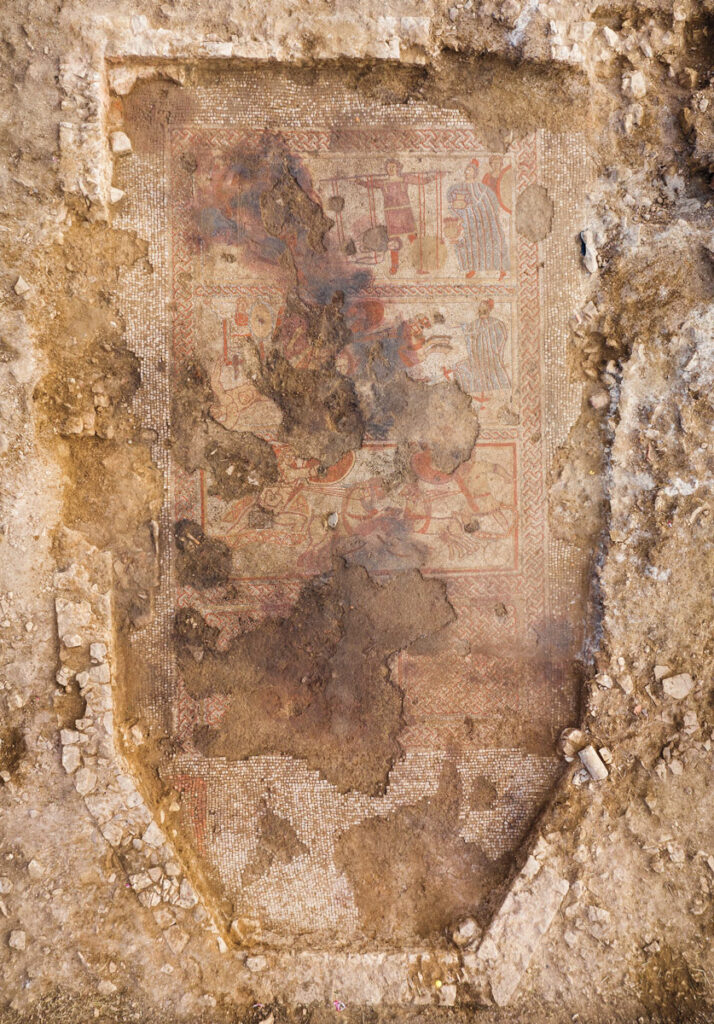
Scenes depicting the events of the Iliad were ubiquitous throughout the ancient Greek and Roman world. While Homer’s epic is undoubtedly the best-known literary work to tell the story of the Trojan War, it wasn’t the only such narrative that ancient artists drew upon. A particularly vivid artwork inspired by alternative sources is known as the Ketton Mosaic. This ornate floor decorated the triclinium, or dining room, of a fourth-century a.d. Roman villa in England’s East Midlands that was discovered in 2020. The mosaic contains remnants of three colorful panels, each portraying a different moment in the duel between the heroes Achilles and Hector. One scene shows the two warriors standing on chariots and jousting with spears. Another panel depicts the victorious Achilles dragging Hector’s lifeless body behind his chariot, and the third portrays the fallen hero’s father, the Trojan king Priam, ransoming his son’s corpse.
Scholars initially assumed the mosaic’s creator based the work on the Iliad. However, a team led by University of Leicester archaeologist Jane Masséglia argues this is not the case, largely because the Ketton Mosaic depicts details that aren’t found in Homer’s telling. “We need to think of the mosaic as a kind of buffet of Trojan War ideas, designs, and influences, old and new, all fitted together to make one big, impressive—and slightly eccentric—whole,” she says. For example, in the third panel, Priam is shown balancing the weight of Hector’s body against the equivalent weight in gold on a giant set of scales—the cost of recovering his son’s remains from Achilles. In the Iliad, by contrast, Priam sends Achilles a wicker box packed with robes, cloaks, tunics, blankets, cauldrons, cups, and gold as payment. Homer does not speak of weighing gold. Masséglia says the mosaic’s version of events was taken from another Trojan War tale, the Phrygians, written by the ancient Greek tragedian Aeschylus. Similarly, the scene in which Achilles and Hector are shown fighting from chariots isn’t found in any extant ancient literary work, suggesting the mosaicist may have been inspired by a variety of sources, perhaps even ones no longer known today.