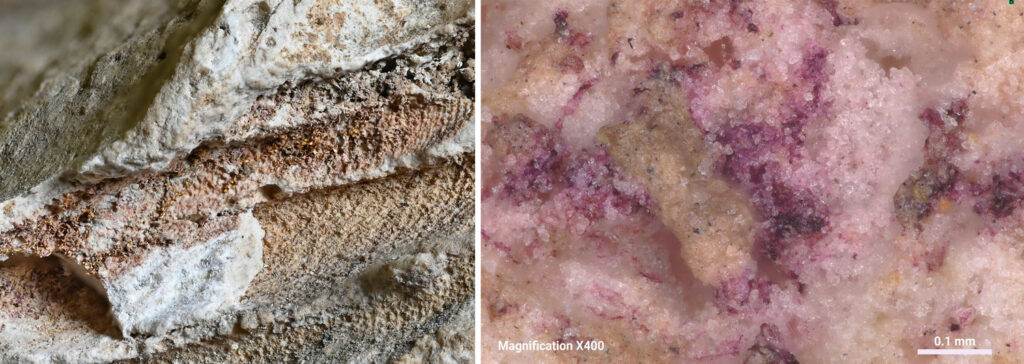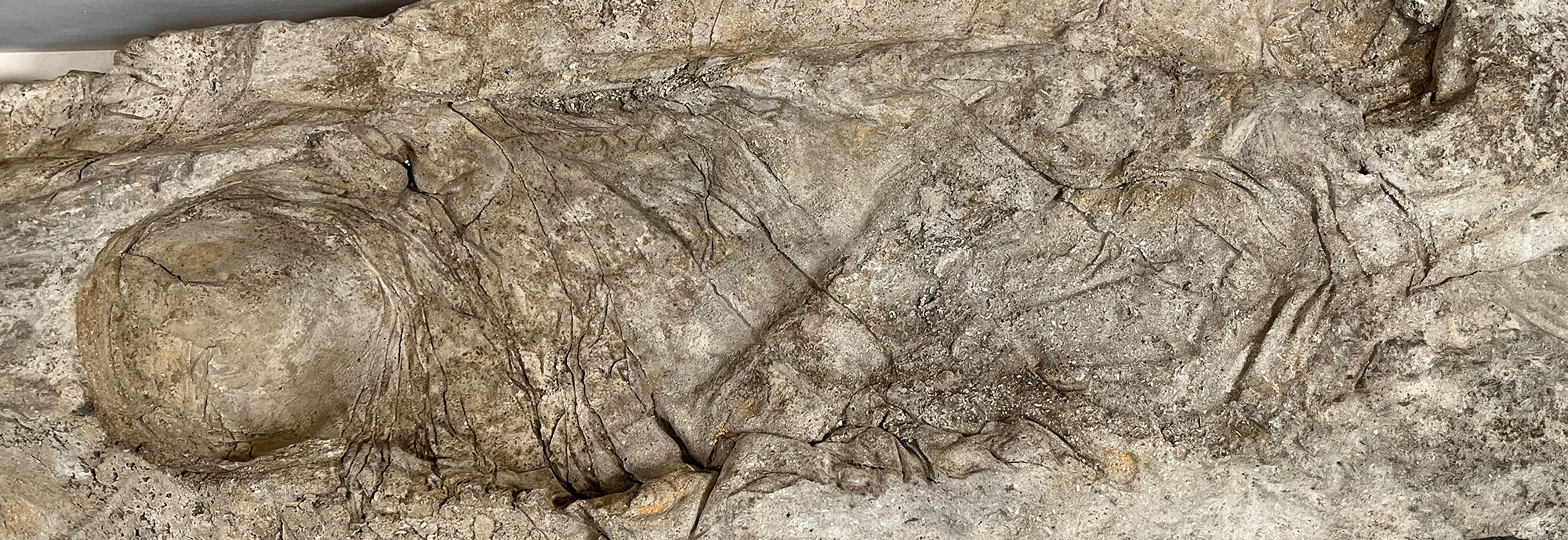
YORK, ENGLAND—According to a statement released by the University of York, researchers have identified rare traces of dyed purple textiles in two Roman infant burials. Known as Tyrian purple, the extremely costly colorant was manufactured by crushing thousands of murex marine sea snails and was typically reserved for use by emperors, royalty, and members of the aristocracy. However, experts were able to detect its presence on garments wrapped around two small children who died and were buried around 1,700 years ago. Their remains are held in the collections of the York Museums Trust. The dye was identifiable through chemical analysis because liquid gypsum had been poured over the shrouded young bodies in accordance with Roman mortuary custom. When the gypsum hardened, it protected the coloring of the fabric beneath it. It is the first time that the purple dye has ever been found on textiles from Roman York and demonstrates that some of the city’s inhabitants had access to luxury commodities. The find is all the more intriguing because scholars have assumed that Romans did not outwardly grieve infant deaths. “This remarkable discovery tells us a lot about the importance of children in Roman York and the willingness of the family to give their baby the best possible send-off in tragic circumstances,” said University of York archaeologist Maureen Carroll. To read about a chunk of Tyrian purple dye discovered in Carlisle, go to "Around the World: England."