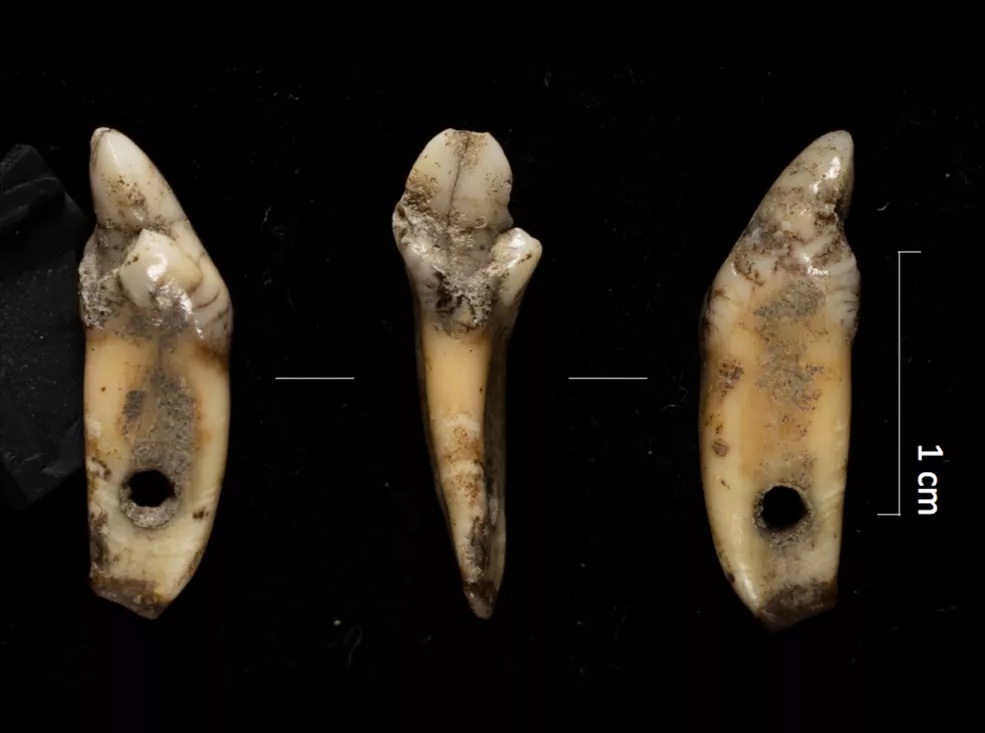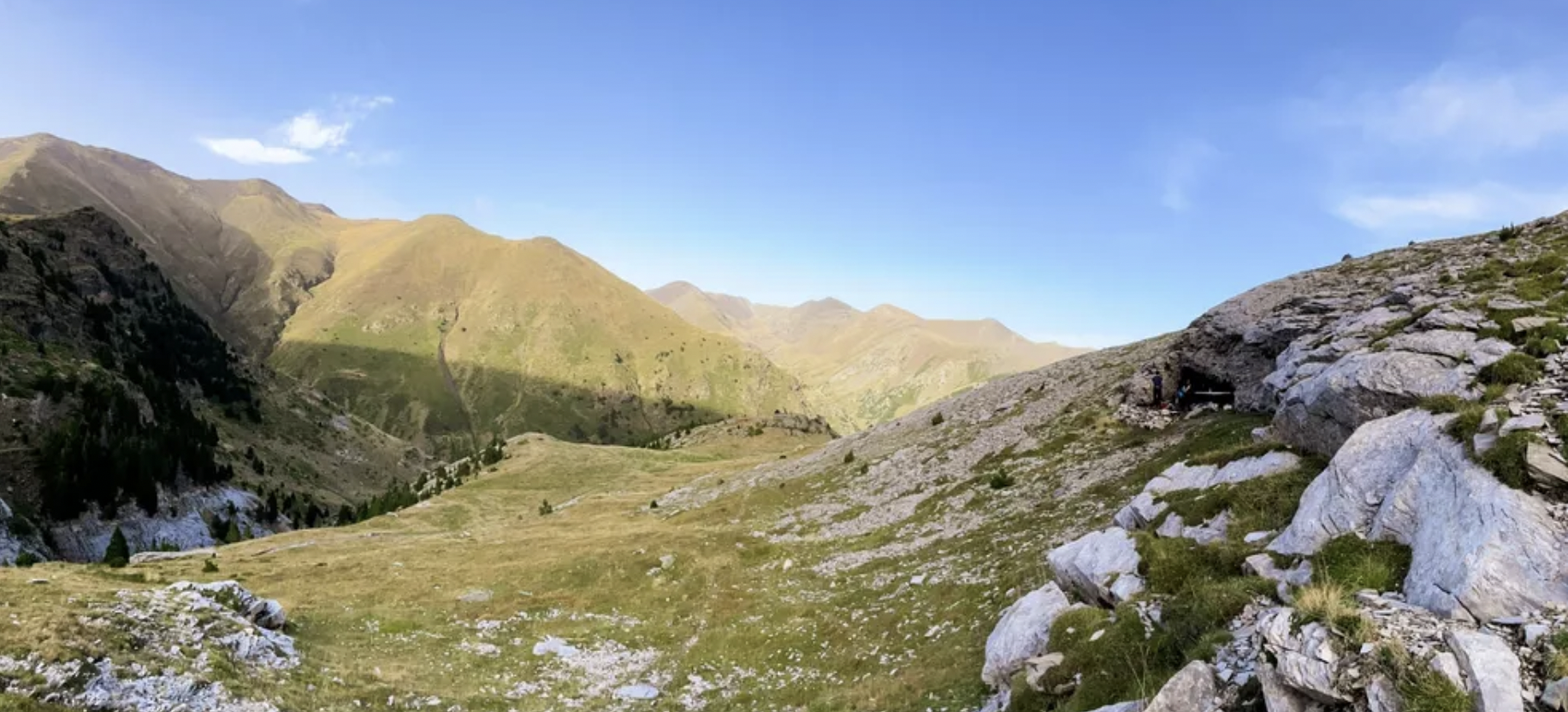
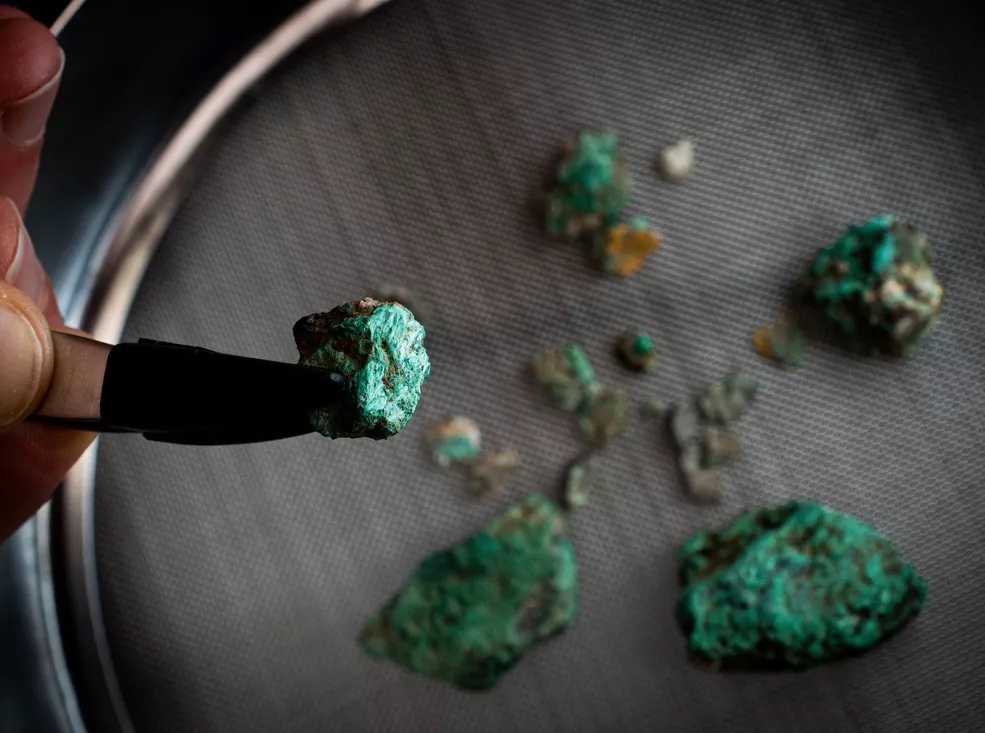
BELLATERRA, SPAIN—According to a statement released by the Autonomous University of Barcelona (UAB), an international team of researchers, including Carlos Tornero of UAB and the Catalan Institute of Human Paleoecology and Social Evolution (IPHES-CERCA), has found evidence of human occupation in Cova 338, a cave located at more than 7,000 feet above sea level in the Pyrenees Mountains. Hearths, animal bones, ceramics, and pieces of green mineral identified as malachite indicate that people returned repeatedly to the site between 7,000 and 3,000 years ago. “For the first time in the Pyrenees, high-mountain prehistoric occupations of significant intensity have been documented, characterized by repeated activities and the direct exploitation of mineral resources within the cave,” Tornero said. The green minerals are thought to have been brought into the cave for processing. Researchers also uncovered two pendants—one made from a marine shell, the other from a brown bear tooth. “For a long time, these spaces were assumed to be marginal. What we document here is recurrent occupation, with complex activities and a clear exploitation of mineral resources,” Tornero explained. Read the original scholarly article about this research in Frontiers in Environmental Archaeology. For more on the peoples of prehistoric Spain, go to "The Red Lady of El Mirón."