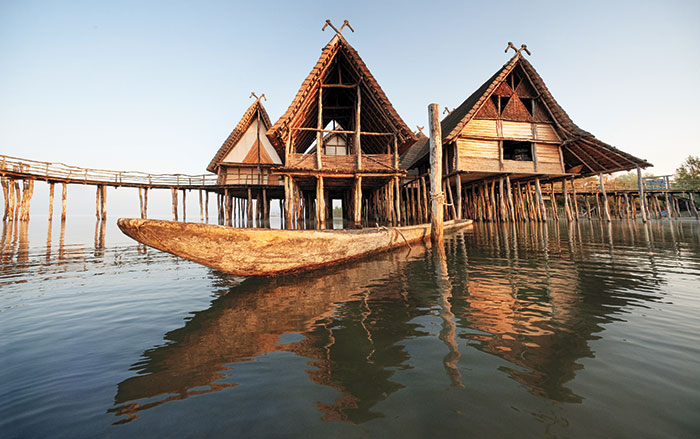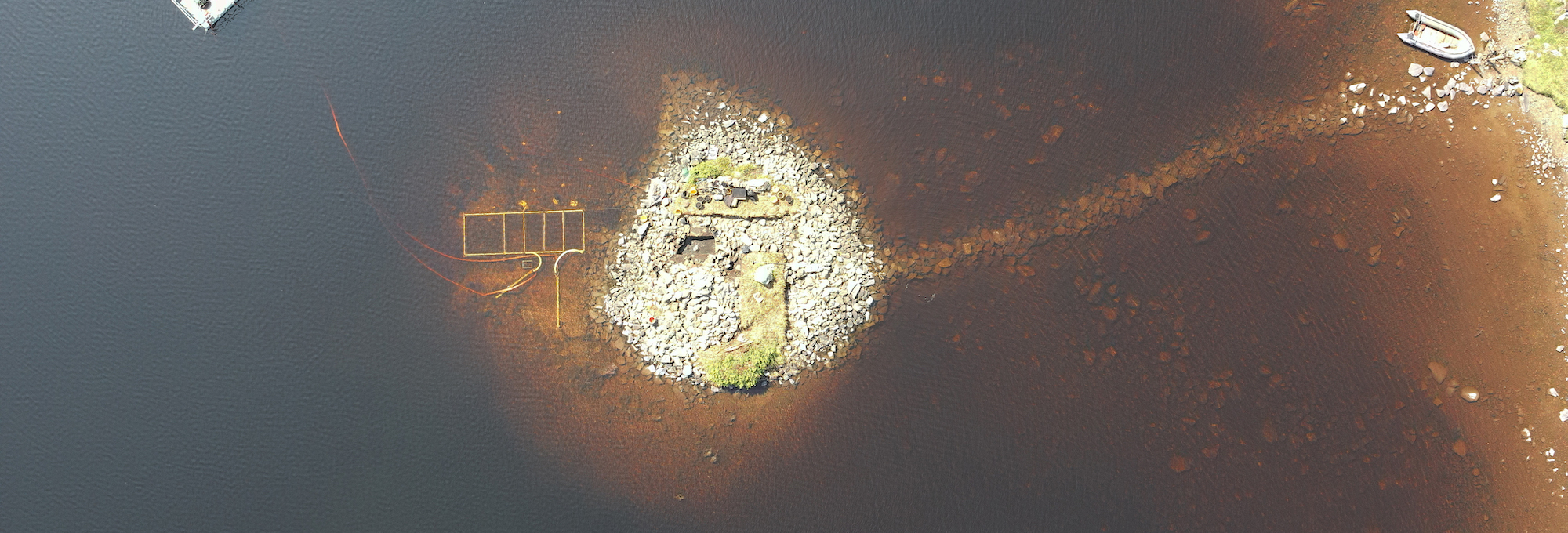

SOUTHAMPTON, ENGLAND—According to a statement released by the University of Southampton, a crannog in shallow waters in Loch Bhorgastail on Scotland’s Isle of Lewis has been evaluated by researchers from the University of Southampton and the University of Reading with a technique called stereophotogrammetry, which involves stitching together photographs taken at different angles to create a high-resolution 3D model. The study determined that the structure began as a circular wooden platform, measuring about 75 feet in diameter, that was topped with brushwood. Neolithic pottery was also discovered in the area surrounding the crannog, enabling archaeologists to date this first construction of the island to about 5,000 years ago. Some 2,000 years later, during the Middle Bronze Age, another layer of brushwood and stone was added to the crannog. Then, during the Iron Age, about 1,000 years later, a stone causeway was built to connect the artificial island to the loch shore. This causeway is now underwater. “While crannogs were long thought to have been built, used, and reused, mainly between the Iron Age and the post-medieval period, we now know that some were first constructed much earlier, during the Neolithic, between 3800 and 3300 B.C.,” said Stephanie Blankshein of the University of Southampton. The presence of pottery around the crannog suggests that it may have been used for communal activities involving cooking and feasting, Blankshein explained. Read the original scholarly article about this research in Advances in Archaeological Practice. To read more about crannogs, go to "Worlds Apart."