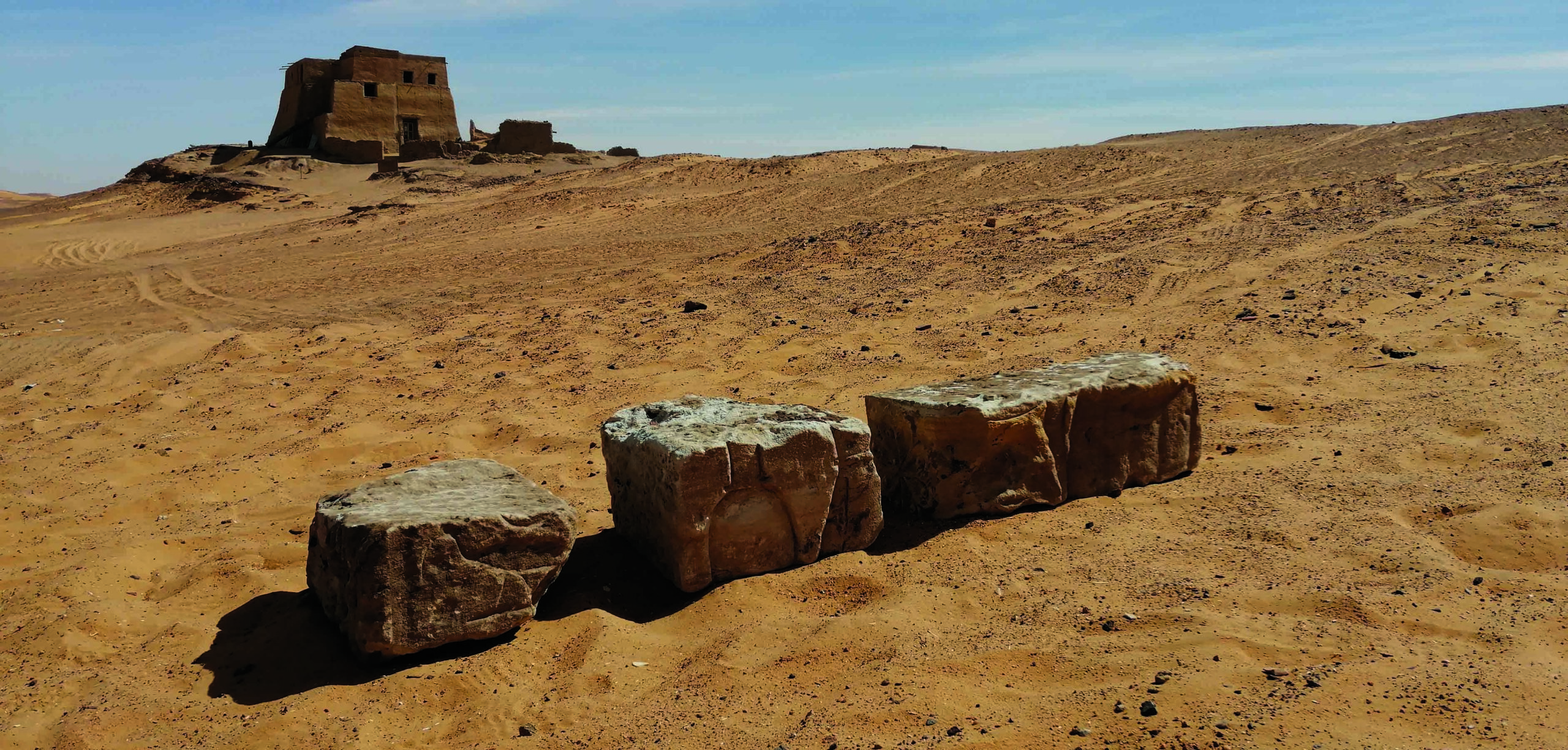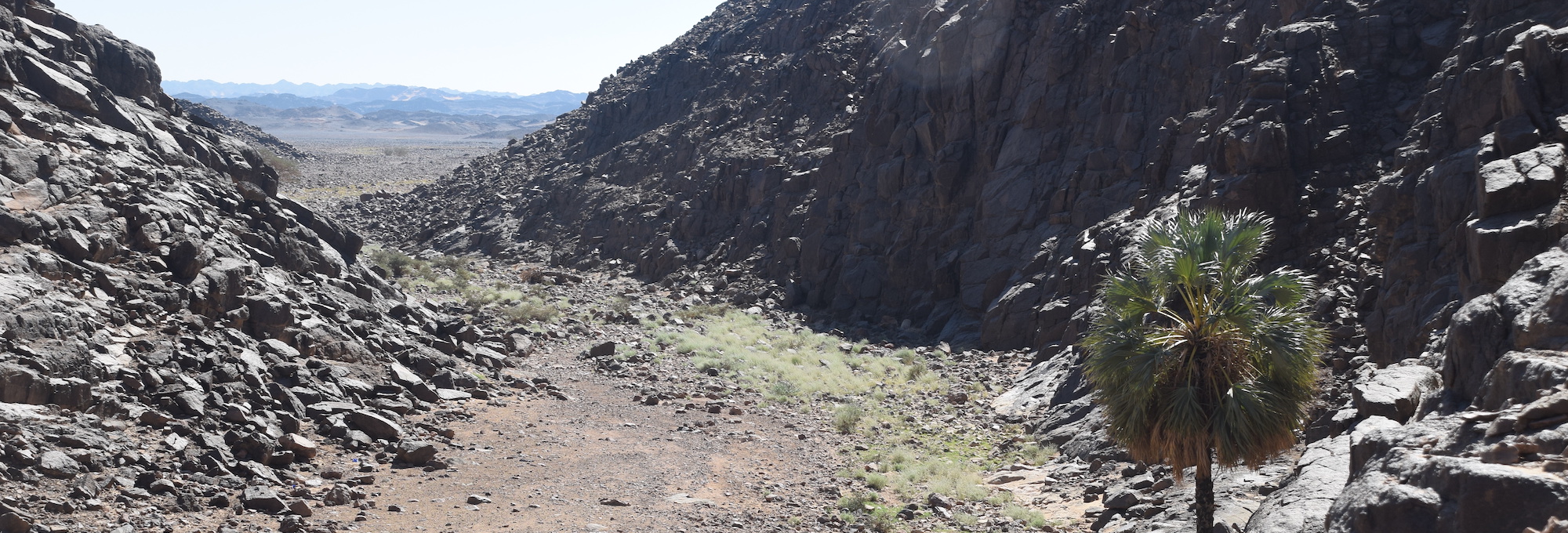
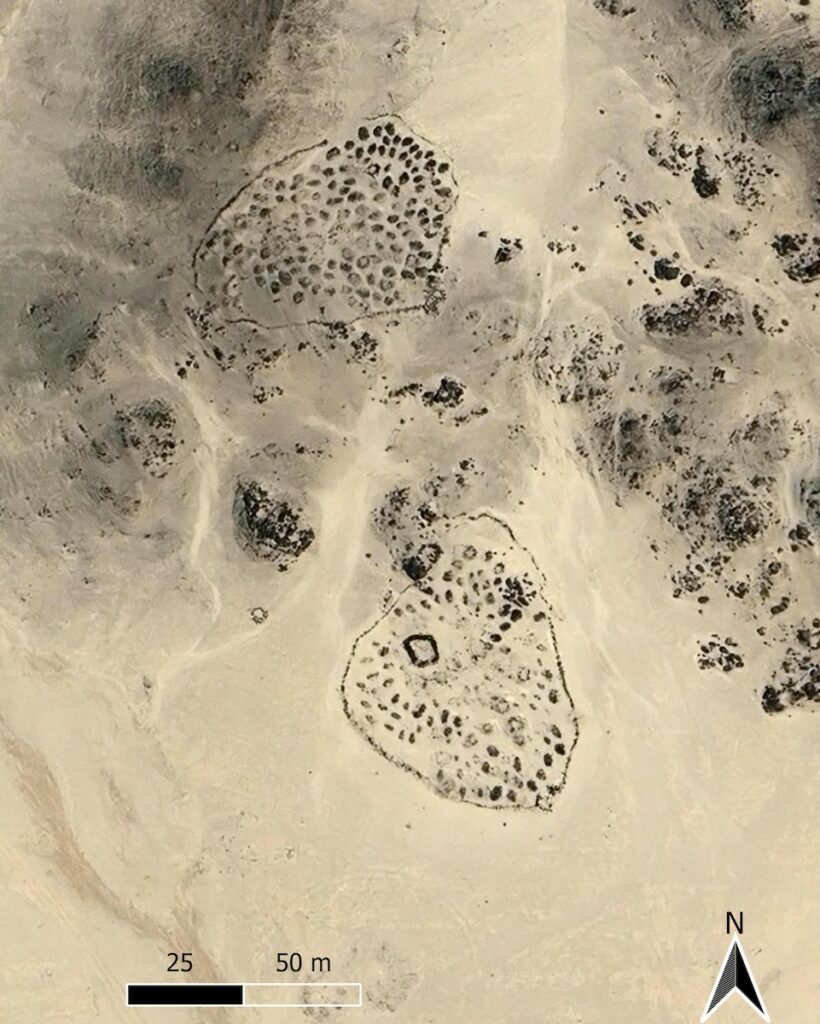
ATBAI DESERT, SUDAN—A new survey of Eastern Sudan’s Atbai Desert mapped hundreds of previously unidentified archaeological features that are providing new clues about what life was like in the region prior to the rise of pharaonic Egypt, Europe Says reports. Researchers used satellite aerial imagery to record at least 260 monumental enclosure burials between the Nile River and the Red Sea. These enigmatic tombs, which can reach 260 feet in diameter, were built by local nomadic herding communities during the fourth and third millennium b.c., making the funerary tradition older than the pyramids of Egypt. Previously excavated examples of these structures, such as those at Wadi Khashab, Wadi el-Ku, and Bir Asele, contained human remains along with the bones of cattle, sheep, and goats, indicating that individuals were buried alongside their herds. Some of these enclosures also had secondary burials carefully arranged around the grave of a central or primary figure, who may have been a chief or important member of the community. Many were deliberately built near wadis, former water sources, wells, rock pools, or areas that would have supported pasture. These newly mapped tombs suggest that the region was not an empty corridor between civilizations, but home to its own pastoralist cultural horizon. Read the original scholarly article about this research in African Archaeological Review. To read about excavations at Africa's oldest urban center outside Egypt, go to "A Nubian Kingdom Rises."