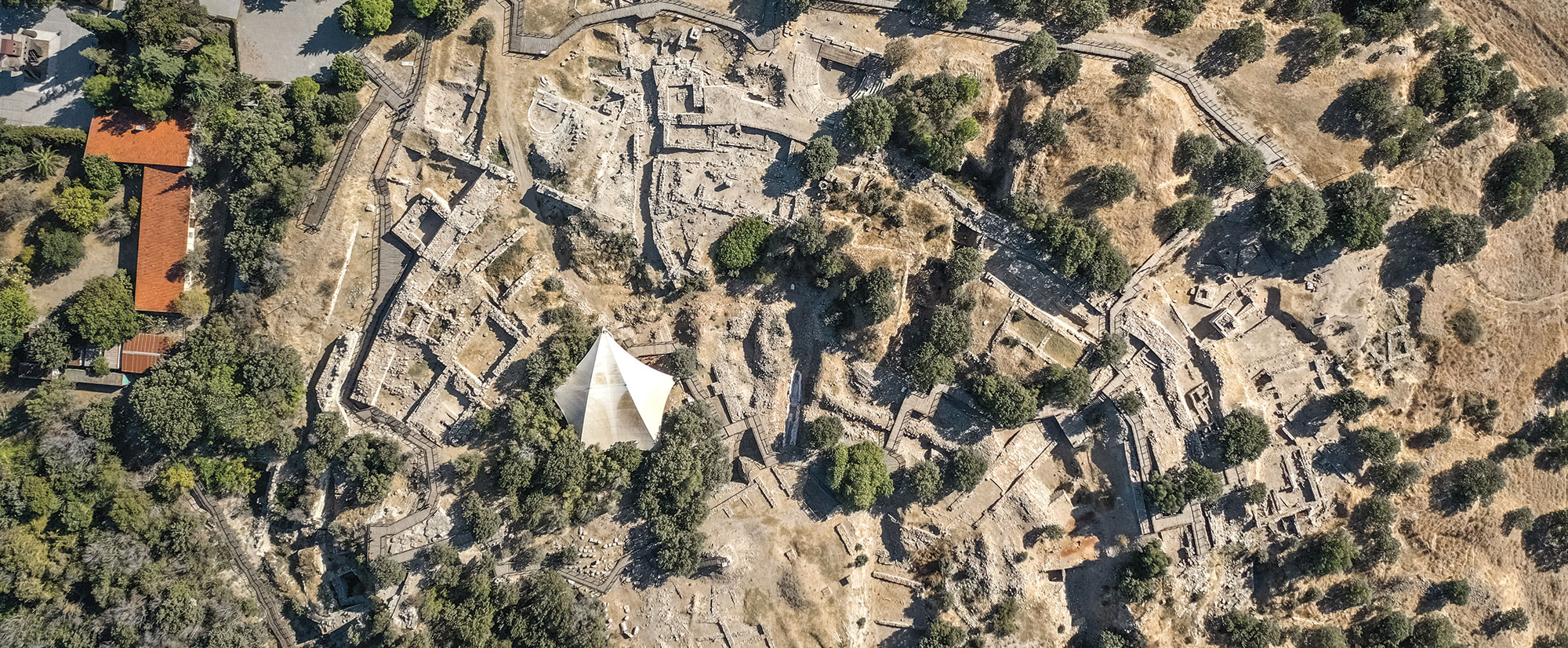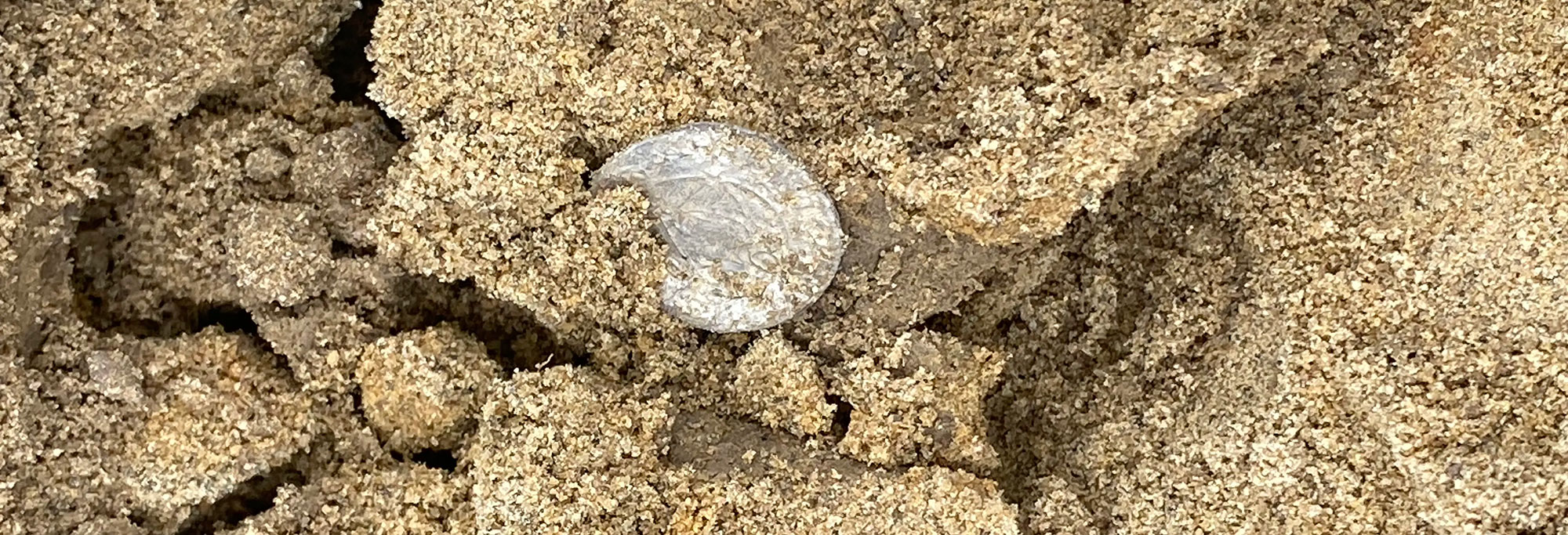
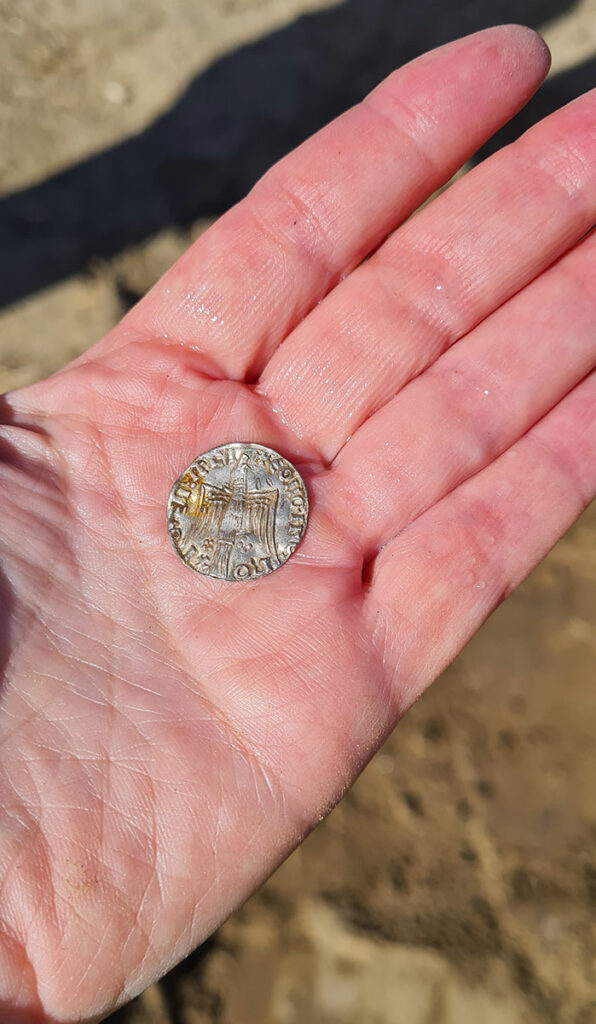
RENA, NORWAY—Science in Norway reports that archaeologists have now recovered 4,772 silver coins from the Mørstad field in southern Norway. Metal detectorists alerted archaeologists last month when they retrieved the first 19 silver coins, which are thought to have been buried around A.D. 1050. A ground-penetrating radar survey of the area did not detect any evidence of a Viking Age settlement, however, according to Knut Paasche of the Norwegian Institute for Cultural Heritage Research (NIKU). “This confirms that the treasure was not buried inside a house or at a farm,” he said. "Someone hid it in a completely different place from where people actually lived." Kjetil Loftsgarden of the Museum of Cultural History suggests that crops were grown on the site in the eleventh century. Since iron was produced in the region during this period, he thinks the medieval farmer who likely buried the hoard in the field may have also been involved in the lucrative iron business. “It was needed for farming tools, house construction, ship rivets, weapons, axes, and swords. Everyone depended on iron,” he explained. Paasche suggests that there may be a medieval settlement on higher ground nearby. “The river has a strong current, and the spring floods can quickly overflow the area,” Paasche said. He and Lars Gustavsen of NIKU investigated the course of this river over time, and think that the hoard may have been buried on what was once an island. “That would make it an even better hiding place,” Paasche said. To read more about Viking Age coinage, go to "Hoards of the Vikings."