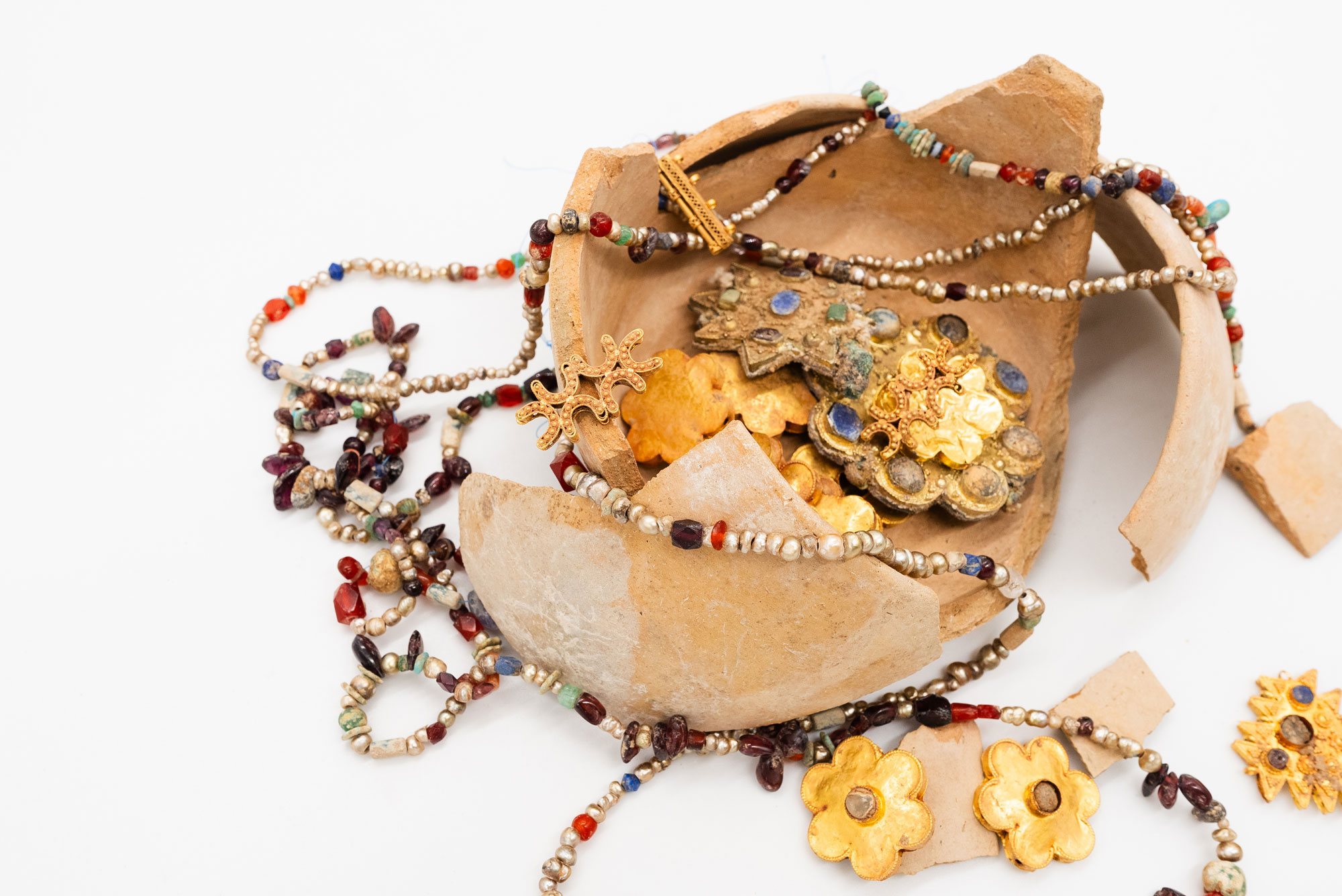
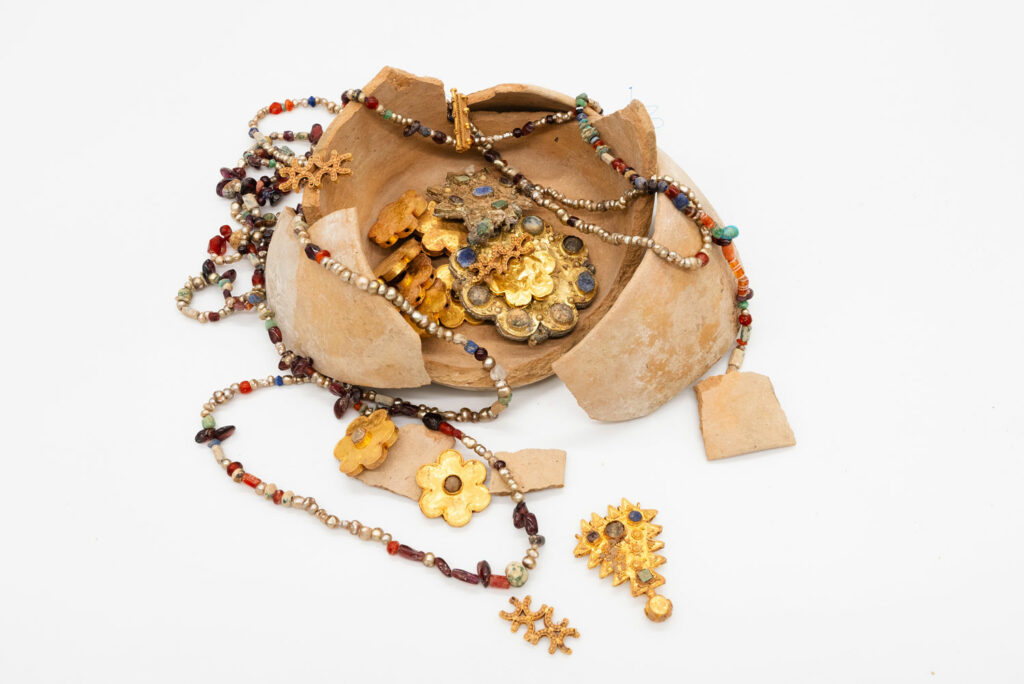
RIYADH, SAUDI ARABIA—A collection of more than 100 gold, silver, and gemstone jewelry pieces stored in a ceramic jar was discovered in Diriyah, a settlement that was once a stop on the route that connected Basra in southern Iraq and Mecca on the west coast of Saudi Arabia more than 1,000 years ago, according to a Live Science report. Pilgrimage to Mecca, a trip known as the hajj, is considered a religious duty for adult Muslims who are physically capable of making the trip and financially able to do so. Excavations at the site of Diriyah, conducted by archaeologists from the Saudi Heritage Commission, have uncovered gypsum water basins and the remains of residential buildings. Inside the buildings, the researchers discovered fragments of pottery, glass, and the collection of jewelry. Organic remains from the settlement have been dated to between A.D. 743 and 753. The hoard is thought to have been buried during the Abbasid Caliphate, which was established in A.D. 750 and ended in 1258 with the evasion of the Mongols. For more on the Abbasids, go to "Expanding the Story."