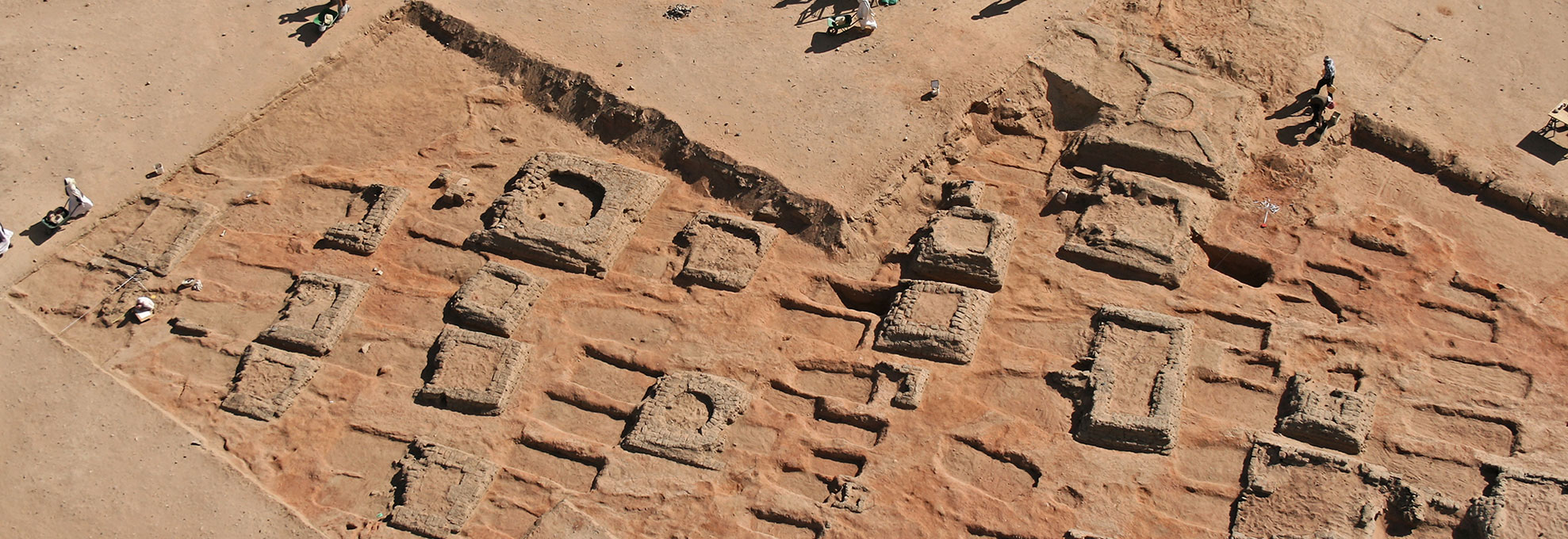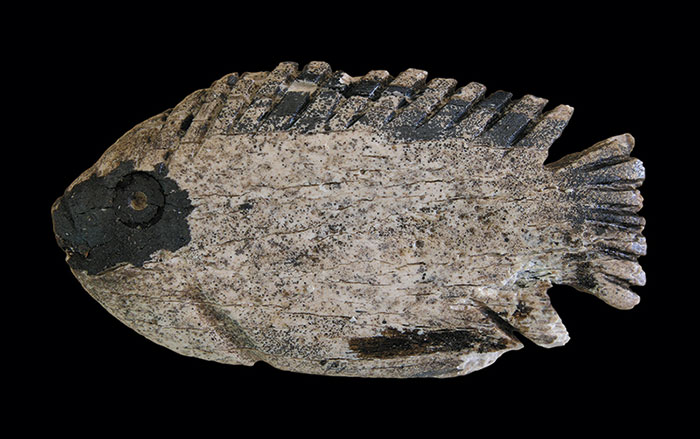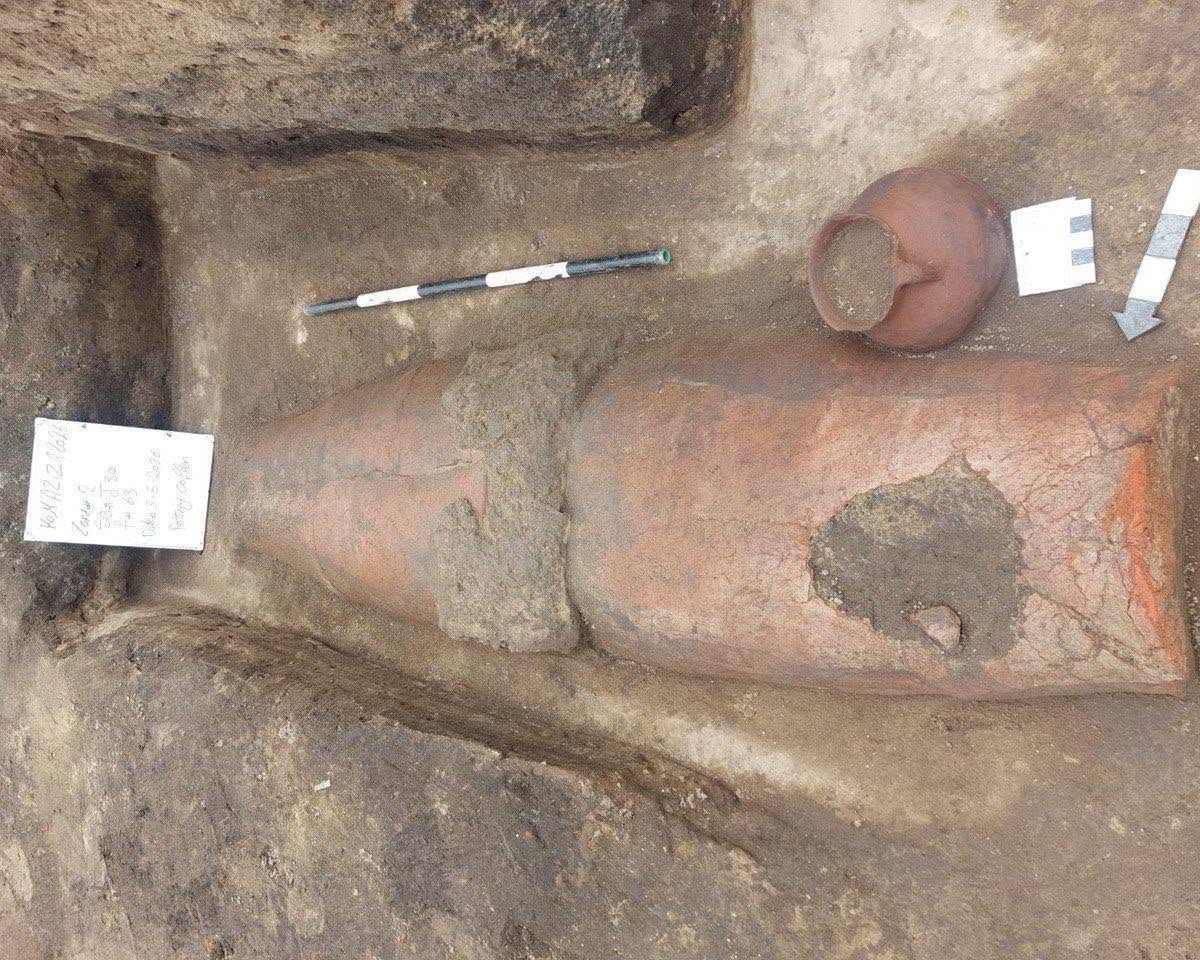
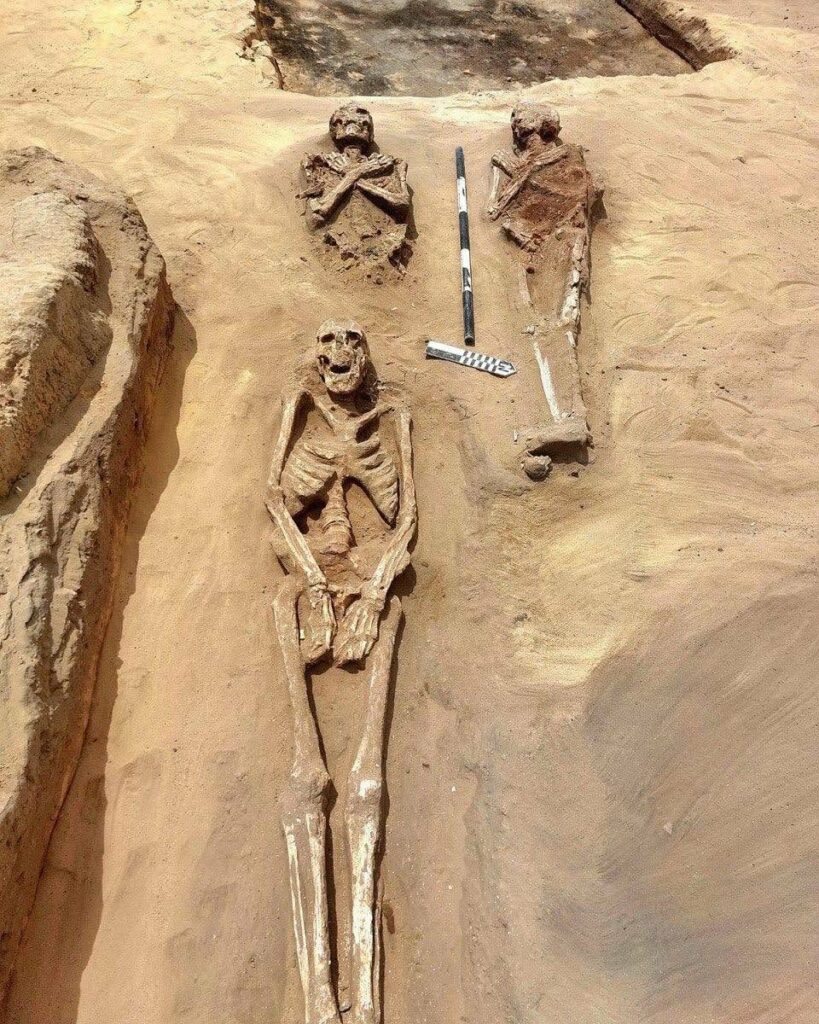
BEHEIRA, EGYPT—Excavations near the coast of northern Egypt, at the site of at Tell Kom Aziza, have revealed a cemetery dated to the Greek and Roman periods, according to an Ahram Online report. The necropolis is located on the site of a settlement dating back to the Old Kingdom, some 4,000 years ago. Sherif Fathy, Egypt’s Minister of Tourism and Antiquities, said that the burials ranged from simple pits where bodies had been placed directly in the ground to graves lined with mudbricks. Painted plaster coffins and barrel-shaped coffins made of pottery dating to the Ptolemaic period were also unearthed. The burials were placed in both north-south and east-west orientations. The positions of the dead also varied, with arms folded and crossed over the pelvis or crossed over the chest. Vessels made of pottery and stone, bread molds, tools, and ovens were recovered, along with the bones of animals, birds, and fish. Unusual burials of intact wild boars were also discovered. Pigs were linked to Seth, the Egyptian god of chaos and the untamed natural world, so the swine may have held a religious significance. To read about burials uncovered in the Greco-Roman necropolis at Oxyrhynchus, go to "Speaking in Golden Tongues."