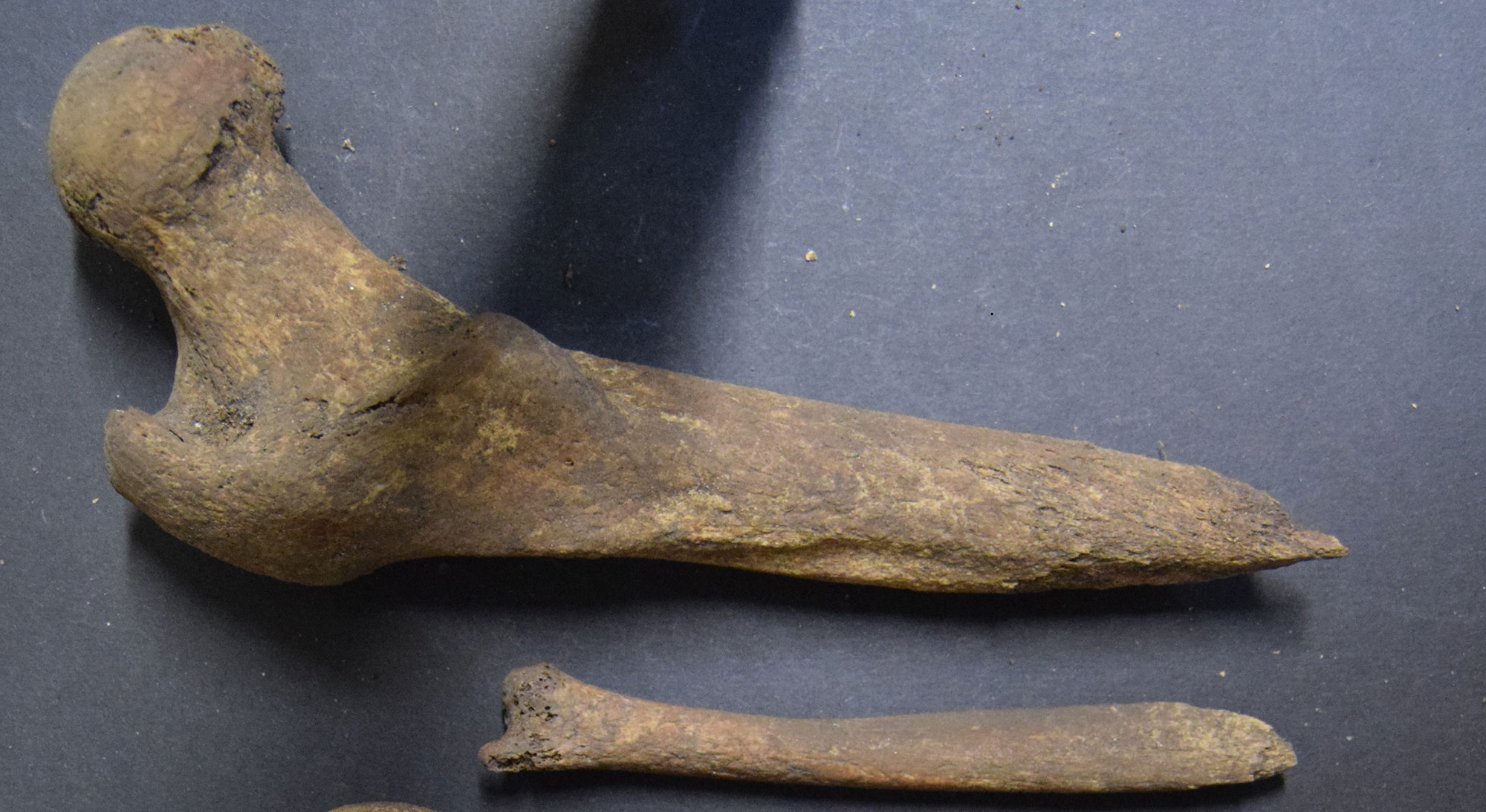
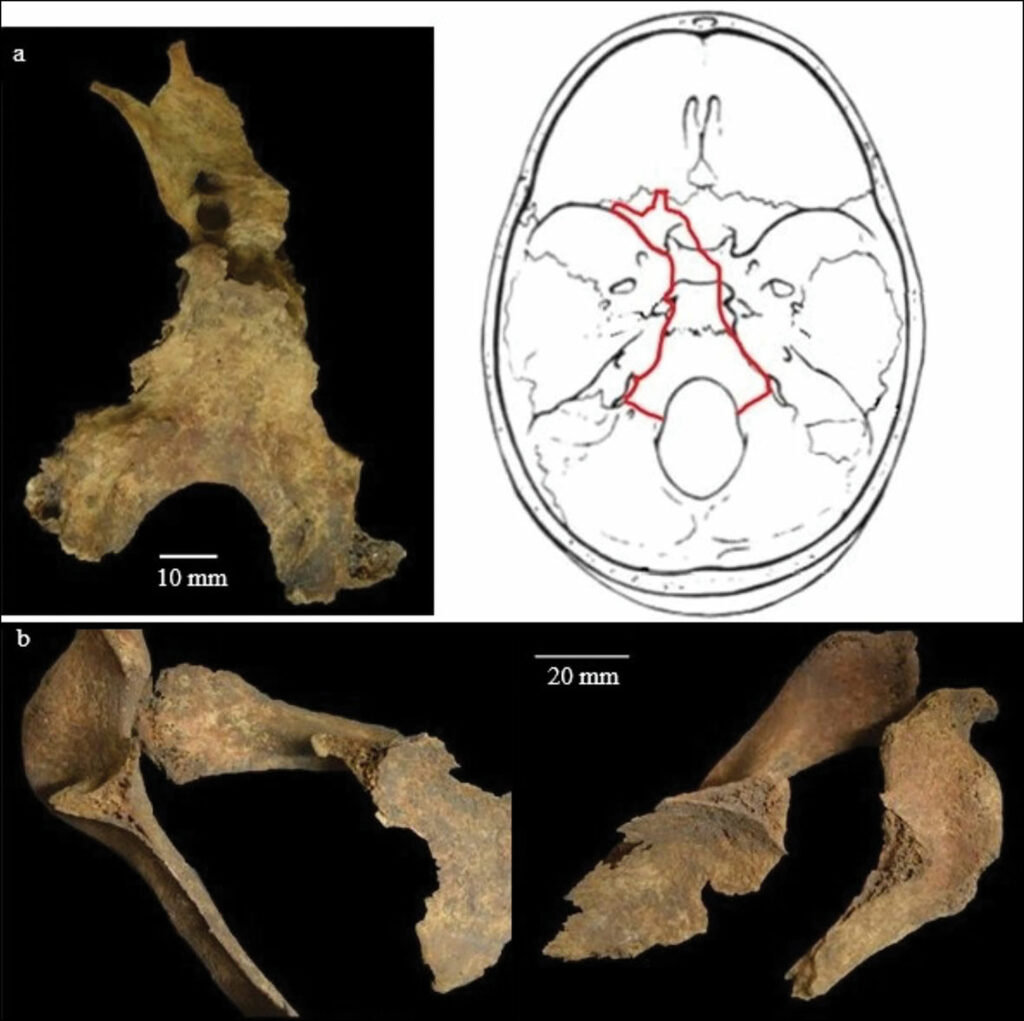
YORK, ENGLAND—Cuts found on the inside of an Iron Age woman’s skull suggest that her brain may have been cut out before burial, according to a CNN report. The woman’s remains were discovered with those of a teenaged boy in 2000 under a cairn in northern Scotland. Laura Castells Navarro of the University of York and her colleagues said that the cut marks were found in areas of the woman’s cranium where ligaments attached the brain to the skull, which reinforces the idea that the brain had been deliberately removed. The researchers also determined that the base of the woman’s cranium may have been fractured by an intentional, targeted impact in an effort to access the brain. Additionally, signs of modification were identified on one of the woman’s femurs, the humerus in each upper arm, and an ulna from one of her forearms. It had been previously suggested that the marks on the bones had been made by rodents after burial, but Navarro said that the bones were smoothed from polishing. “We think that what happened was that [the arm bones] may have been snapped in half, and then they had been whittled to a very sharp edge,” she explained. The leg bone was flat and smooth, however. The bones were then placed in the grave in the correct anatomical position. “That was quite interesting, given how heavily modified they have been because clearly there has been some kind of thought and respect and care on putting them together,” Navarro concluded. Read the original scholarly article about this research in Antiquity. To read about an early Iron Age fort in northern Scotland, go to "Letter from Scotland: Land of the Picts."