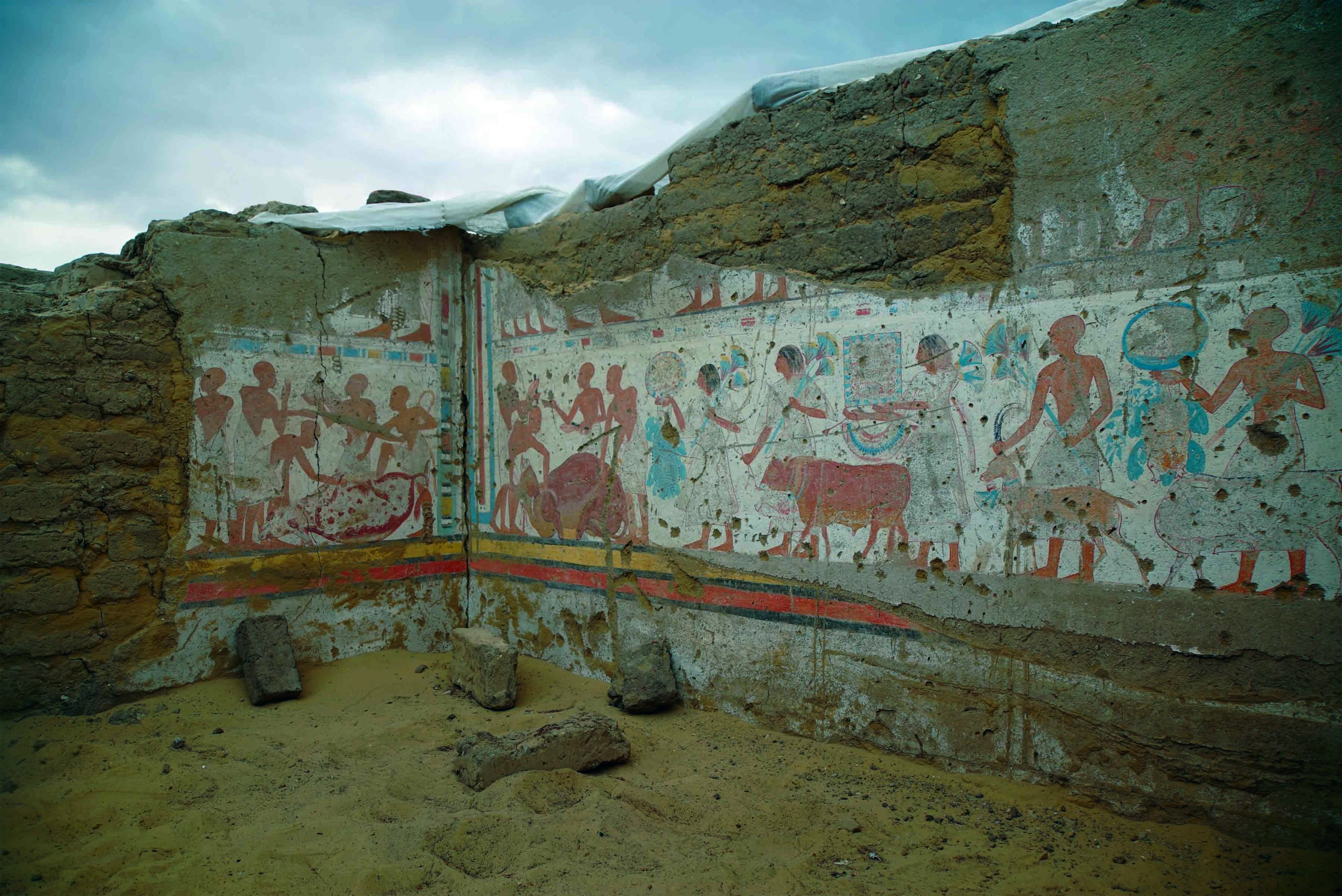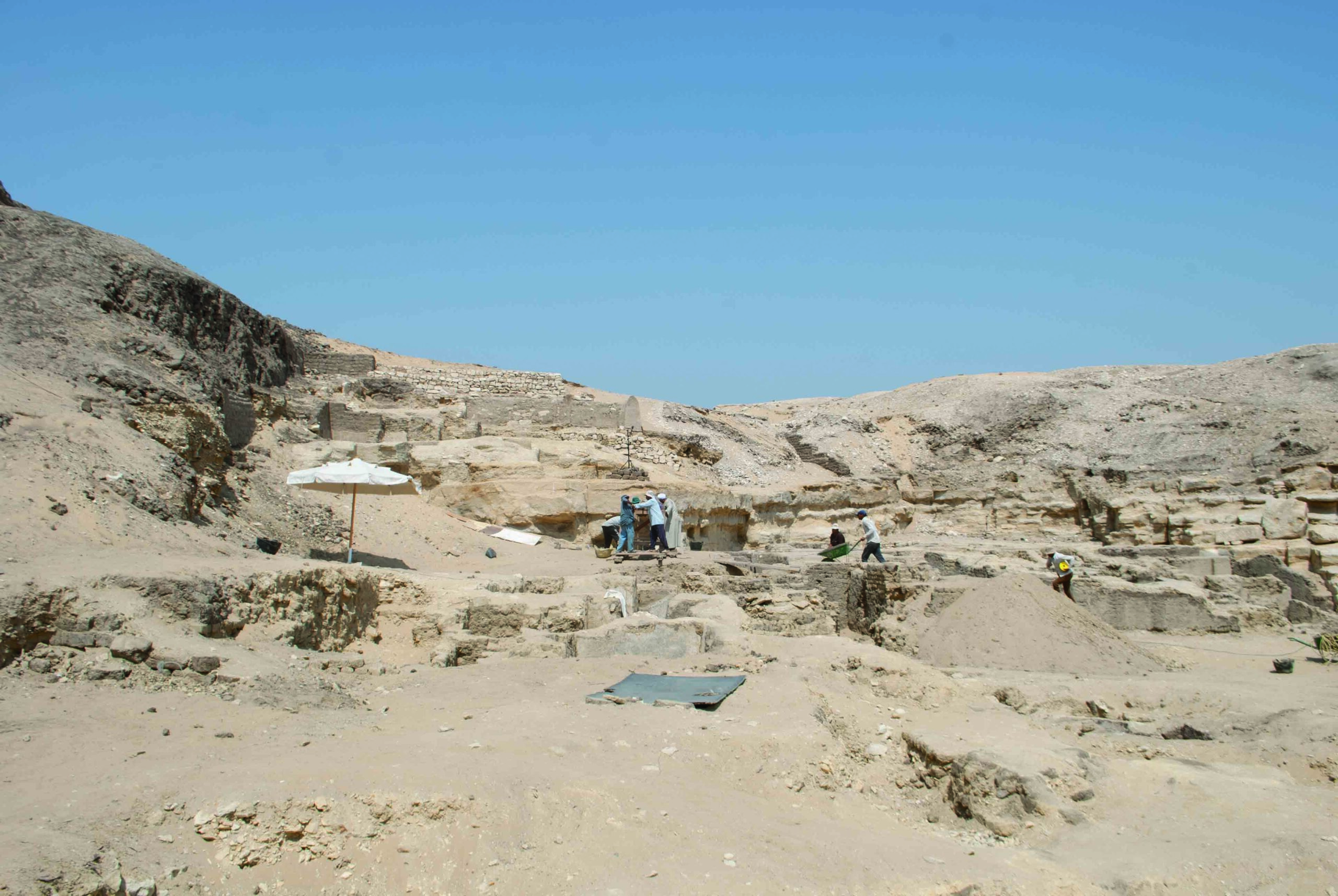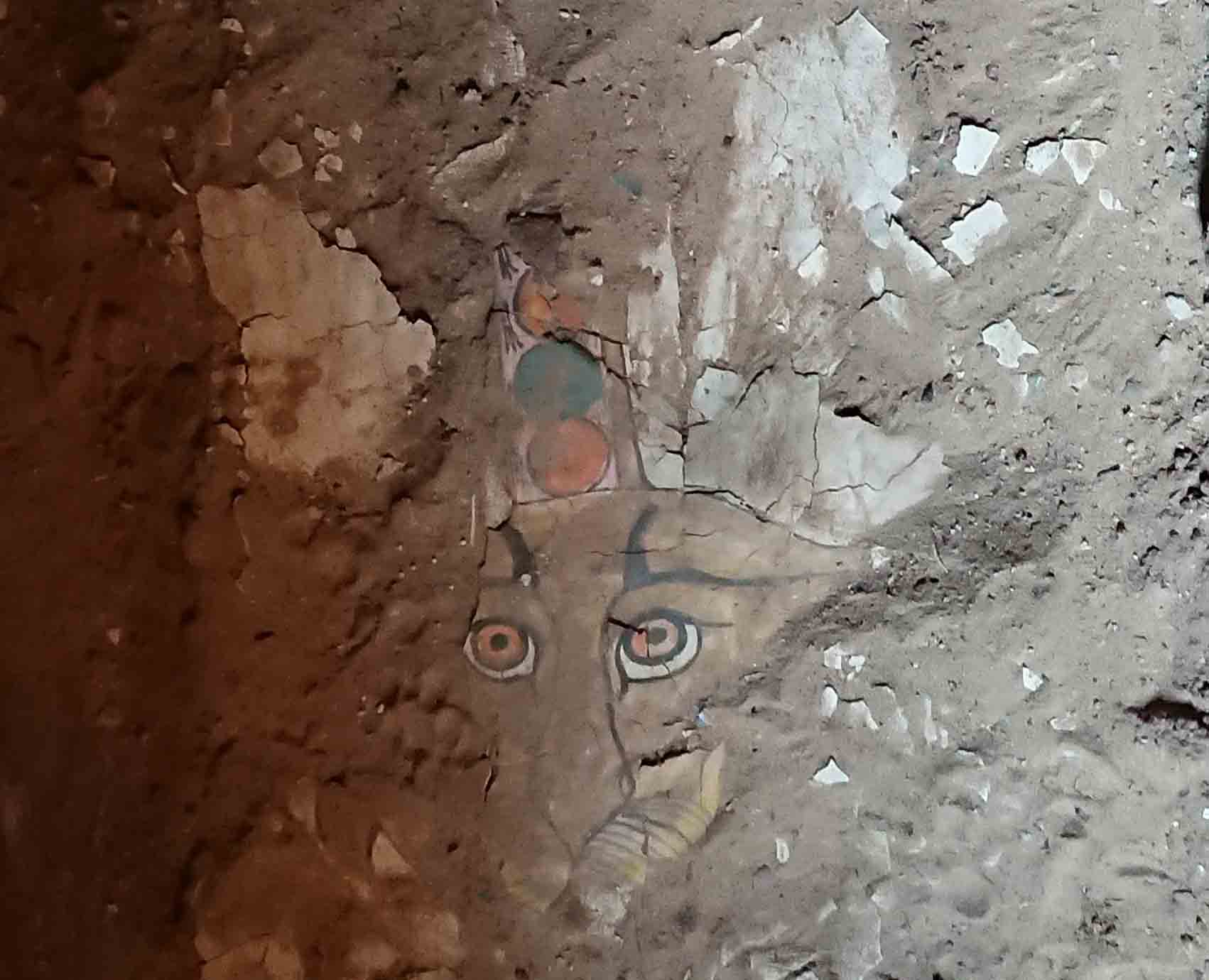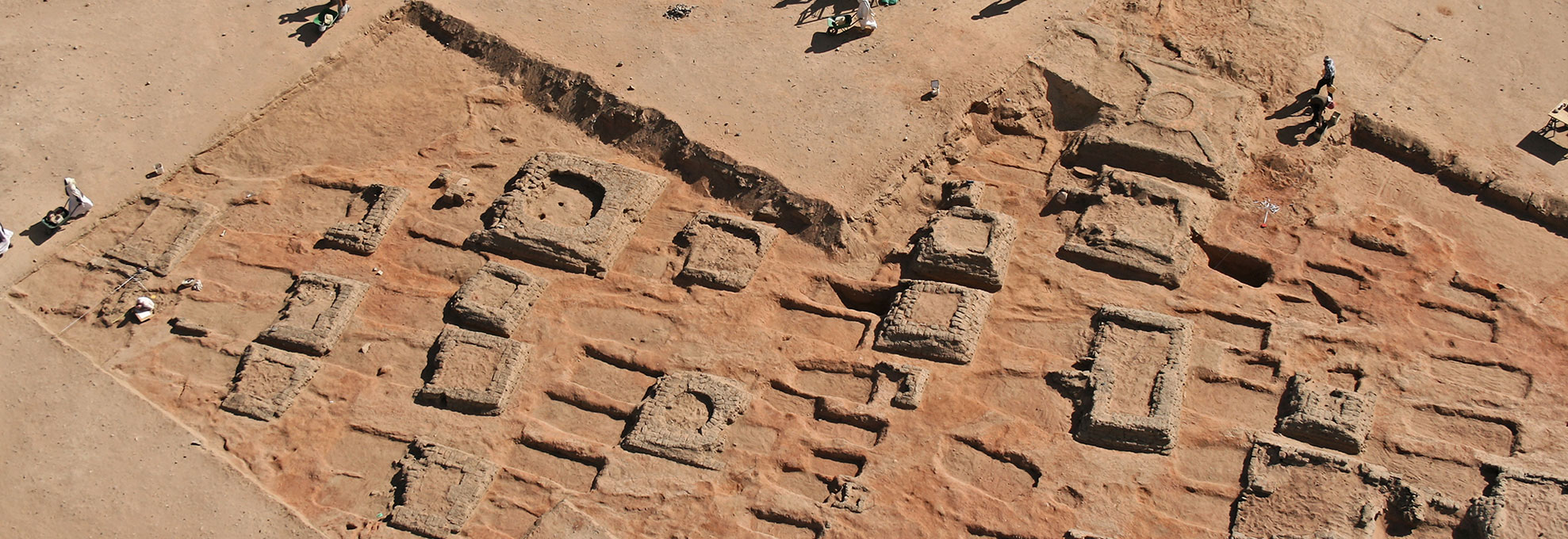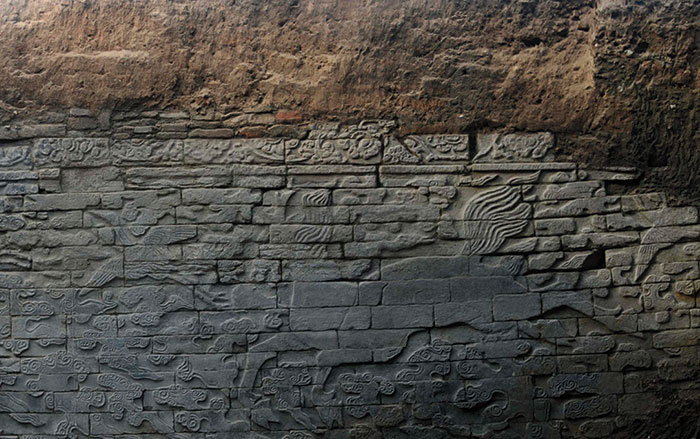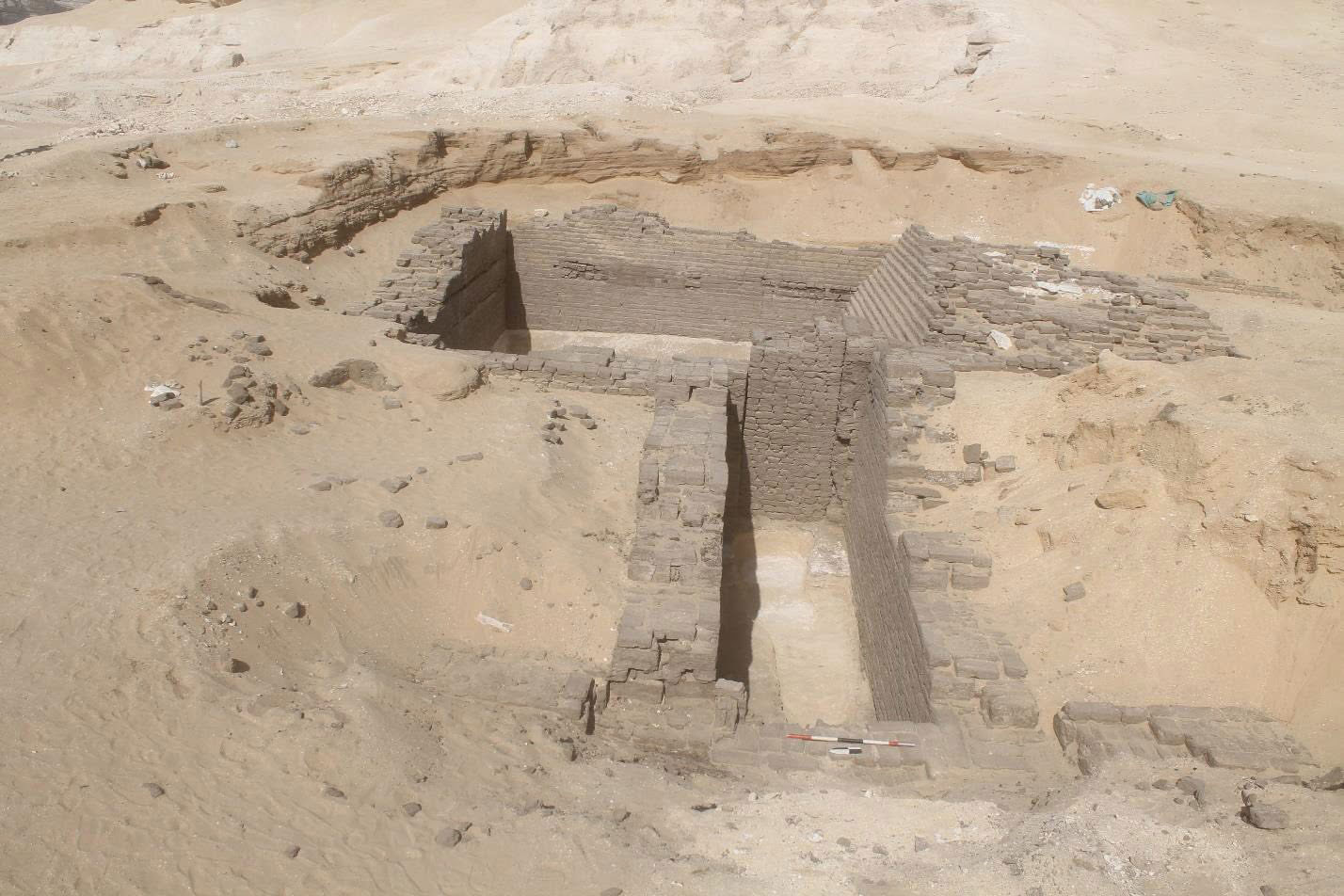
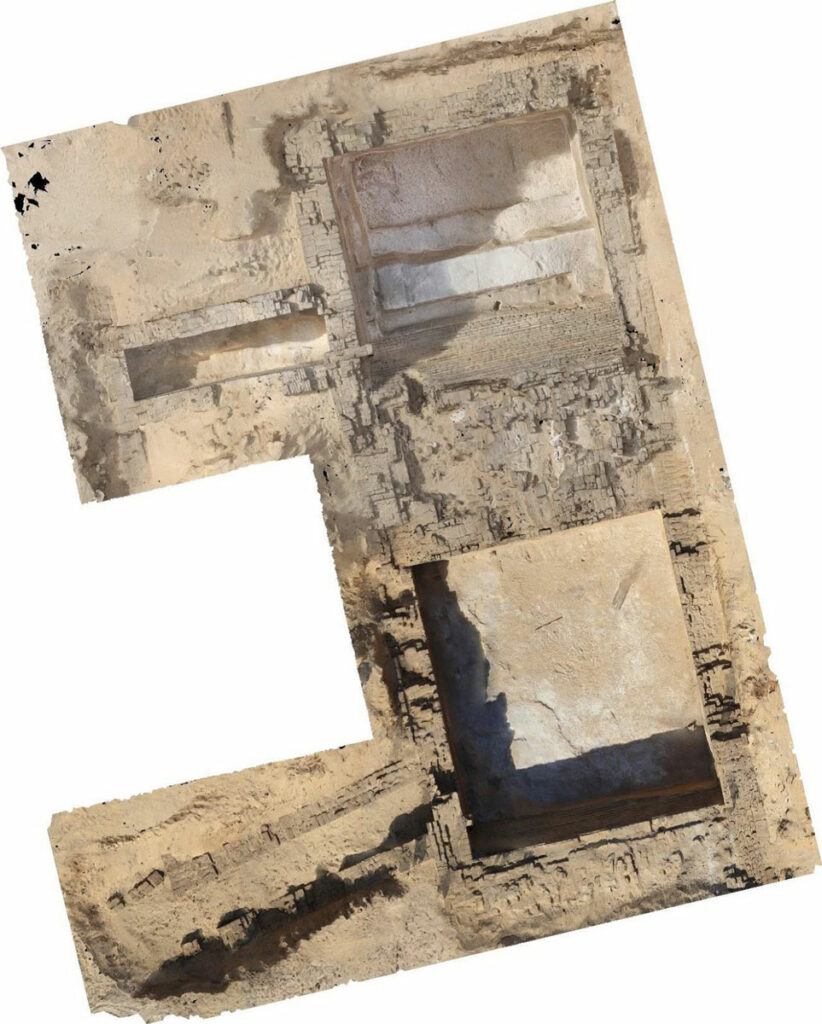
MINYA GOVERNORATE, EGYPT—Two tombs dated to the Early Dynastic period have been unearthed at Gabal El-Teir in Upper Egypt, according to an Ahram Online report. Use of the necropolis at Gabal El-Teir began in the Predynastic period, prior to 3100 B.C. Egypt’s Minister of Tourism Sherif Fathy said that the Early Dynastic tombs, dated from 3100 B.C. to 2686 B.C., will allow researchers to trace the development of funerary architecture. Hisham El-Leithy of the Supreme Council of Antiquities said that the walls of the first tomb are thick at the base and taper toward the top, perhaps representing an early stage in the development of pyramids. Lines remain on the stones of the tomb, he added, revealing the precise stonecutting practices used. Wooden supports to reinforce the walls were also found. It appears that stones had been removed from this tomb to be reused in other structures. The second tomb, to the south, is nearly identical in design, El-Leithy said, but its stone walls remain intact. To read more about early Egyptian history, go to "Searching for Lost Cities: Egypt's First Capital?"