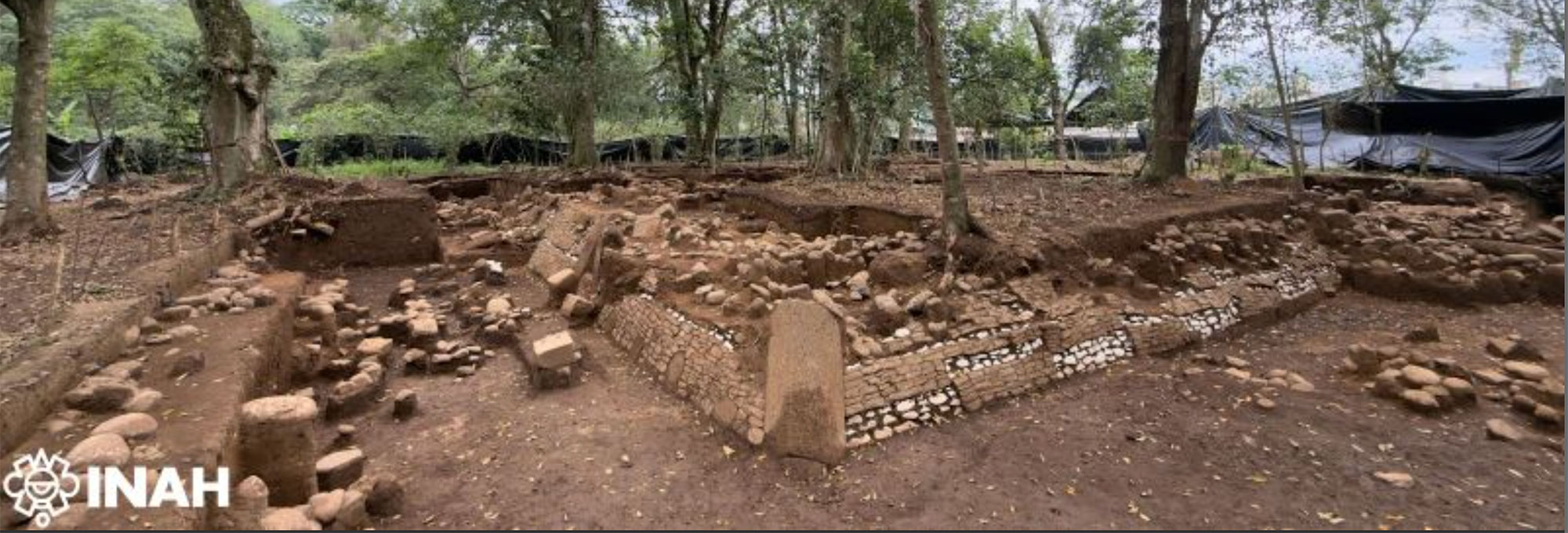
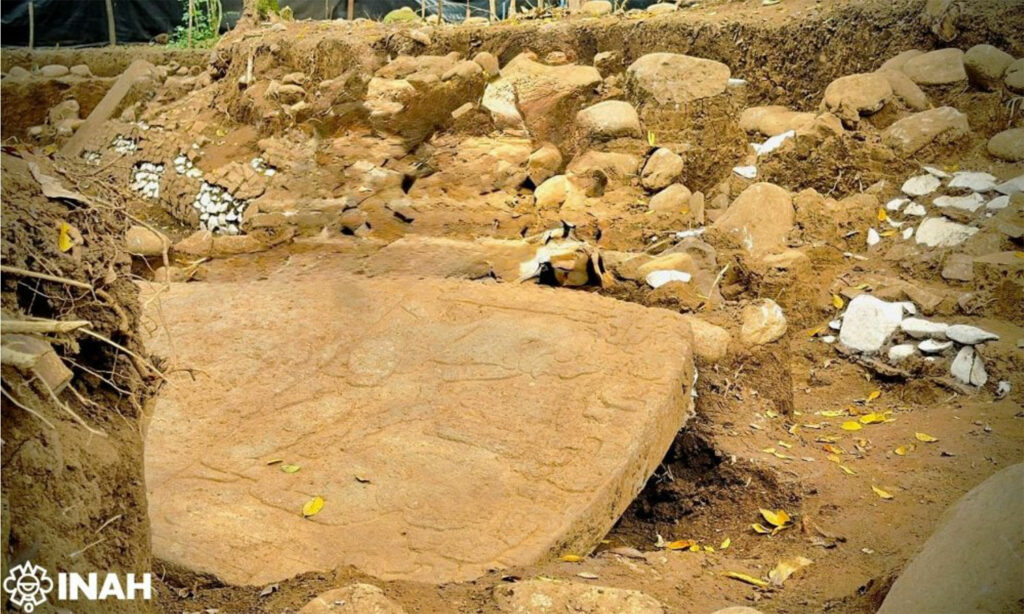
VERACRUZ, MEXICO—Excavations at the Campo Viejo site in eastern Mexico have uncovered a circular stone platform and a monolithic sculpture bearing potential Maya features, according to an Agence France-Presse report. The objects have been dated to the Early Classic period, between A.D. 200 and 600. Lino Espinoza García of Mexico’s National Institute of Archaeology and History (INAH) said that the platform was made with circular stones and decorated with squared lines or figures. “We don’t have any records so far of a correlation with other [ancient] sites,” said INAH archaeologist Alberto Vázquez. The monolith stands more than six feet tall and is engraved with images of two characters. “They have a bowl and are receiving something, we think it’s a liquid,” Espinoza said. He thinks that the image may have been carved during a time of drought. The two people, one with Maya traits, are shown receiving a divine liquid—perhaps water—from a deity. To read about the largest known ceremonial structure in the Maya world, go to "Oldest Maya Temple," one of ARCHAEOLOGY's Top 10 Discoveries of 2020.