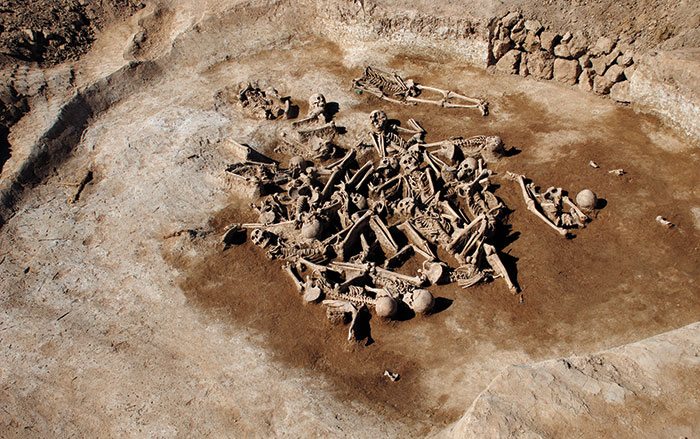
While excavating burials of hunter-gatherers in a cave in Vietnam, archaeologist Hsiao-chun Hung of the Australian National University wondered how to explain the flexed, folded, and contorted positions of some skeletons. She suspected these people had originally been mummified in a smoke-drying process, based on ethnographic reports of such practices in Southeast Asia as recently as the twentieth century. To test the theory, Hung’s team analyzed skeletal remains of 57 people found at 11 different sites across China, Vietnam, and Indonesia that date to between 10,000 and 2000 b.c. The researchers used techniques that involved bombarding the bones with X-ray beams and infrared light. Their results indicated that many bones had been heated at low temperatures. Some also had visible burn marks. The team concluded that the bodies had indeed likely been dried over fires.
Once mummified and bound, the bodies would have been light enough to move easily. “These hunter-gatherers might have been carrying ancestral people with them,” says archaeologist Peter Bellwood, also of the Australian National University. “As the bodies decayed and fell apart, they decided to bury them.” Some of the burials have been dated to approximately 10,000 years ago, making them the earliest known intentionally mummified people in the world. “What is striking,” Hung says, “is how widespread this tradition seems to have been.”