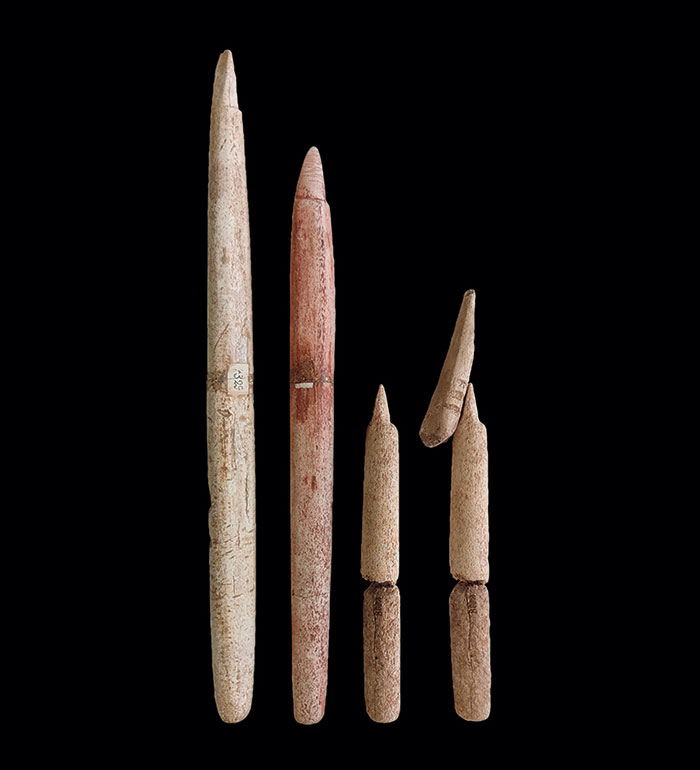
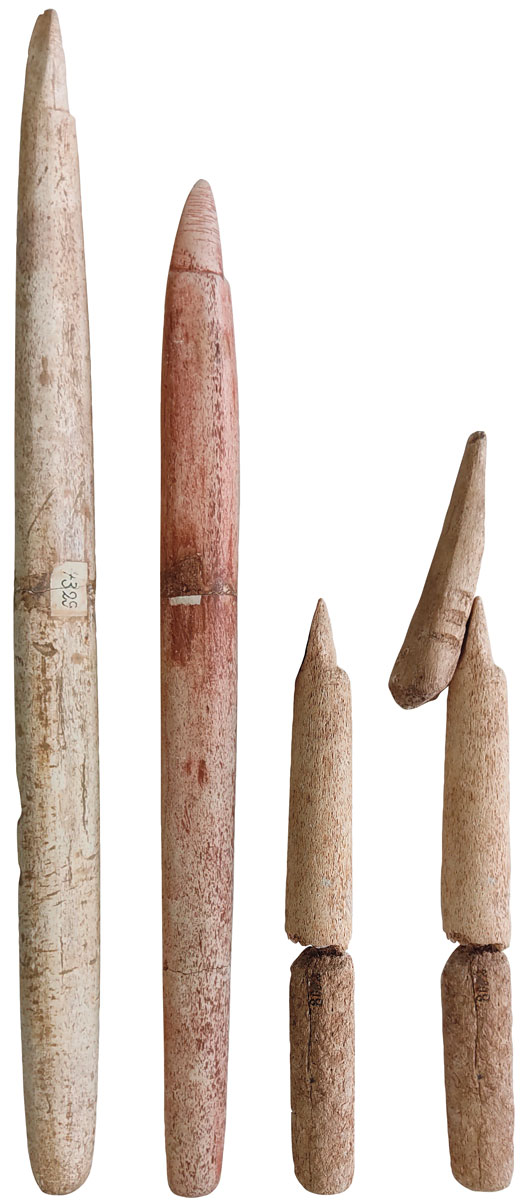
What is it?
Harpoons
Material
Whale bone
Culture
Sambaqui
Date
2944 b.c. (oldest)
Dimensions
From 12.6 to 19.6
inches long
Found
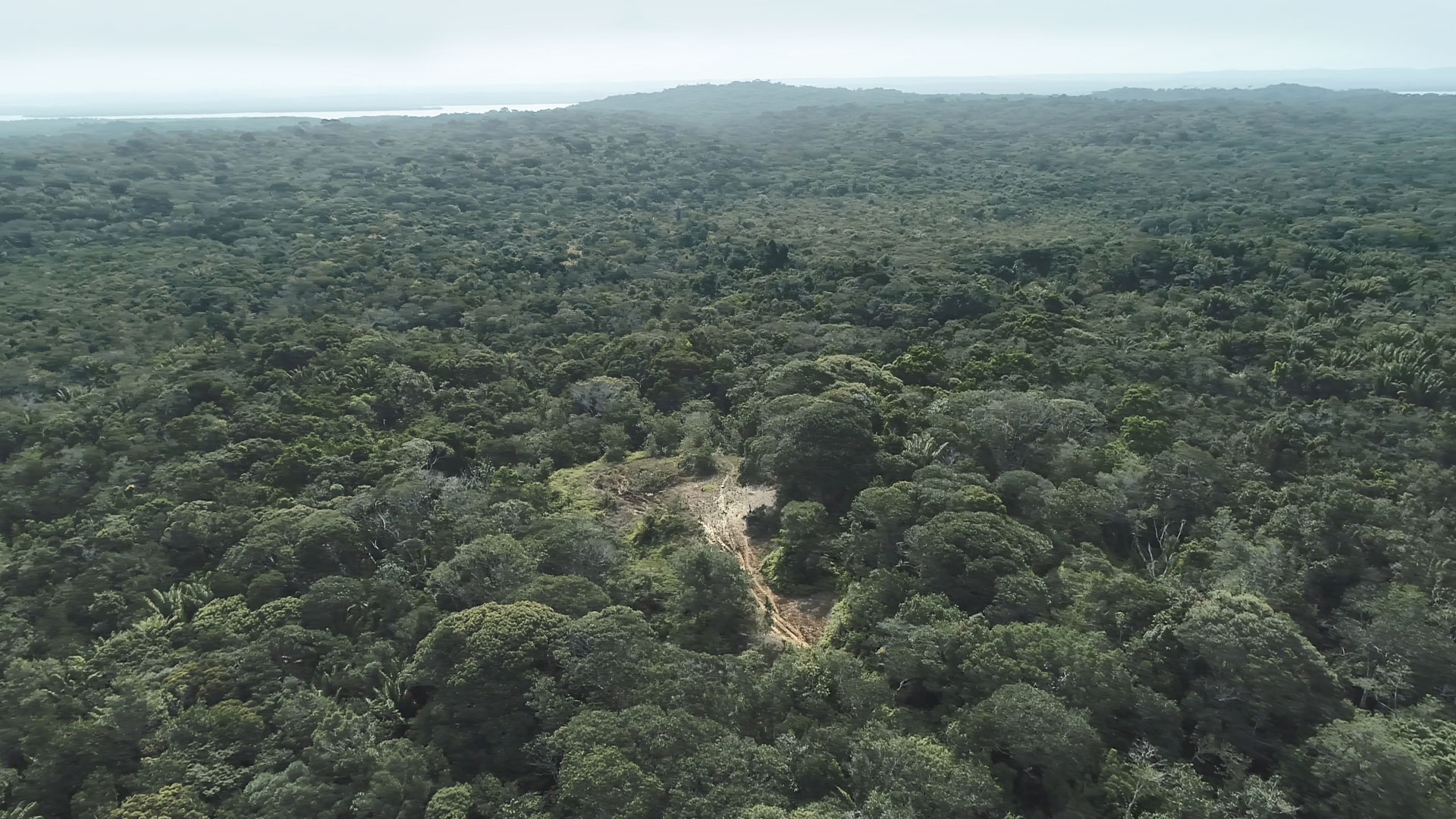
Babitonga Bay, Brazil
Humans’ spiritual relationship with whales is as profound as the ocean depths these extraordinary mammals glide through. In the Old Testament, a whale is the instrument of God’s will; many Native American peoples of the Pacific Northwest believe whales are conduits between the terrestrial and otherworldly realms; and in Moby Dick, the white whale symbolizes Ahab’s obsession and his unwinnable struggle against nature.
Whales have also been a source of physical sustenance: Their blubber can be made into lamp oil, their bones can be carved and used as tools or artwork, and their meat can be eaten. But when people began to hunt whales has been fiercely debated. Scholars once thought that dedicated whale hunting was first practiced by people living approximately 3,500 to 2,500 years ago in Arctic and subarctic regions. However, a new study has shown that members of the Sambaqui culture in southern Brazil were hunting large baleen species such as southern right whales and humpbacks much earlier.
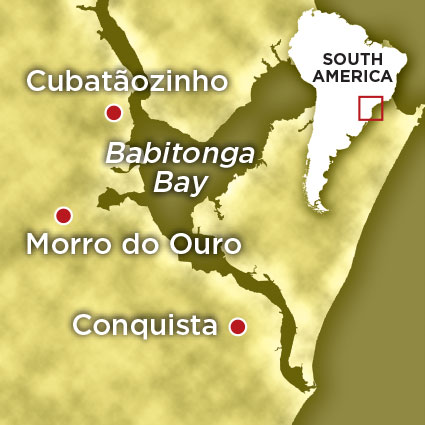
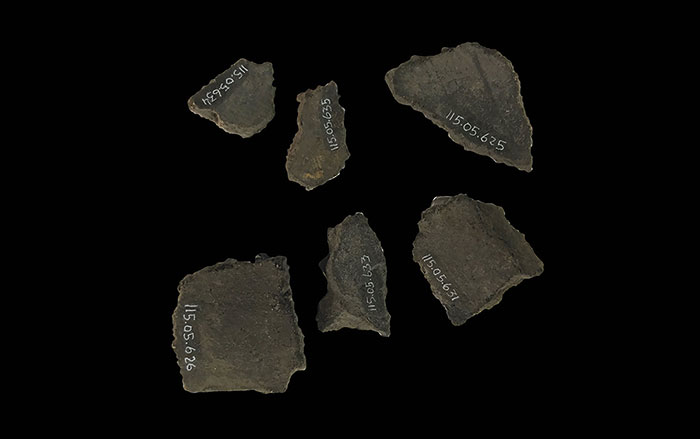
Archaeologists have discovered a wealth of whale remains, many with butchery marks, in the sambaquis, or “shell mounds,” that give the culture its name. They have also determined that a number of enigmatic artifacts found at sites near Babitonga Bay and radiocarbon dated to as early as 2944 b.c. were used as harpoons to hunt whales. “These harpoons—which were originally simply described in field notes from the mid-twentieth century as sticks or rods—along with abundant whale remains,show that southern Brazil was likely one of the first places where people hunted large whales, at least one thousand years earlier than we thought, and maybe even more,” says molecular archaeologist Krista McGrath of the Autonomous University of Barcelona. She believes the Sambaqui hunted whales to gather food, to harvest resources, and to celebrate ceremonial or ritual events. “Some of the harpoons were associated with human burials in the sambaquis, so I think they must have had some sort of spiritual aspect,” says McGrath. “Whale hunting was probably a special event that happened at specific times of year, such as the winter, when whales came close to the shore and remained there for long stretches of time.