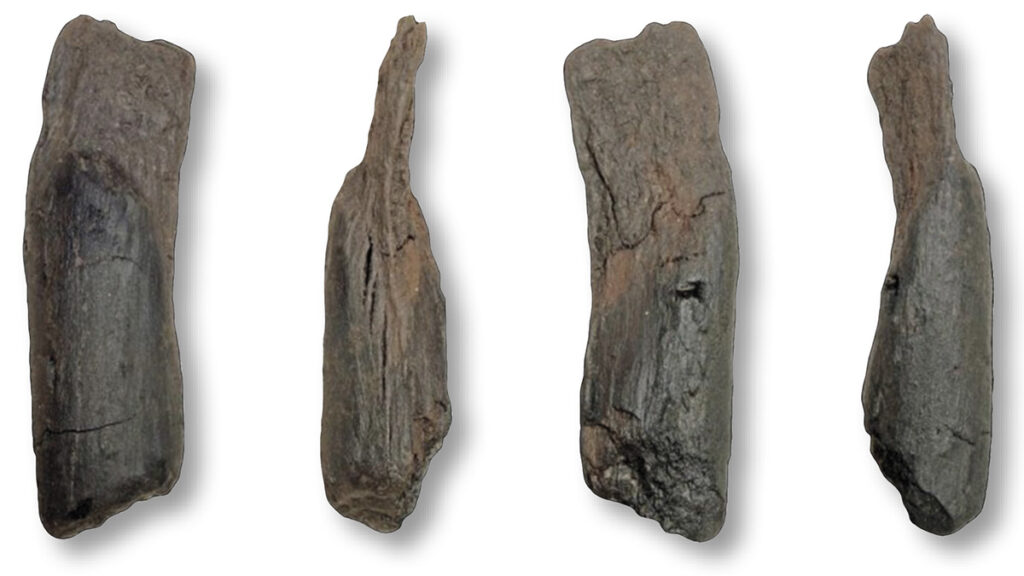
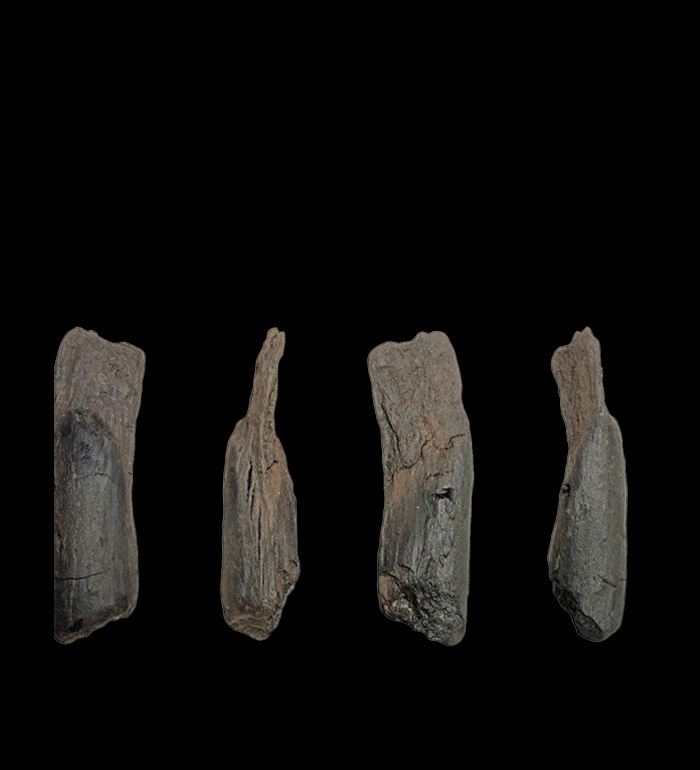
A team of researchers has determined that two artifacts recovered from the site of Marathousa 1 in southern Greece are the world’s oldest known handheld wooden tools. The artifacts were found on the shore of an ancient lake alongside items such as butchered elephant remains, worked bone, and stone tools. The team established that the implements were crafted 430,000 years ago. This makes them at least 40,000 years older than similar examples discovered in the past. The researchers are unsure how the smaller of the two objects, which was made from willow or poplar and measures 2.2 inches long, was used. However, they believe that the size, shape, and wear patterns of the larger artifact, which was made from an alder trunk and measures 32 inches long, indicate it was employed as a digging stick. This sort of multipurpose tool was often used by ancient hominins to forage for food such as plant roots and tubers in the soil.

No human remains were found at the site, and thus it is difficult to ascertain which human ancestor shaped the objects. However, University of Reading archaeologist Annemieke Milks suggests it could have been either Homo heidelbergensis or early Neanderthals. “We can characterize them as large-brained members of our genus, Homo,” she says. “They’re clearly technologically savvy, using lots of different materials to gather food and surviving in southern Europe during this period.”