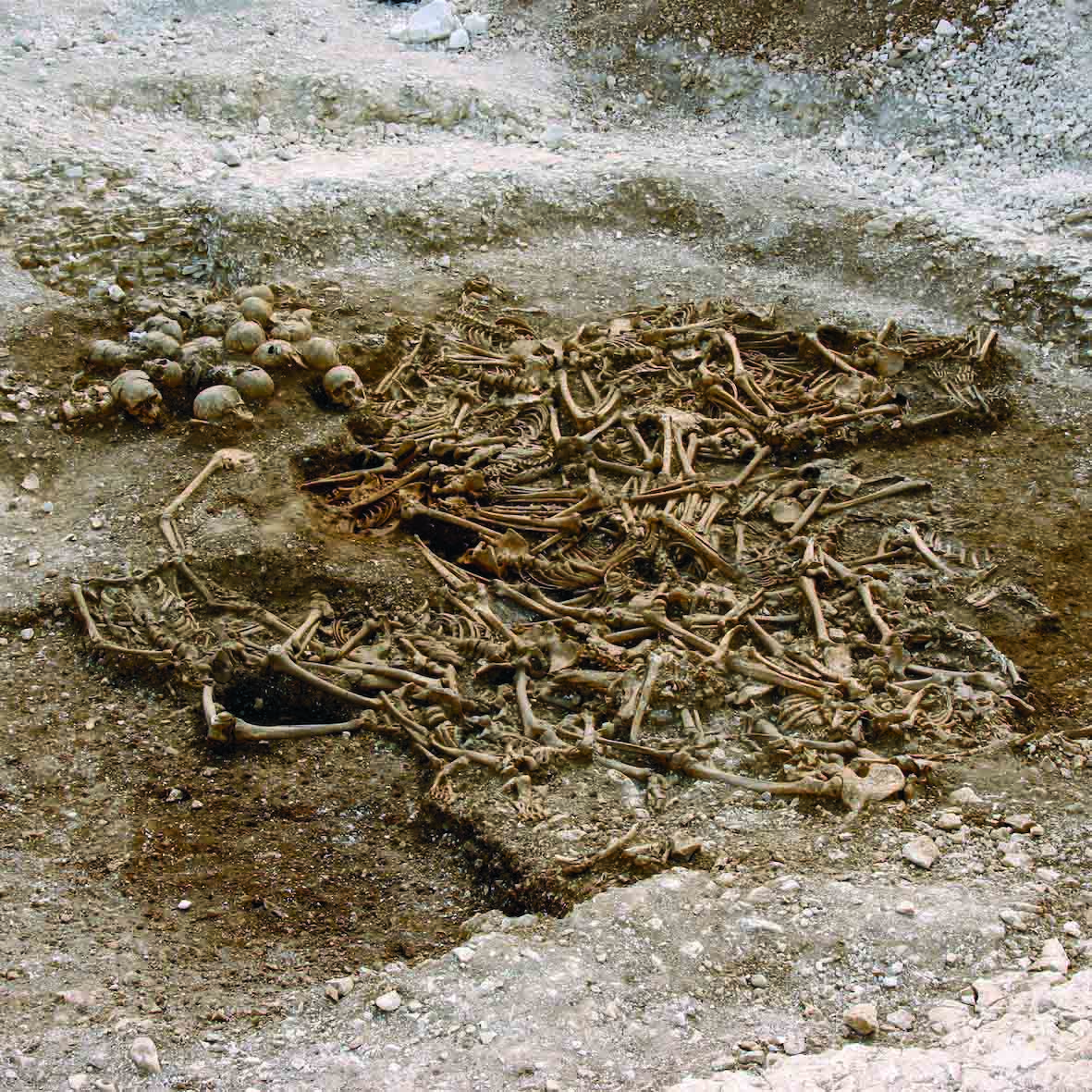

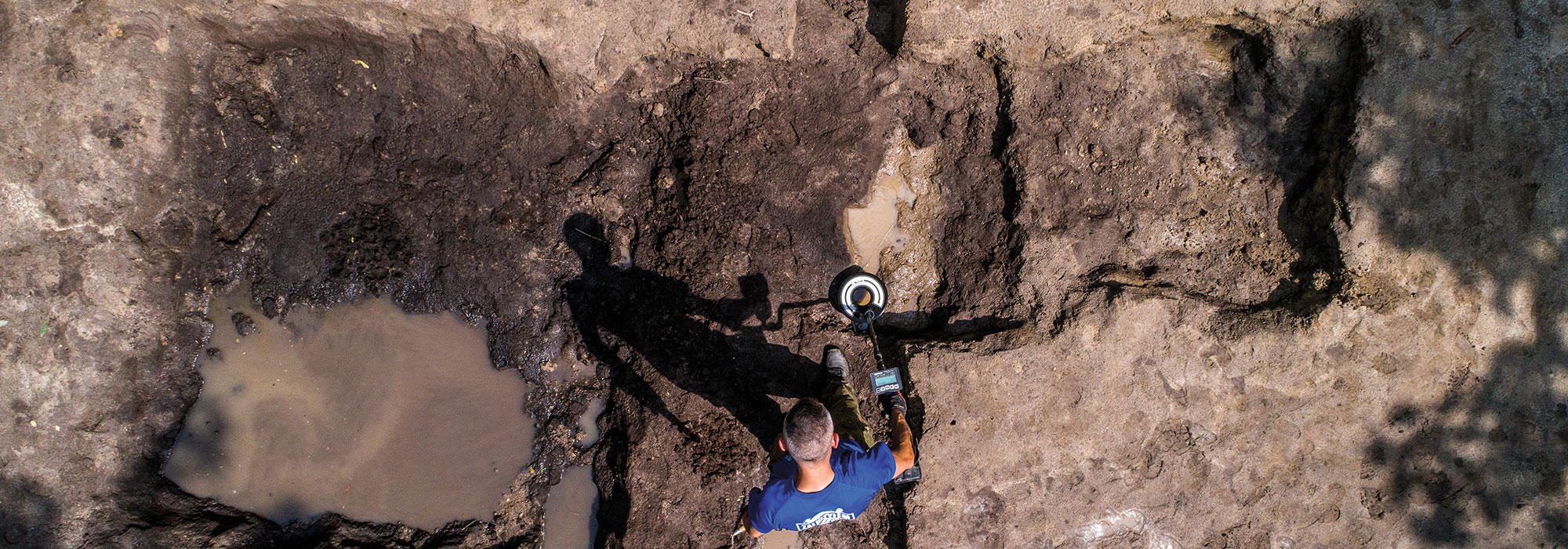
On a cool, cloudy summer day on the outskirts of the town of Chojnice in northern Poland, nine archaeologists wearing disposable latex gloves brush dirt from a three-dimensional tangle of weathered human bone at the bottom of a steep slope. Just a few shades lighter than the surrounding soil, the bones are arranged in an L shape a few feet wide and about 20 feet long in all. Talking quietly, the researchers work to free skulls, ribs, femurs, and other bones from the surrounding soil before lifting them gently out of the ground. Excavations are typically noisy and busy, but here the uncanny calm is punctuated only by the occasional ping of a handheld metal detector. Among the bones are metal artifacts including deformed bullets, expended shell casings, and dozens of simple zinc buttons. Archaeologists working here are more accustomed to uncovering much older evidence—cemeteries dating to the Bronze Age or Slavic burial mounds from the early Middle Ages. For the past five years, however, they have been searching for physical evidence of one of countless massacres carried out by the German forces who occupied Poland during World War II. The work is a combination of archaeology and crime scene investigation, part of an effort to uncover and understand a slaughter whose human cost is difficult to fathom.