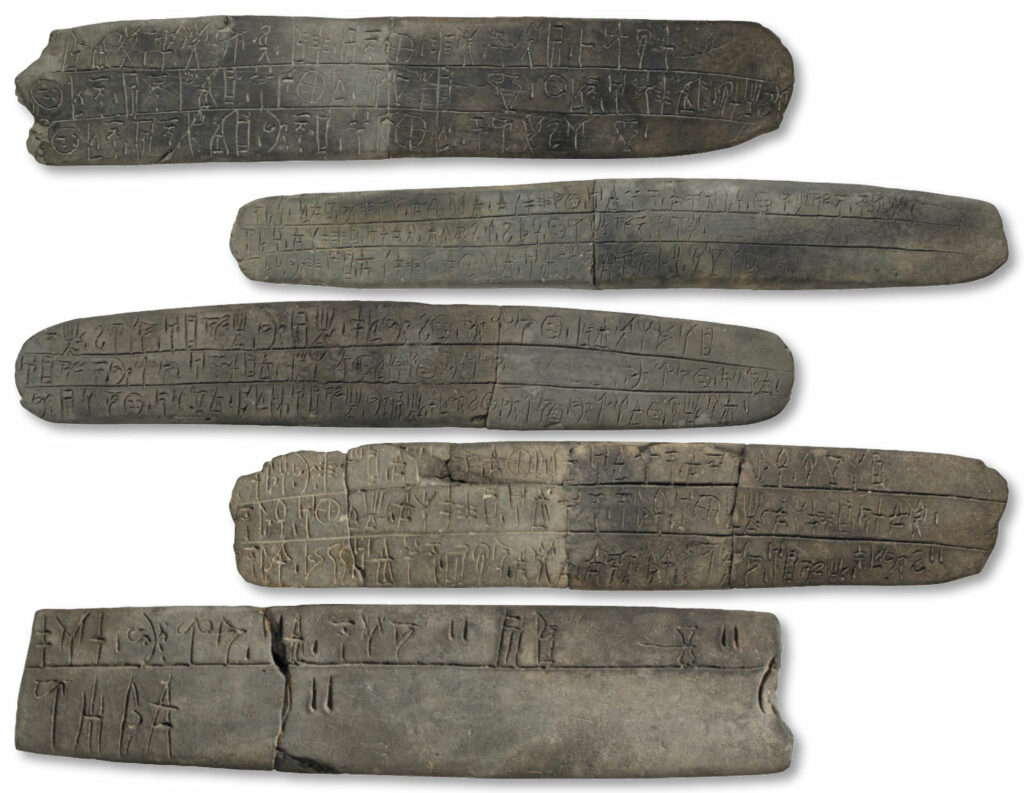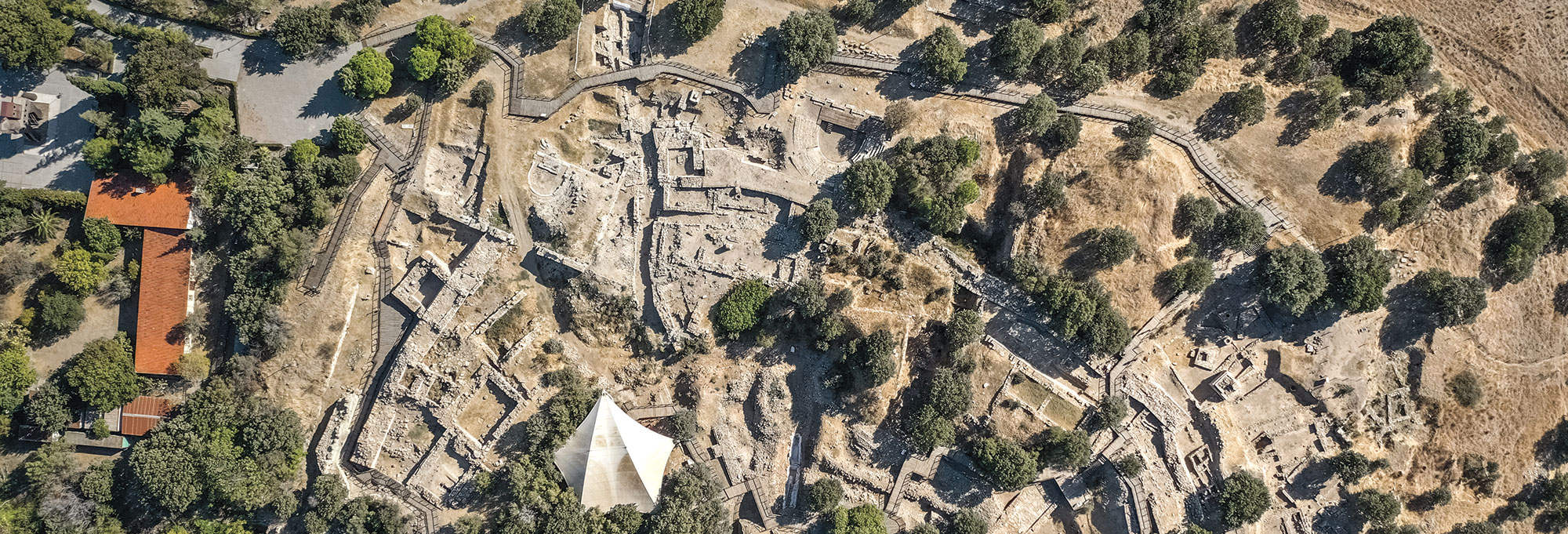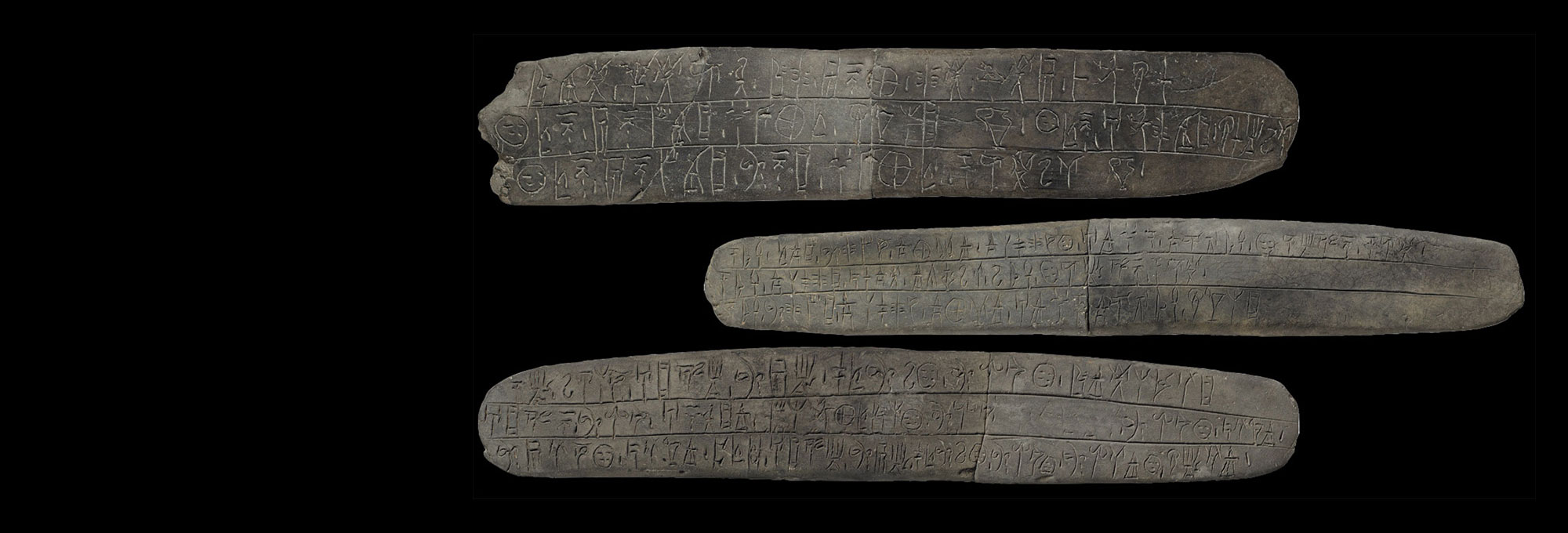
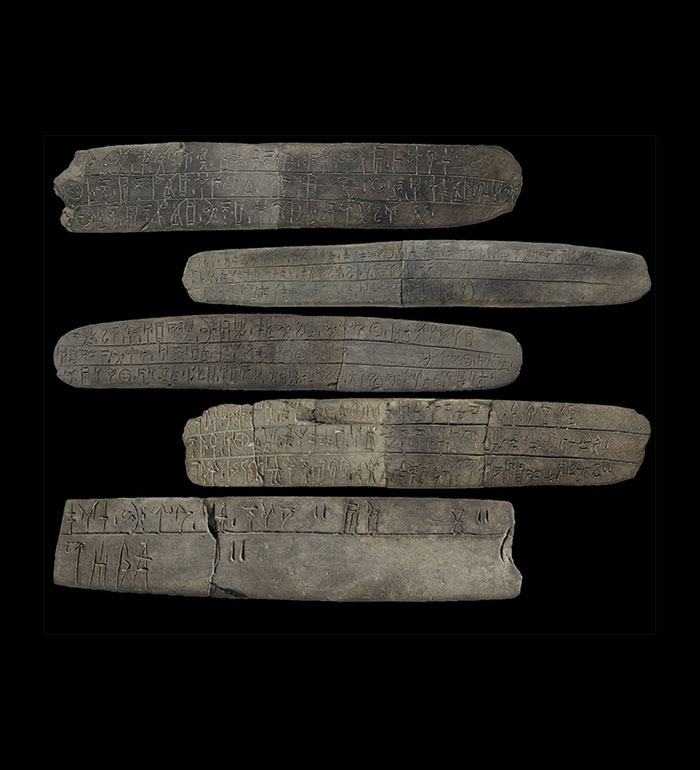
In book 3 of the Odyssey, the hero’s son Telemachus voyages to the kingdom of Pylos in southern mainland Greece to seek the counsel of its wise king Nestor. As his boat approaches the shore, Telemachus beholds a crowd of 4,500 people. He soon learns that the throng is participating in a sacrifice of 81 bulls to the sea god Poseidon. Scholars suggest references to such a ceremony are recorded in 13 of some 1,200 clay tablets unearthed at Pylos that are inscribed with Linear B, a Greek Bronze Age script. Carleton College classicist Jake Morton, working with archaeologists Nicholas Blackwell of Indiana University Bloomington and Kyle Mahoney of Swarthmore College, has concluded that these particular tablets contain an inventory of chairs, altars, knives, and enormous tables used during a single mass sacrifice. Previously, scholars believed that the huge tables and other objects listed on the tablets from Pylos were dining equipment used for banquets. But the team argues that sacrificial animals in Bronze Age Greece were often slaughtered on large tables such as those described in the tablets, and that the other inventoried equipment would also have been critical to carrying out a mass sacrifice.
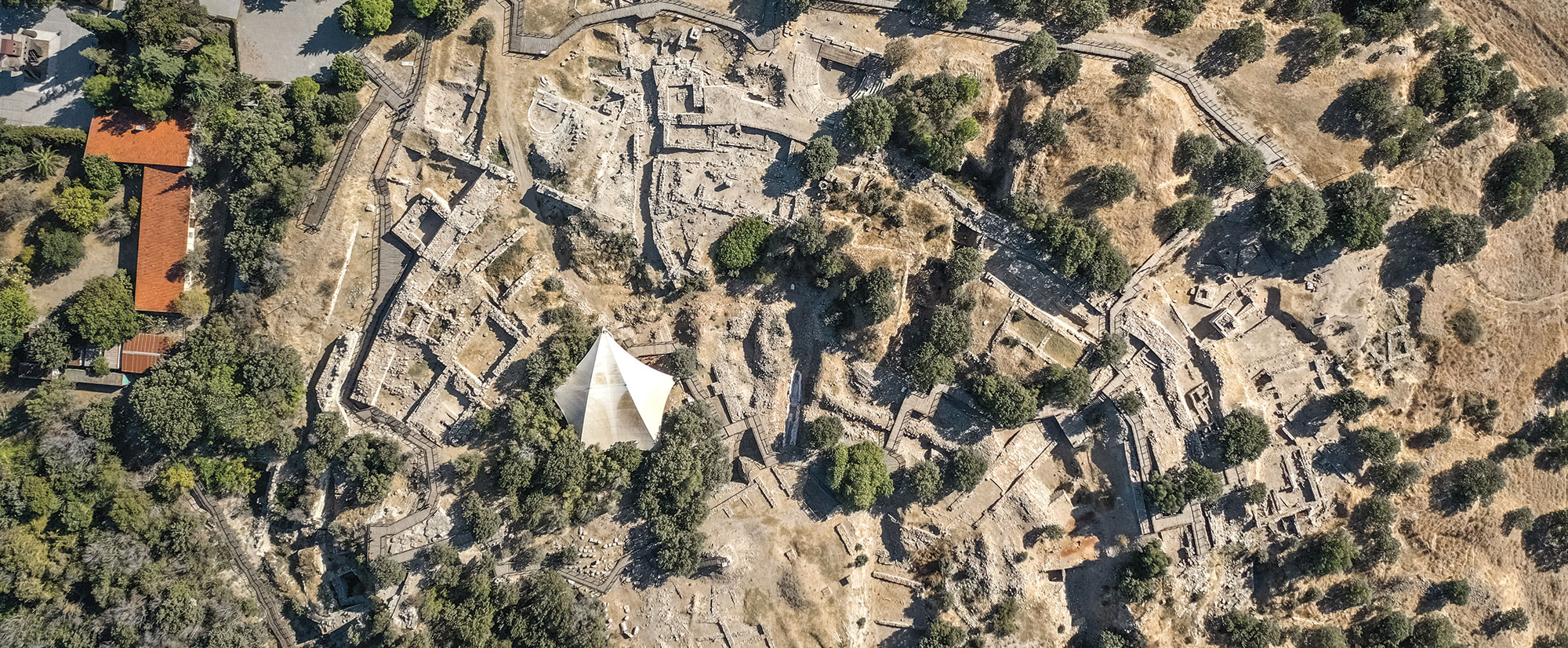
The tablets were discovered in an archive room of the palace at Pylos near a cache of burned cattle bones. Researchers found that the bones belonged to up to 19 animals that were around five years old when they died, an age repeatedly mentioned in the Homeric epics as ideal for sacrificing bulls. The tablets mention that the equipment was used to celebrate the political appointment, or possibly the funeral, of a man named Augewas. The team believes this Bronze Age official might have been the inspiration for the figure of King Augeas, whom Nestor mentions in the Iliad. “If we think about the origins of some of these heroes attested in Homer, many of them were probably real people who got turned into legend,” says Mahoney. “This sacrifice would have been such a momentous event, and it’s possible Augewas was such a famous character that he became attached to a number of different episodes in the epic cycles.” Perhaps the spectacle Telemachus witnesses on the beach at Pylos is a heightened memory of actual sacrifices once carried out in the city to honor figures such as Augewas.