The Homeric Hymns are a set of several dozen ancient Greek poems praising the deities of the Olympian pantheon, such as Apollo and Aphrodite. In antiquity, the works were generally attributed to Homer, though modern scholars believe they date to at least a century after the epics were compiled in the eighth century b.c. Nevertheless, the poems have clear similarities to the Homeric epics, including the same poetic meter and the use of stock phrases. They also provide backstories for the divinities who play key parts in shaping the course of events in the Iliad and the Odyssey.
Classicist Jenny Strauss Clay of the University of Virginia observes that, in the epics, the roles of the Greek gods are settled, whereas in the longer narrative hymns, the deities are still finding their place in the pantheon. For example, the “Hymn to Demeter” narrates how Demeter’s daughter, Persephone, becomes queen of the underworld and goddess of spring. After Persephone is abducted by Hades, Demeter, the goddess of agriculture, prevents all crops from growing until her daughter is allowed to return. Hades lets Persephone go but requires her to spend a third of each year as his wife in the underworld, initiating the seasonal cycle of growth, dormancy, and regrowth. At the end of the hymn, Demeter founds the Eleusinian Mysteries, a cult dedicated to her and Persephone that promises followers a better afterlife.
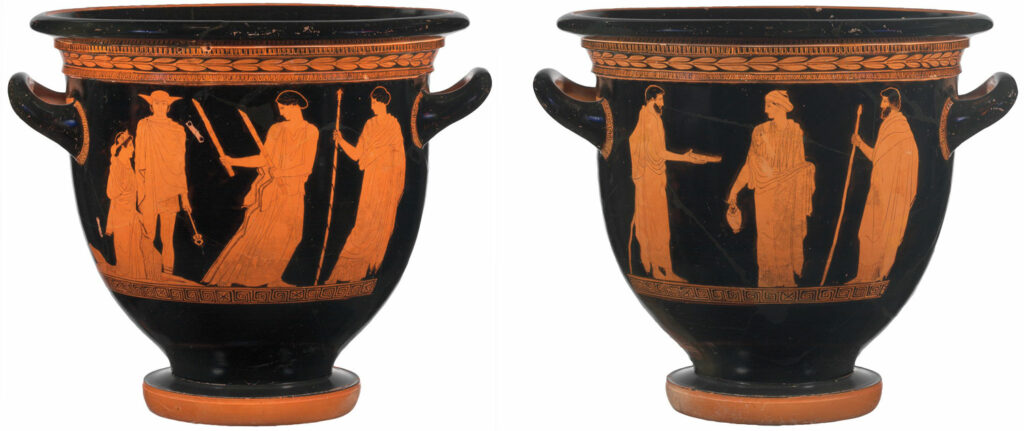
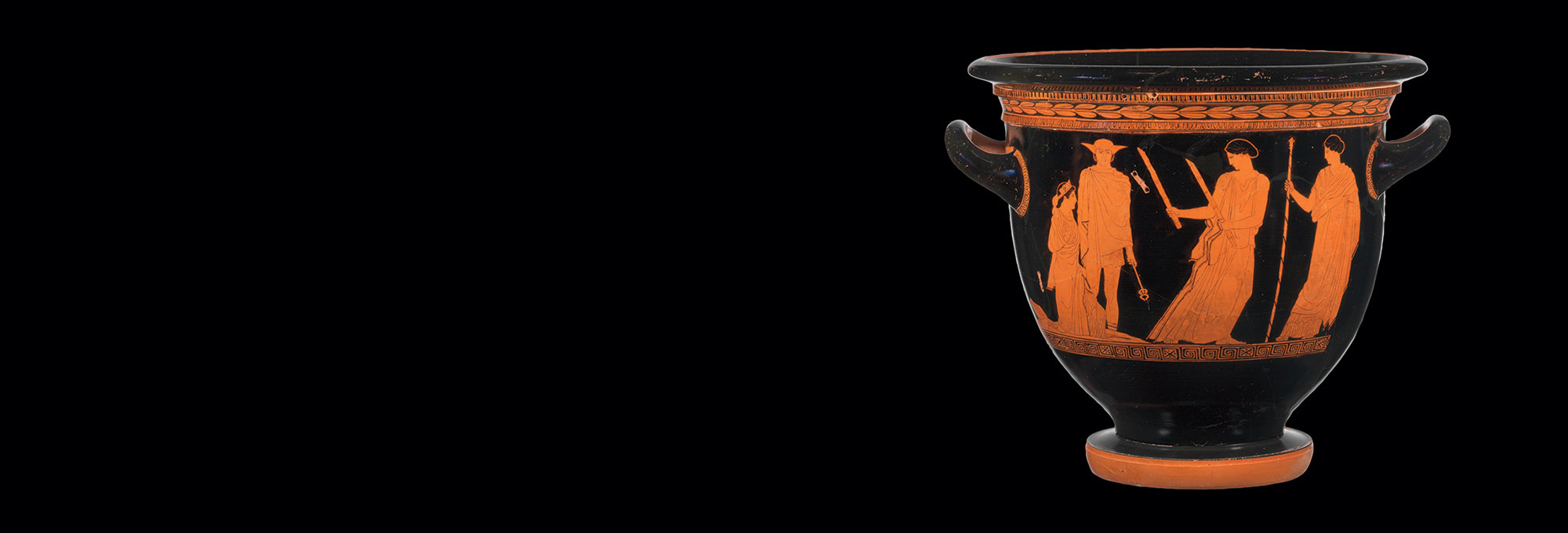
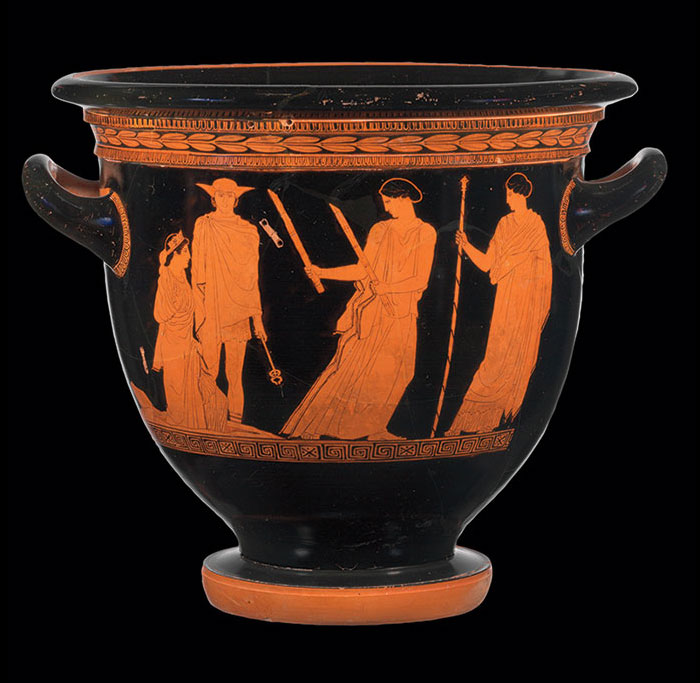
Clay points to a vase made in Athens dated to the mid-fifth century b.c. that illustrates the far-reaching consequences of these events. On one side, Persephone emerges from the ground while Demeter and another goddess, Hecate, look on, and the god Hermes stares at the viewer. On the other side, a woman standing between two men holds an oinochoe, or wine jug, poised to pour its contents toward the viewer. “The painter is representing a world-shaking, cosmic event,” says Clay. “Persephone returns from the underworld, and that means the land becomes fertile again and we have seasons. Hermes is looking at us, drawing us in, and making us feel that the return of Persephone has changed our lives. The three figures on the other side are pouring a libation to a divinity. They are the worshippers in Demeter’s cult—they are the ones who have gotten the message of this story.”