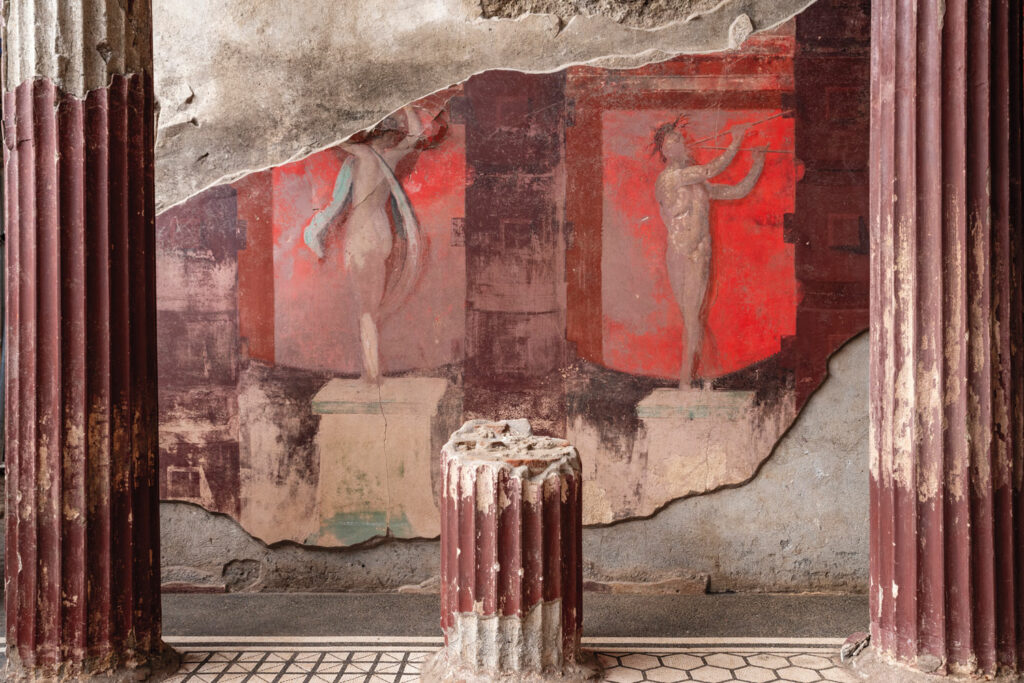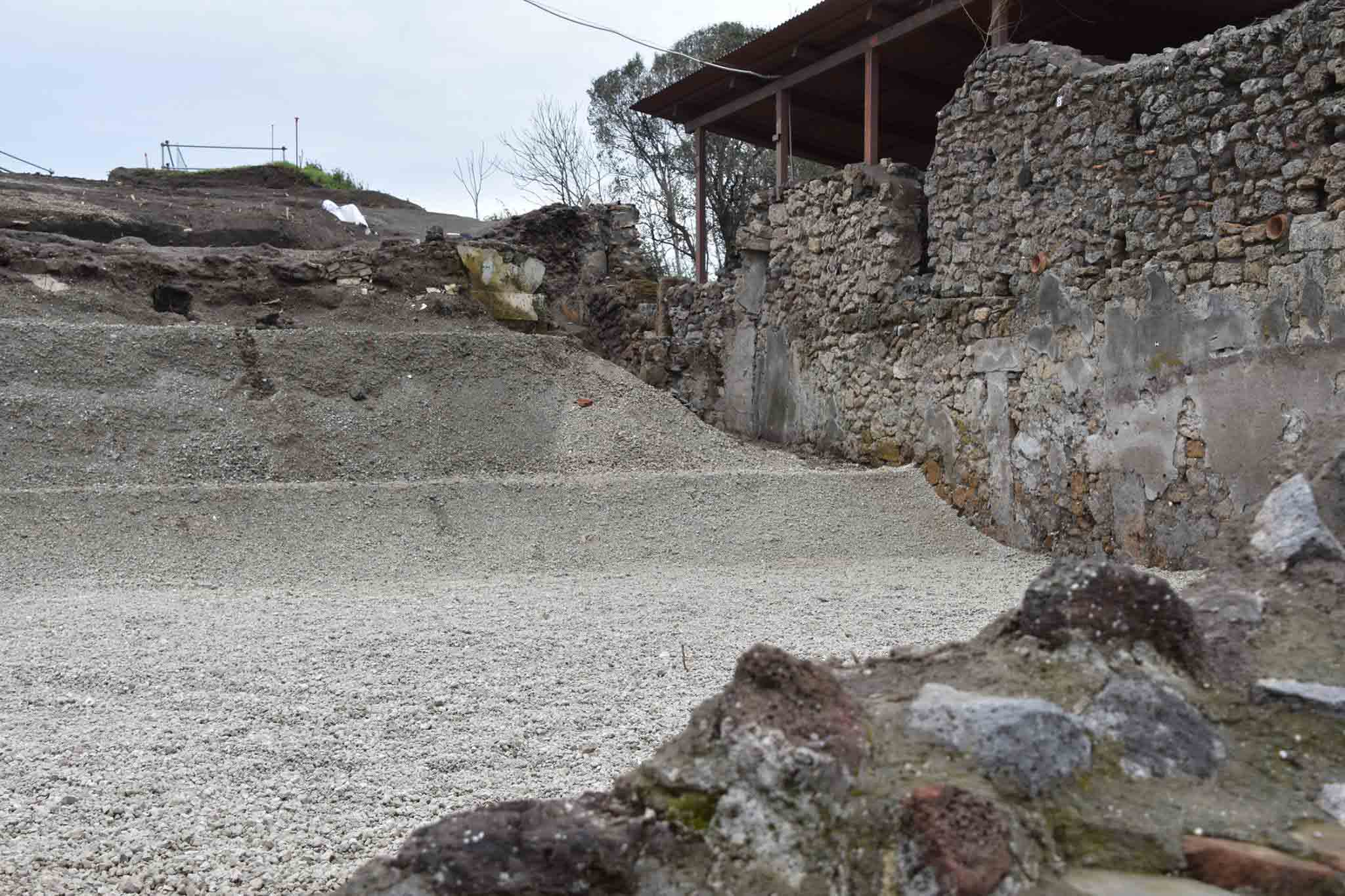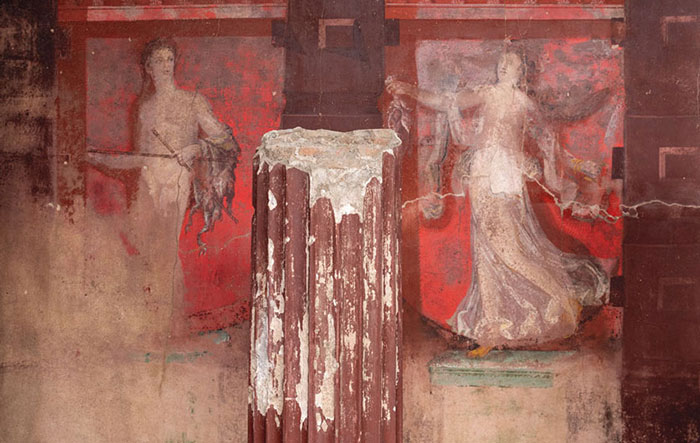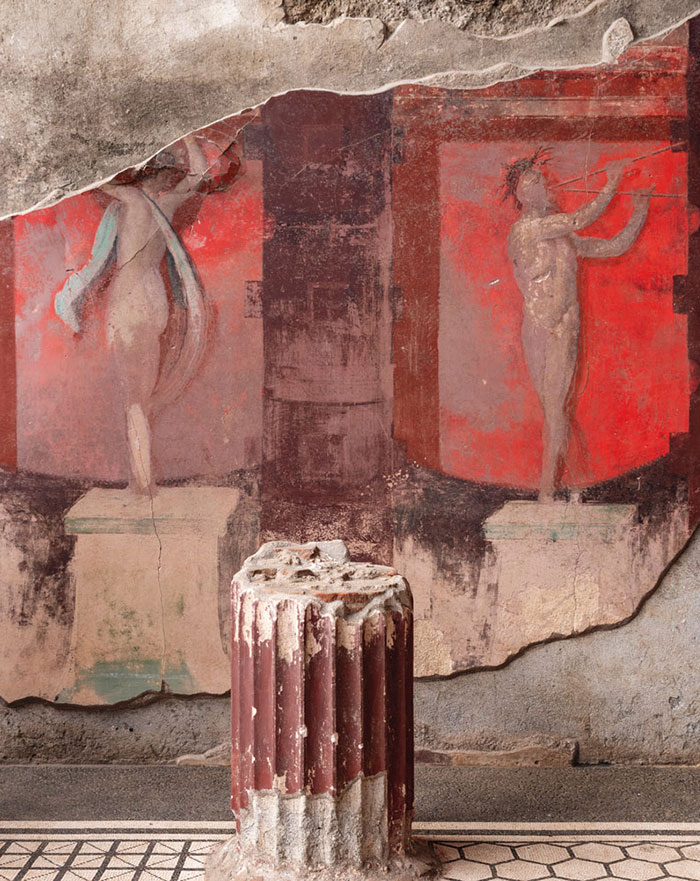
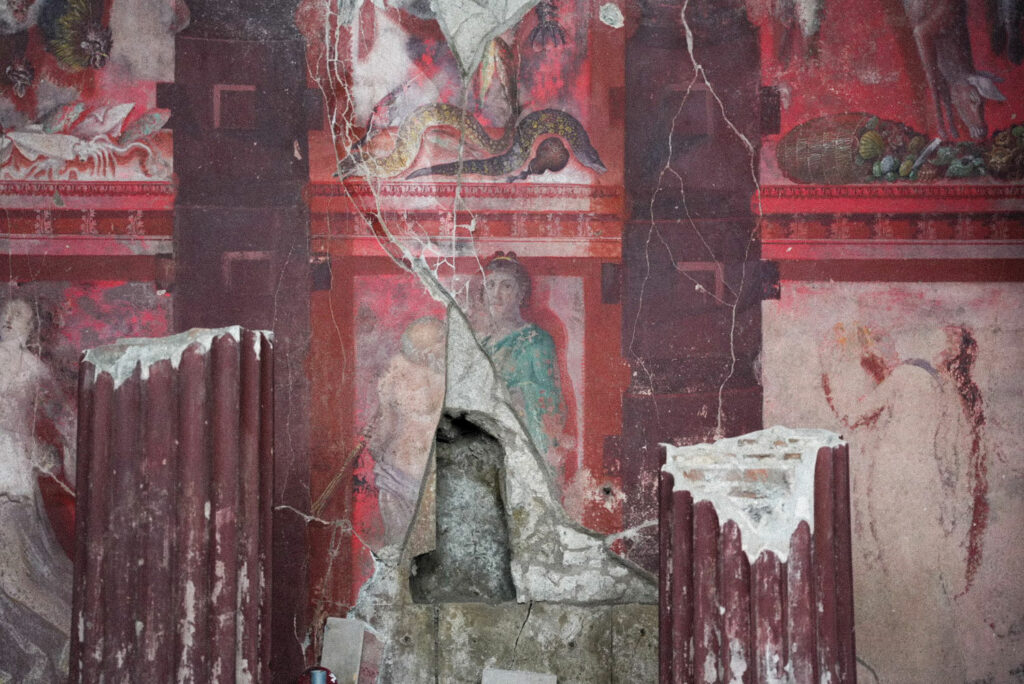
Inside a large house in a part of Pompeii called Regio IX, a team from the Archaeological Park of Pompeii unearthed a splendidly decorated dining room that eighteenth-century excavators had stumbled upon but largely ignored. Opening onto a garden, the vaulted room is lined with partially preserved columns painted a rich red that frame frescoed wall panels. Archaeologists were surprised to discover that the frescoes represent a rare example of a megalography—a group of paintings depicting nearly life-size figures, in this case part of the retinue of Dionysus, the god of wine. Researchers have dubbed the residence the House of the Thiasus, after the term for a Dionysian procession, and have dated the frescoes to between 40 and 30 b.c. on the basis of their style.
Among the revelers, who are perched atop painted statue bases, are satyrs playing double flutes and pouring libations of wine. There are also dancing women called maenads induced by Dionysus into an ecstatic state. In the center of the back wall, a woman is being led by a male attendant of the god to be initiated into his mystery cult. Women are also shown hunting, a theme that archaeologist Molly Swetnam-Burland of William & Mary says is underscored by depictions of both living and dead animals in painted friezes running above the main panels. “When we see real women depicted in Roman houses, they’re typically shown in more proper social roles,” she says. “I find it interesting that in the House of the Thiasus, we have a celebration of the wildness of women without showing the counterpoint—what they’re supposed to be like when they’re buttoned up in their daily lives.”