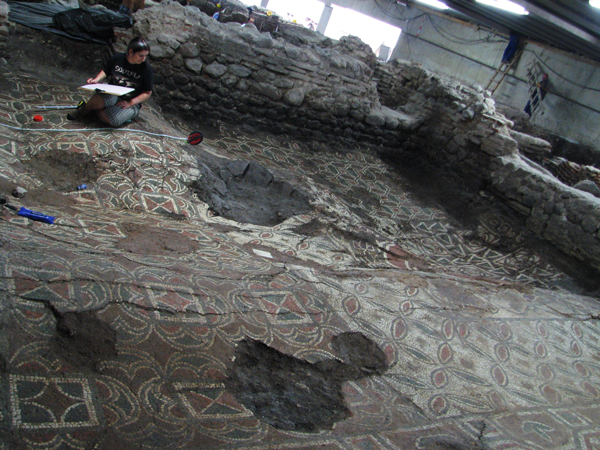
Emergency excavation work in the Bulgarian capital of Sofia, carried out for just over a year before the construction of a new metro line, has uncovered a large section of the center of the ancient Roman city of Ulpia Serdica. The discoveries include streets, a public bath with pools for cold and heated water, sewage canals, and spacious residences, many of which are decorated with colorful mosaics. Ulpia Serdica was strategically sited by the Romans in the first century A.D. halfway between the Roman cities of Singidunum (modern-day Belgrade) and Constantinople, and thus between Europe and Asia.
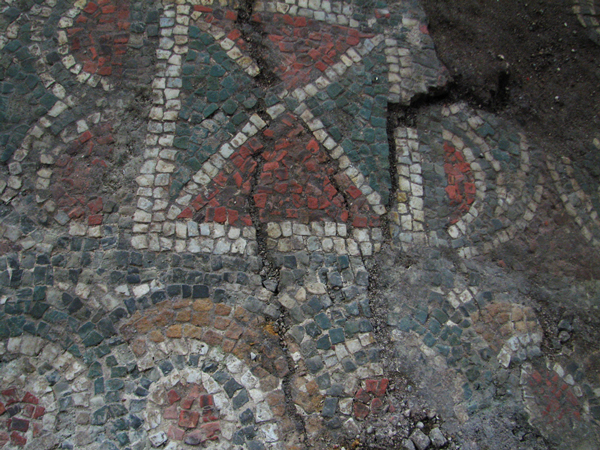
Most of the city's remains date from the fourth to sixth centuries A.D., when it became an important Mosaics from Where East Met West Christian center and the bishop's seat after the conversion of the Roman Empire to Christianity. "We expected to find ruins from Ulpia Serdica, but not in such a good state of preservation and with the walls of buildings so intact," says excavation director Mario Ivanov. "It shows us where the streets and the important buildings are," Ivanov says. "It's helping us make a map of the ancient city."
Since the discovery of a particularly large six-room residence with a mosaic floor this past summer, the Bulgarian media has been filled with speculation about whether the Emperor Constantine (reigned A.D. 306-337) stayed there when he was in town. Several of the emperor's edicts were issued from the city, leading some to believe he spent time there. But there is no evidence to support this claim.
Digging has now been completed, and the remains will be preserved and structures supported and restored. The site is expected to open to visitors by the end of 2013.