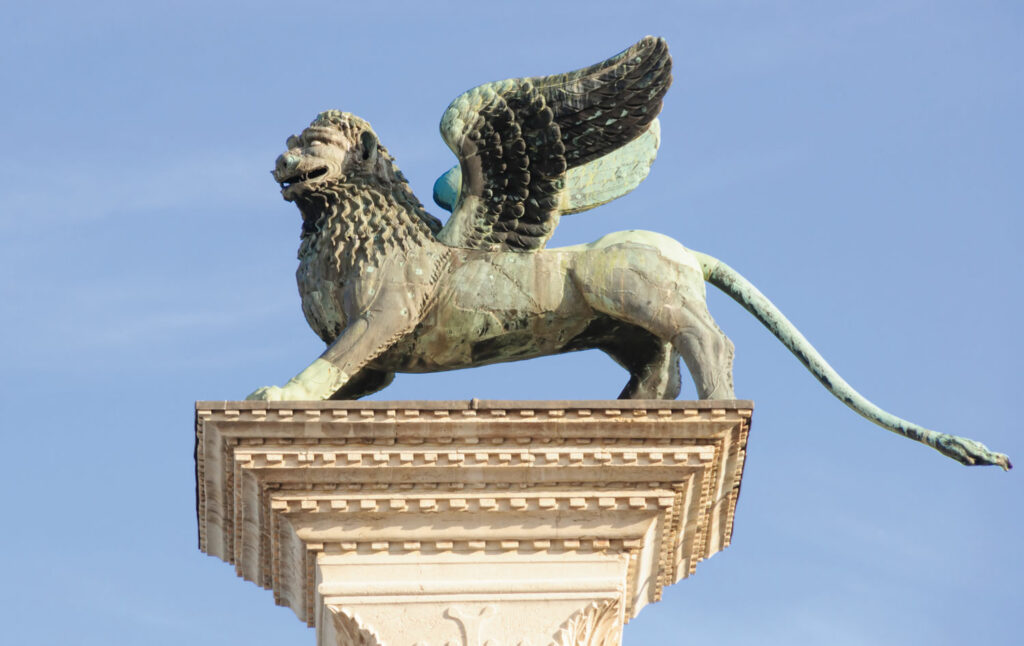

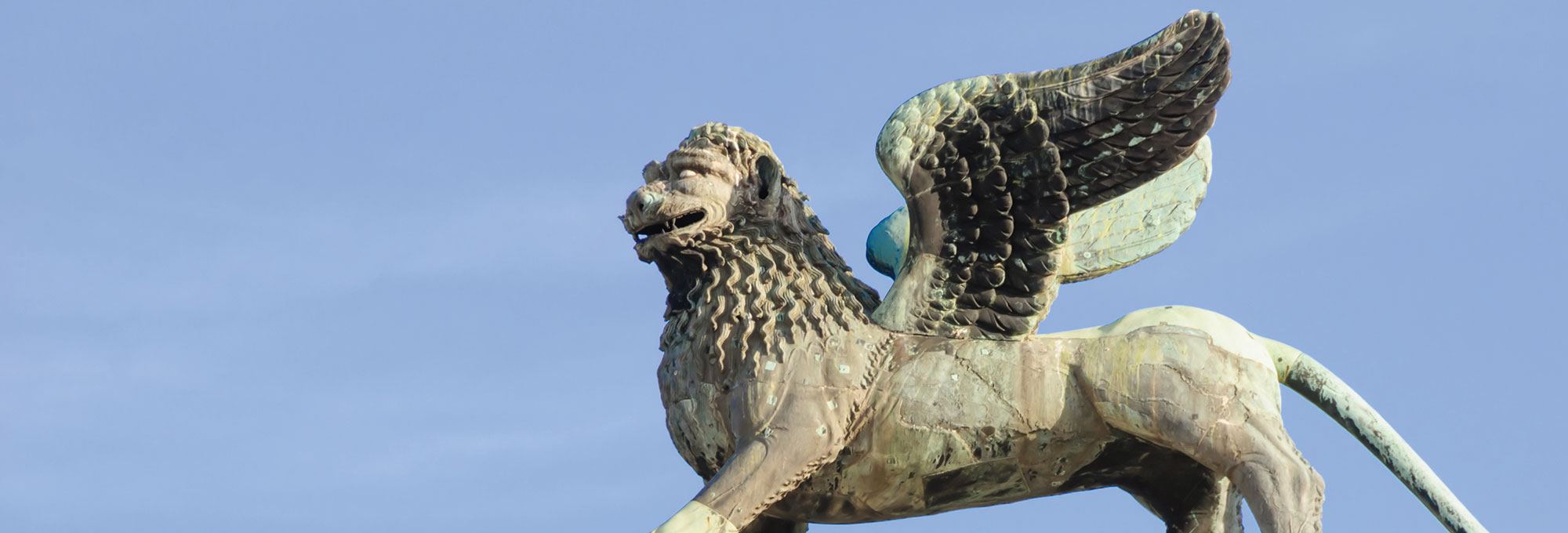
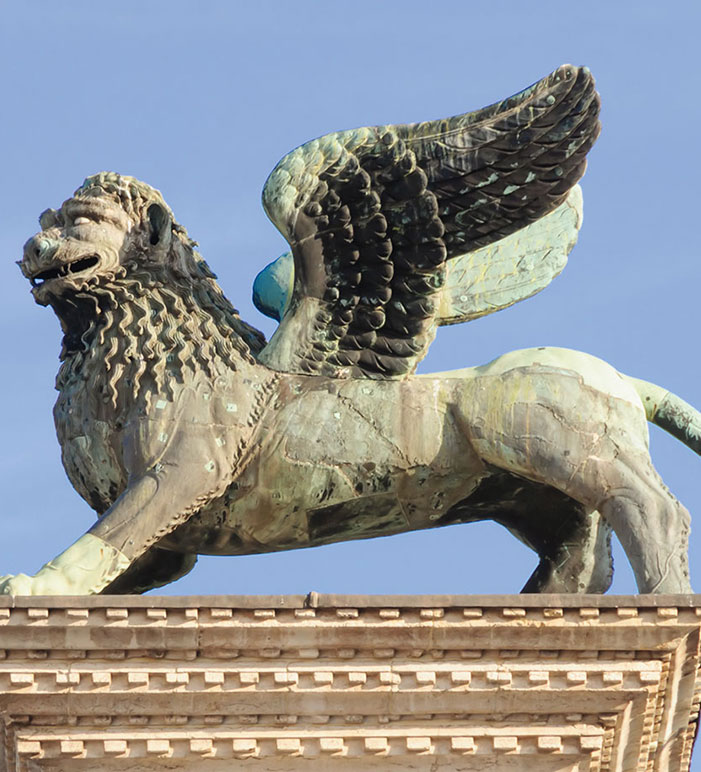
Images of lions abound in Venice. The city’s iconic symbol can be seen emblazoned on brightly colored flags, decorating the Doge’s Palace, and even adorning water taxi stops. The most prominent example, though, is the huge bronze winged lion perched high atop a column in St. Mark’s Square. This legendary artwork, sometimes referred to as the Lion of Venice, or simply the Lion, has presided over the city’s bustling main piazza for at least seven centuries. It not only represents power and strength, but is also deeply associated with Mark the Evangelist, Venice’s patron saint. Until recently, though, very little has been known about who made the sculpture and where it came from. “It’s really amazing that there aren’t any written documents about its origin,” says archaeologist Massimo Vidale of the University of Padua. It turns out that the Lion’s backstory involves a journey that may have begun half a world away and centuries earlier than its first known written mention in 1293—and that its origins may have been shrouded in secrecy.