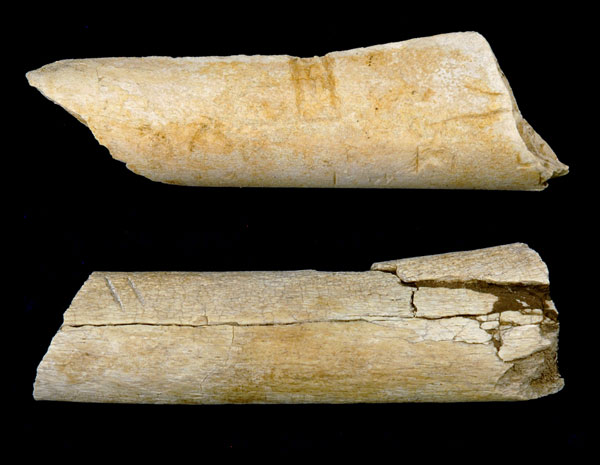
Paleoanthropologists in Ethiopia may have discovered the earliest evidence of stone-tool use. Some 3.3-million-year old bones found near the site of Dikika have marks that look like they were made by tool-using hominins. If this evidence is legitimate, it could mean that one of the tool-using behaviors—a hallmark of humans—dates back to our relatively small-brained ancestors the Australopithecines. Prior to this discovery, the earliest evidence of tool use had come from the site of Gona, which was occupied by Homo habilis 2.6 million years ago.
Curtis Marean of Arizona State University examined the bones (left), which include a femur with gashes running across the bone. "I could tell within minutes that this was stone-tool-inflicted," he says. A rib bone also appeared to have been pounded open with a stone wielded like a hammer. But when the study was published in Nature this August, the findings were greeted with suspicion.
Manuel Domínguez-Rodrigo of Complutense University in Madrid is an expert in the processes that affect bones as they fossilize. He says he has seen similar marks from Ethiopian bones as old as 6 million years, but believes those marks could have been caused by animals trampling the bones or by crocodile bites. Stanley Ambrose of the University of Illinois at Urbana-Champaign calls the report "premature" and says that excavation of the bone-bearing sediments should be conducted to see if there is other evidence of butchery.
Confirmation may come from other material first. "People have fragments from that age that they think are stone-tool modified, but they have just been a little hesitant to step out and make the case," says Marean.