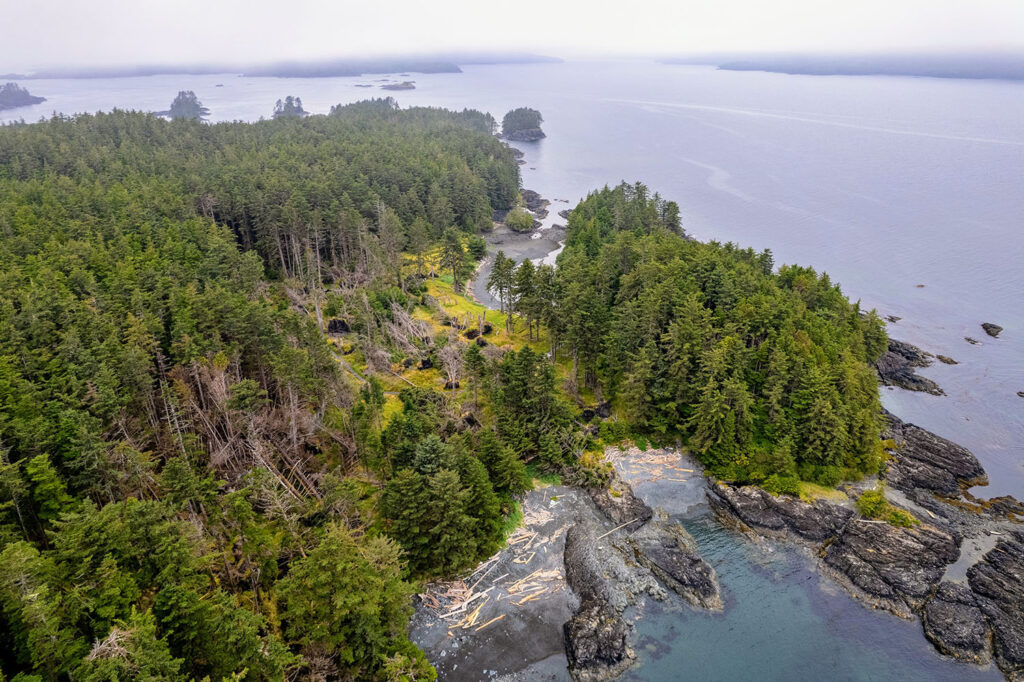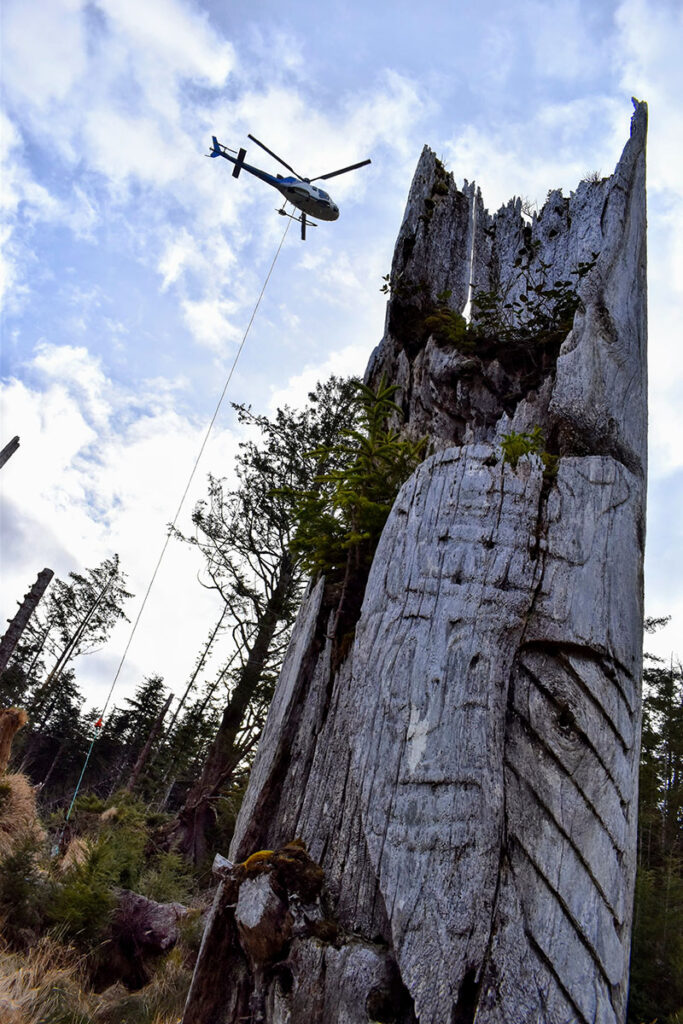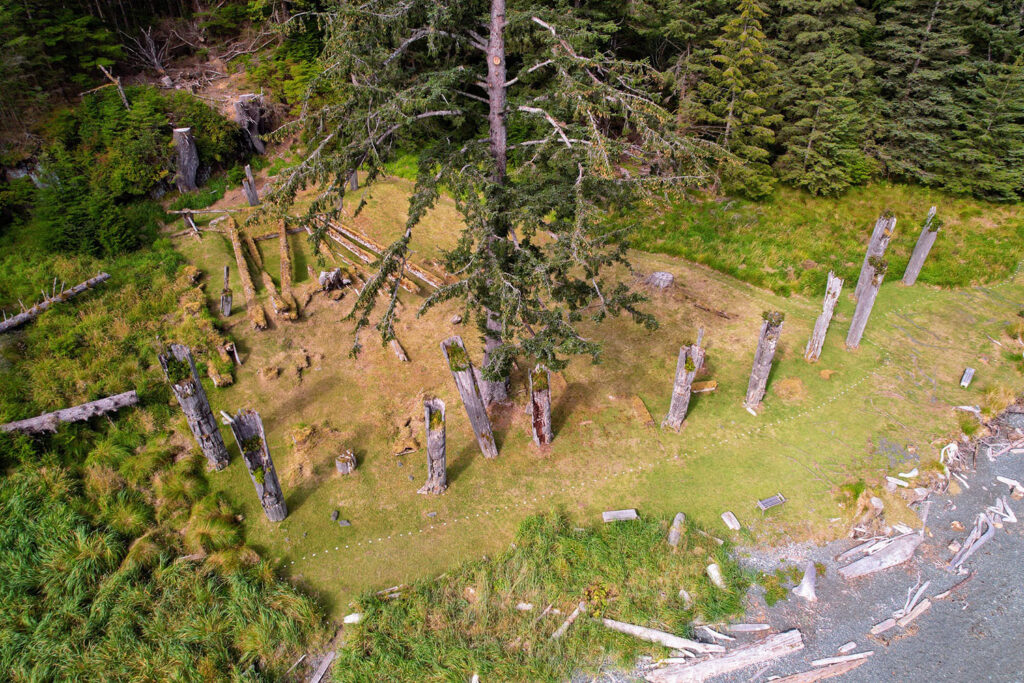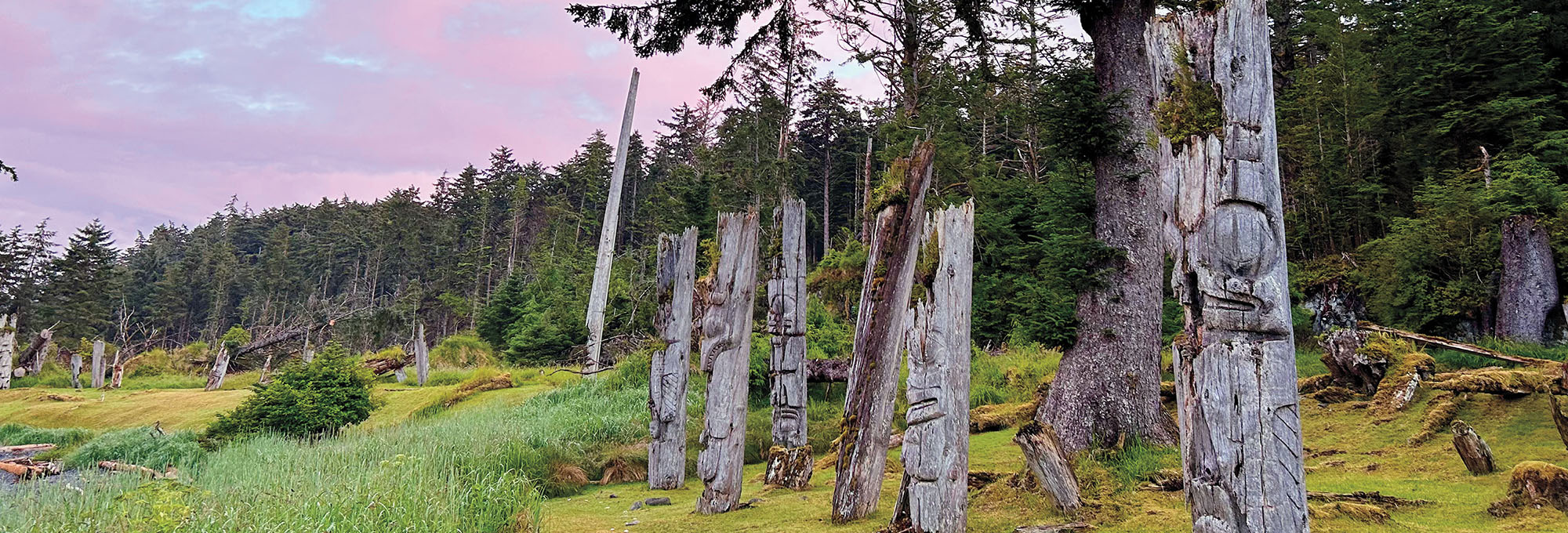
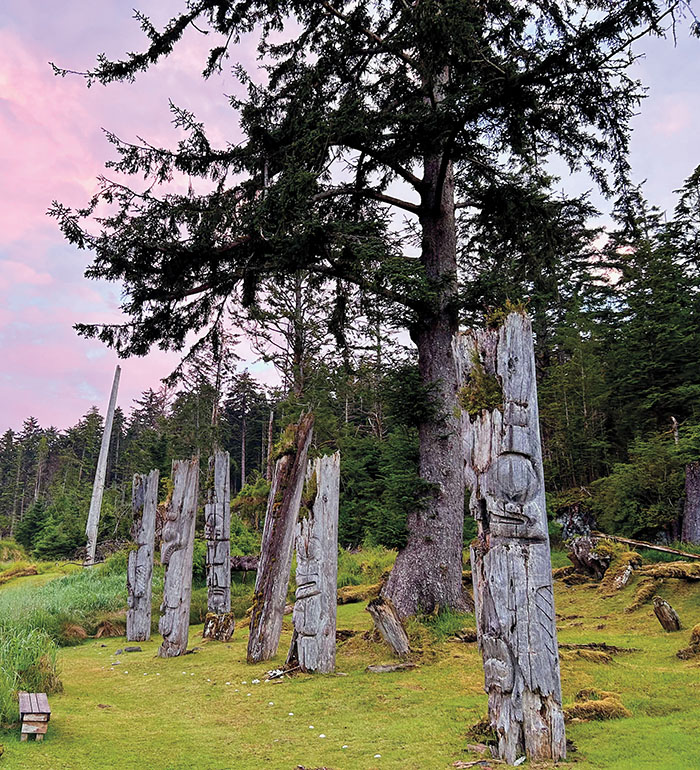

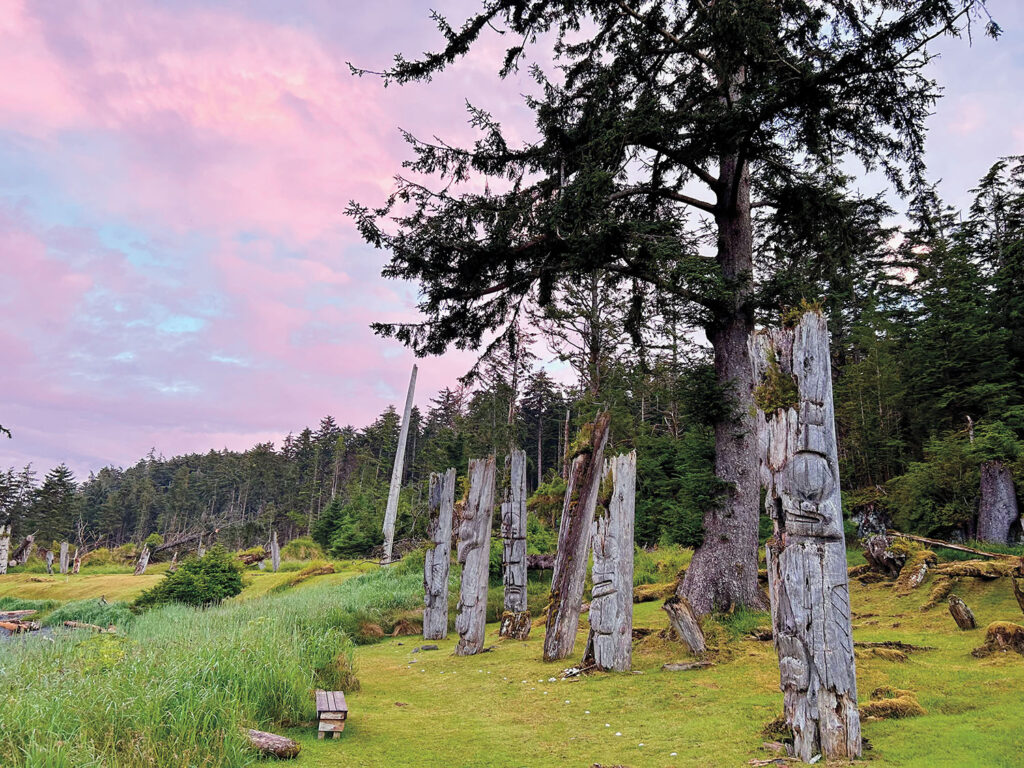
In the winter of 2018, hurricane-force winds thrashed the island village of SG̱ang Gwaay Llnagaay, ripping more than 140 mature trees from the ground. A historic hub of the Haida people in the Haida Gwaii archipelago, the village had been uninhabited since the 1880s. Despite the storm’s ferocity, the village’s elaborately carved cedar mortuary and memorial poles, some more than 50 feet tall, largely stood fast. But urgent restoration work was needed, and the Haida Nation decided to incorporate archaeology into the project. “We have a saying in Haida: ‘Gina ‘waadlux̱an gud ad kwaagid,’” says Gulx̱a t’a’a gaagii.ngang Nadine Wilson, conservation and restoration project manager of Living Landscapes of SG̱ang Gwaay. “It means ‘everything depends on everything else.’ We knew that we couldn’t restore the ecological side without taking care of the cultural integrity.”
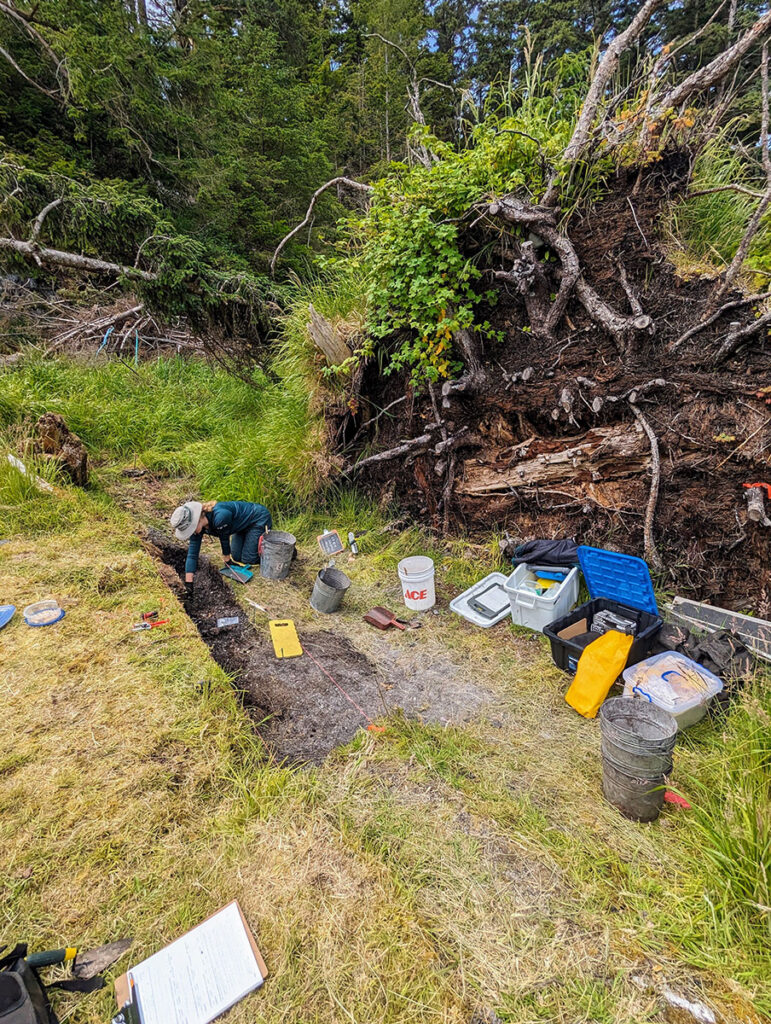
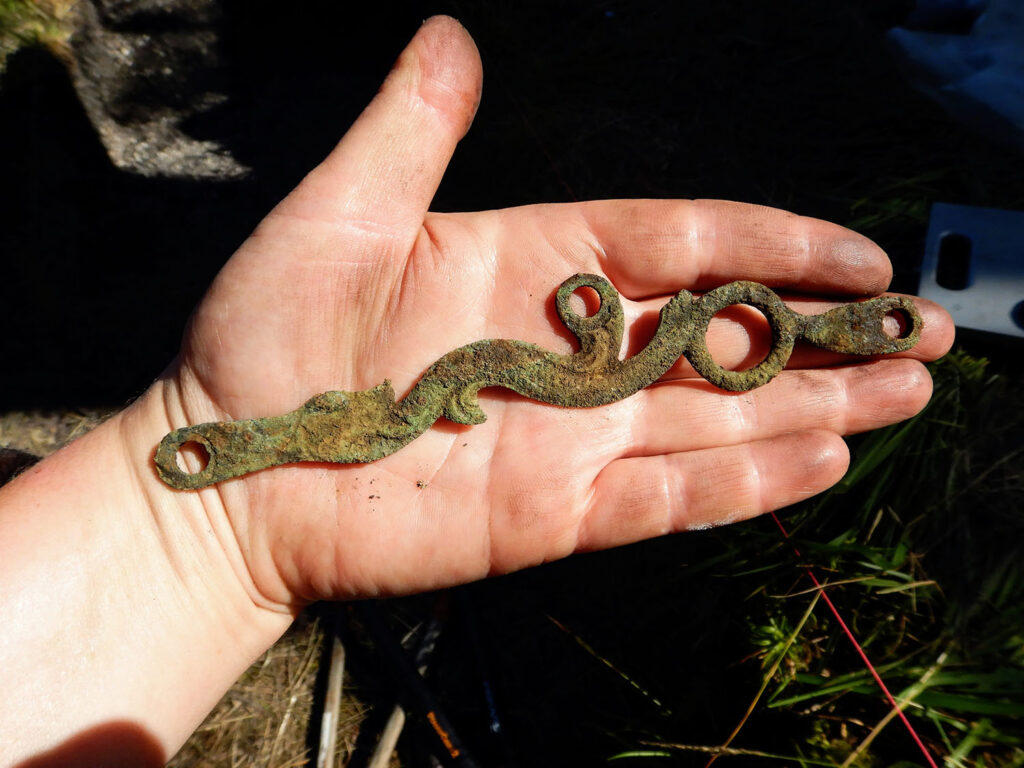
People began living on the island of SG̱ang Gwaay at least 10,000 years ago, and what remains of the village of SG̱ang Gwaay Llnagaay dates mostly to the eighteenth and nineteenth centuries. Today, the site is part of Gwaii Haanas, a protected national park reserve, national marine conservation area reserve, and Haida heritage site. The village site contains centuries-old traces of canoe launches, orchards, a potato patch, and 19 cedar-plank longhouses. There are also more than 30 ceremonial poles carved with figures such as bears and orcas. The 2018 storm uprooted two enormous spruces that were growing through the floorboards of a prominent longhouse called the People Wish to Be There House. Archaeologists excavated one tree’s upturned root ball and the hole it left in the ground, recovering a trove of objects from the period when the house was inhabited. “It was very cool to be able to do household archaeology on this scale,” says Parks Canada archaeologist Lara McFadden-Baltutis. “It’s an intimate look at lives that we don’t typically get. What did people create, and how? What was important to them in terms of fashion?”
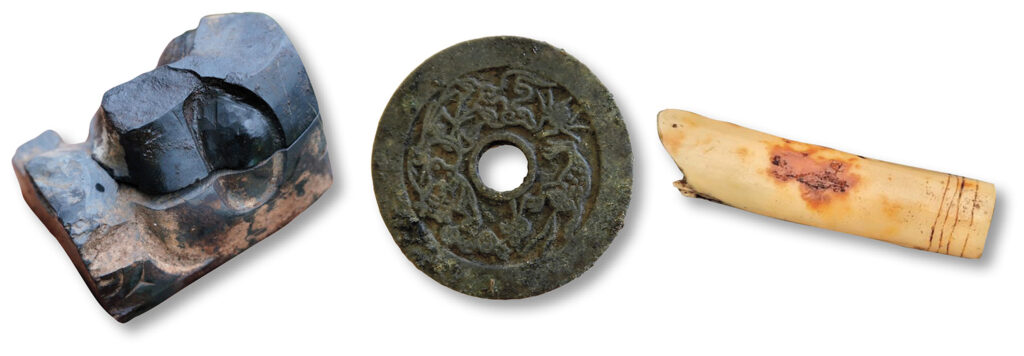
This building would have housed multiple families—30 to 50 people in all—and would have been used for ceremonies, food preparation, meals, weaving, carving, and more. Archaeologists found bird-bone drinking straws, a carved block of argillite stone, perforated thimbles, glass trade beads, amulets and coins from Asia, as well as pigments and pigment-grinding stones. Analysis of a dog coprolite revealed that the canine had eaten as well as humans had, delighting in halibut and mussels. The recent discovery of a bone st’iiga, a disk worn in the lower lip by high-status Haida women, particularly excited the team. “Knowing that the st’iiga once belonged to a matriarch of that village, to a ‘boss lady,’ I found it very emotional,” says Wilson.
THE SITE
At SG̱ang Gwaay Llnagaay, visitors can marvel at the ceremonial poles and houses and see examples of plants that were once grown by the Haida. Seeds cached in the People Wish to Be There House had likely become entangled in the spruces’ root balls. When the trees fell, some of the seeds began to grow into elderberry and huckleberry bushes. Visitors can also follow the village’s ancestral walkways. “People who spend a lot of time at the village say they can hear kids laughing and imagine dogs running,” says archaeologist Jenny Cohen. “It still feels alive.”
WHILE YOU’RE THERE
The nearest airport to SG̱ang Gwaay is at Sandspit, a two-hour flight from Vancouver. From Sandspit, visitors can travel to SG̱ang Gwaay and other points in Gwaii Haanas on their own by motorboat or sea kayak. Guided tours are also available. The archipelago boasts a gorgeous landscape of Pacific waters and rainforest, the domain of humpback whales and sea lions, as well as birds such as puffins and murrelets. Be sure not to miss the ancient and contemporary artisanship on display at Saahlinda Naay, the Haida Gwaii Museum.
Slideshow: Saving an Ancestral Canadian Village
On an archipelago off the Pacific Coast of British Columbia called Haida Gwaii, the Haida people and their ancestors have lived amid lush Pacific rainforest for more than 10,000 years. The Haida Gwaii village of SG̱ang Gwaay Llnagaay was evacuated in the 1880s after epidemics claimed many of its inhabitants. But the remnants of cedar-plank longhouses, orchards, canoe launches, and ceremonial poles for the remembrance of the dead—some more than 50 feet tall—survive as a testament to a hub of Haida artisanship, worship, and trade in the eighteenth and nineteenth centuries. After a violent storm ripped through SG̱ang Gwaay Llnagaay in 2018, the Haida decided to incorporate archaeology into the restoration and conservation work of the village and its environs.