ADELAIDE, AUSTRALIA—People migrated from modern-day Turkey and the Near East to colonize Europe during the agricultural revolution of the Mesolithic period some 7,500 years ago, according to a new study of mitochondrial DNA taken from skeletal remains discovered in Germany and Italy. But their population was later replaced by another group. “What is intriguing is that the genetic markers of this first pan-European culture, which was clearly very successful, were then suddenly replaced around 4,500 years ago, and we don’t know why,” said Alan Cooper of the Australian Center for Ancient DNA.

Early European Farmers Mysteriously Disappeared
News April 23, 2013
Recommended Articles
Off the Grid January/February 2026
Prophetstown, Indiana
Letter from France January/February 2026
Neolithic Cultural Revolution
How farmers came together to build Europe’s most grandiose funerary monuments some 7,000 years ago
Features January/February 2026
The Cost of Doing Business
Piecing together the Roman empire’s longest known inscription—a peculiarly precise inventory of prices
Features January/February 2026
The Birds of Amarna
An Egyptian princess seeks sanctuary in her private palace
-
Features March/April 2013
Pirates of the Original Panama Canal
Searching for the remains of Captain Henry Morgan's raid on Panama City
(Courtesy Captain Morgan Rum Co.) -
Features March/April 2013
A Soldier's Story
The battle that changed European history, told through the lens of a young man’s remains
(Courtesy Dominique Bosquet) -
Letter From Cambodia March/April 2013
The Battle Over Preah Vihear
A territorial dispute involving a 1,100-year-old Khmer temple on the Thai-Cambodian border turns violent
(Masuru Goto) -
Artifacts March/April 2013
Pottery Cooking Balls
Scientific analyses and experimental ARCHAEOLOGY determine that mysterious, 1,000-year-old balls of clay found at Yucatán site were used in cooking
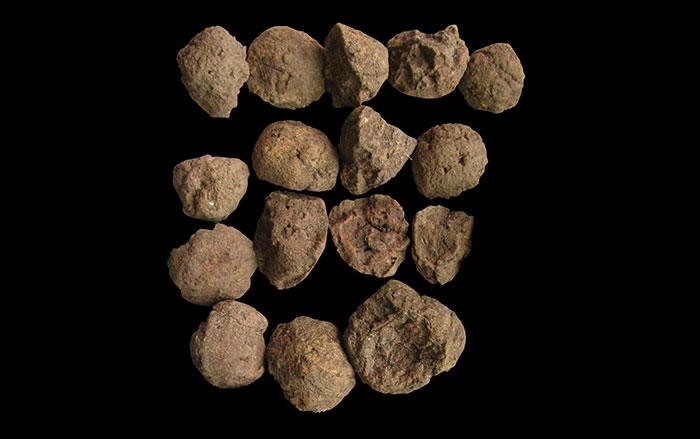
(Courtesy Bolonchen Regional Archaeological Project)