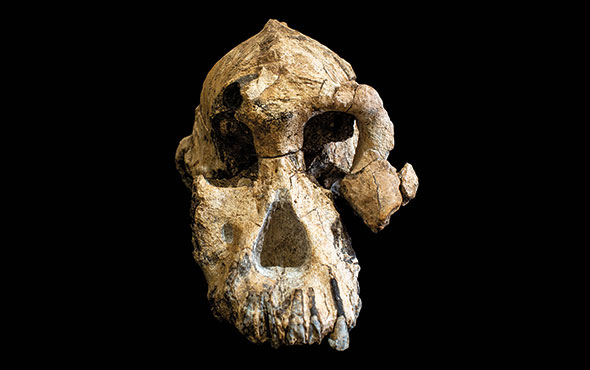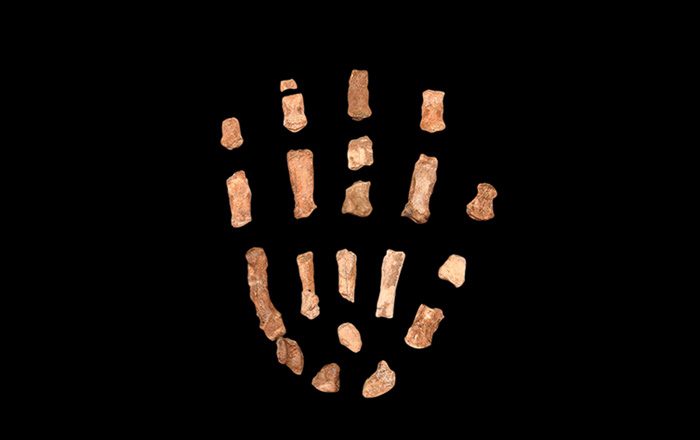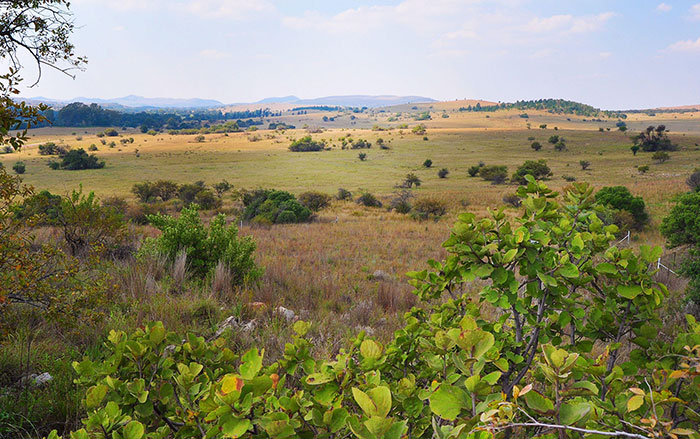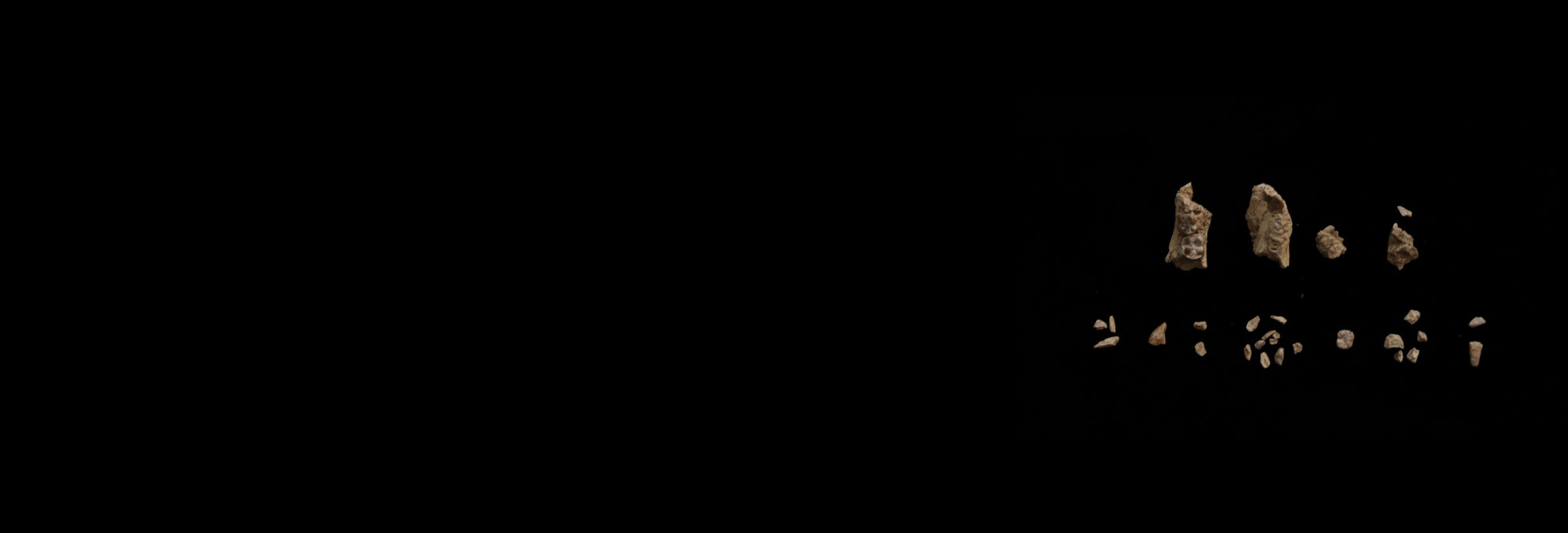
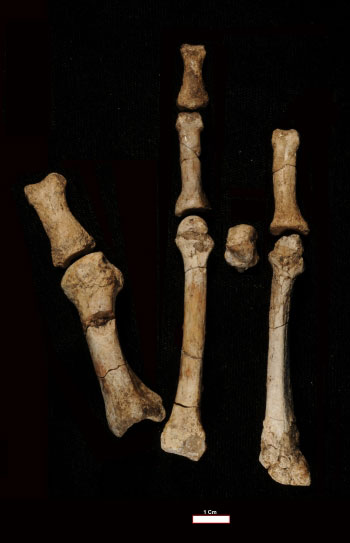
TEMPE, ARIZONA—According to a statement released by Arizona State University, a second hominin lived in Ethiopia’s Afar Rift with Australopithecus afarensis some 3.4 million years ago. Paleoanthropologist Yohannes Haile-Selassie and his colleagues found eight hominin foot bones at the Woranso-Mille site in 2009. The researchers could see that the fossils, dubbed the Burtele foot, were different from the bones of an A. afarensis foot, but crania, jaws, and teeth were needed before a species could be identified. Additional fossils and teeth have now been found, however, and the foot has been attributed to a new species, Australopithecus deyiremeda. Thus, this hominin species lived at the same time and in the same region as A. afarensis. Chemical analysis of its teeth shows that A. deyiremeda consumed mostly foods from trees and shrubs, similar to the diet of earlier hominins. In contrast, A. afarensis ate foods from trees and shrubs, in addition to tropical grasses and sedges. A. deyiremeda retained an opposable big toe, which was useful for climbing, although it could also have walked on two legs, probably pushing off with its second toe. “This is a time when we see species like A. afarensis whose members were fully bipedal with an adducted big toe,” Haile-Selassie said. “What that means is that bipedality—walking on two legs—in these early human ancestors came in various forms,” he concluded. Read the original scholarly article about this research in Nature. To read about evidence of another species that coexisted with A. afarensis, go to "Cosmic Rays and Australopithecines."