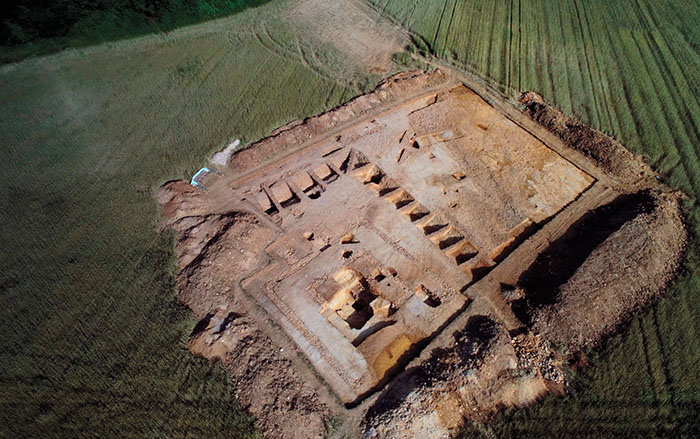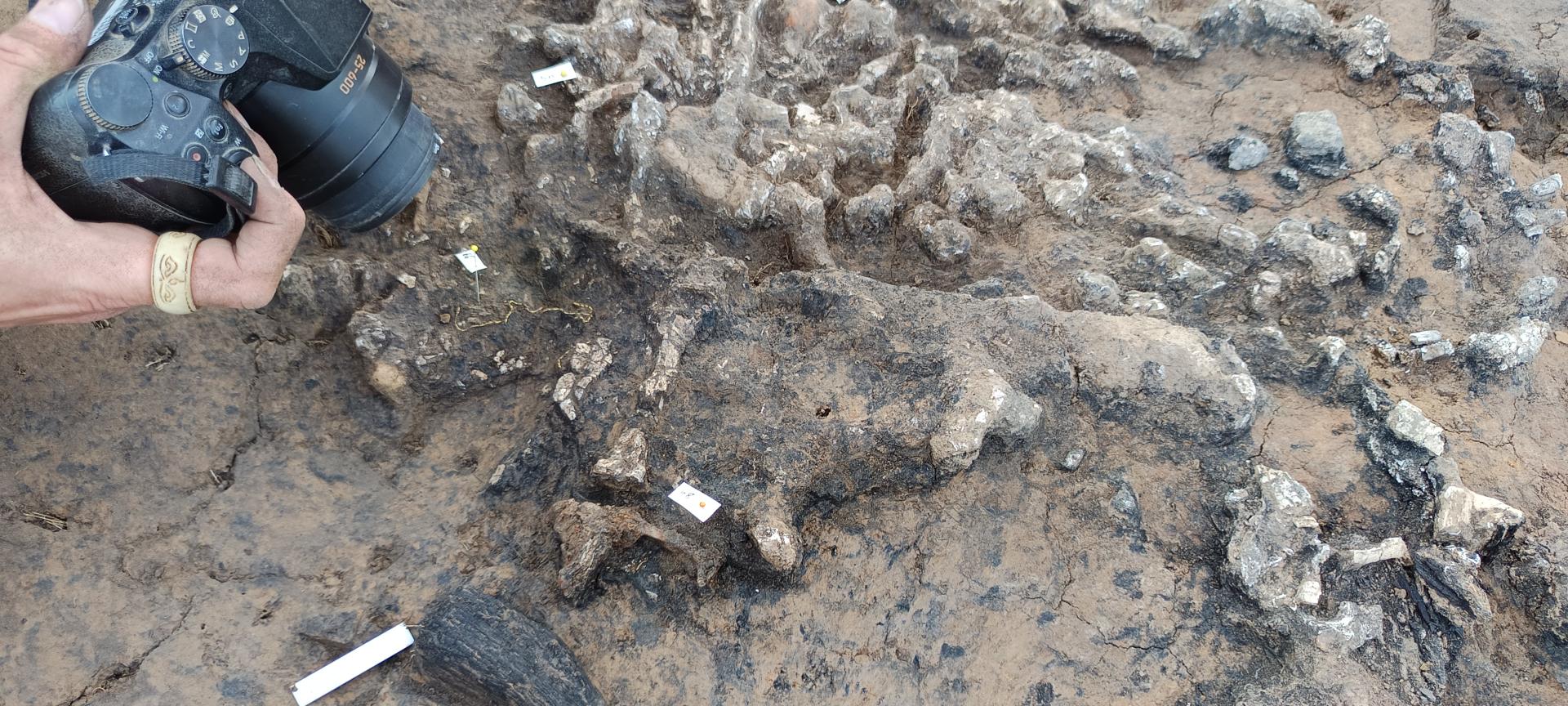
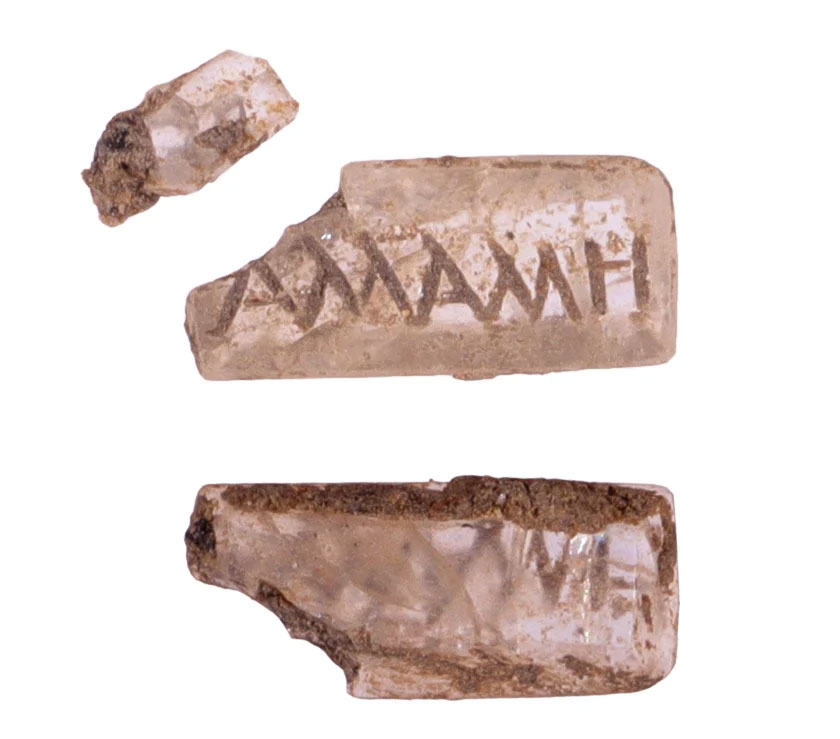
LAMONZIE-SAINT-MARTIN, FRANCE—According to a Live Science report, coins, gold jewelry, and an inscribed ring have been recovered from a grave in southwestern France by researchers led by Frédéric Prodéo of the French National Institute of Preventive Archaeological Research. The person’s remains had been cremated over a rectangular grave, known as a bustum, and immediately buried sometime between the first and third centuries A.D. A ceramic beaker and a clear glass vial were found in one corner of the grave. Silver and bronze coins and gold sheets that may have decorated a purse or case; a set of lozenge-shaped crystals that may have adorned a piece of leather; and a corroded metal item that may have been a horse bit were also found in other areas of the burial. Gold objects from the grave include a bulla, a type of amulet worn by Roman male children until they turned 16, and a gold ring that was damaged in the fire and may have been marked with the name of the deceased. To read about another Gallo-Roman necropolis in southwestern France, go to "Shackled for Eternity."