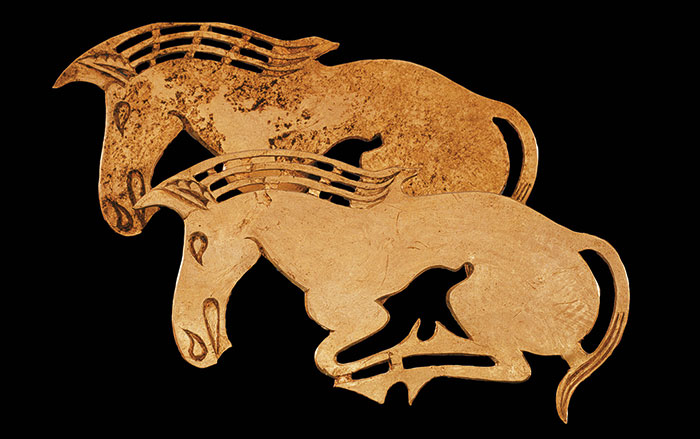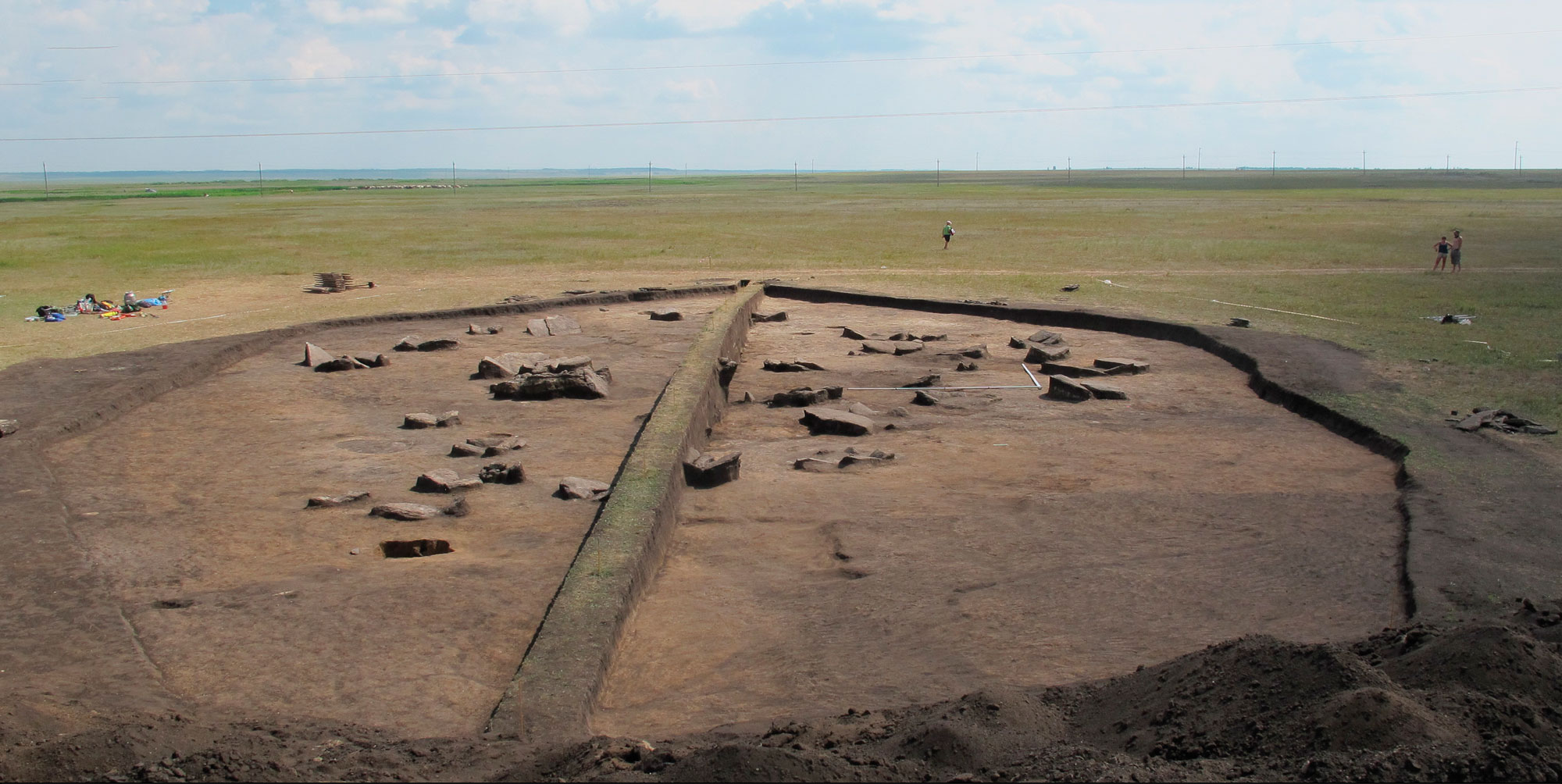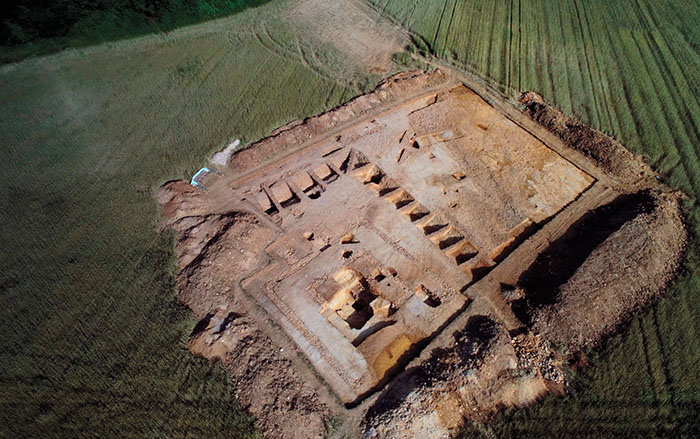
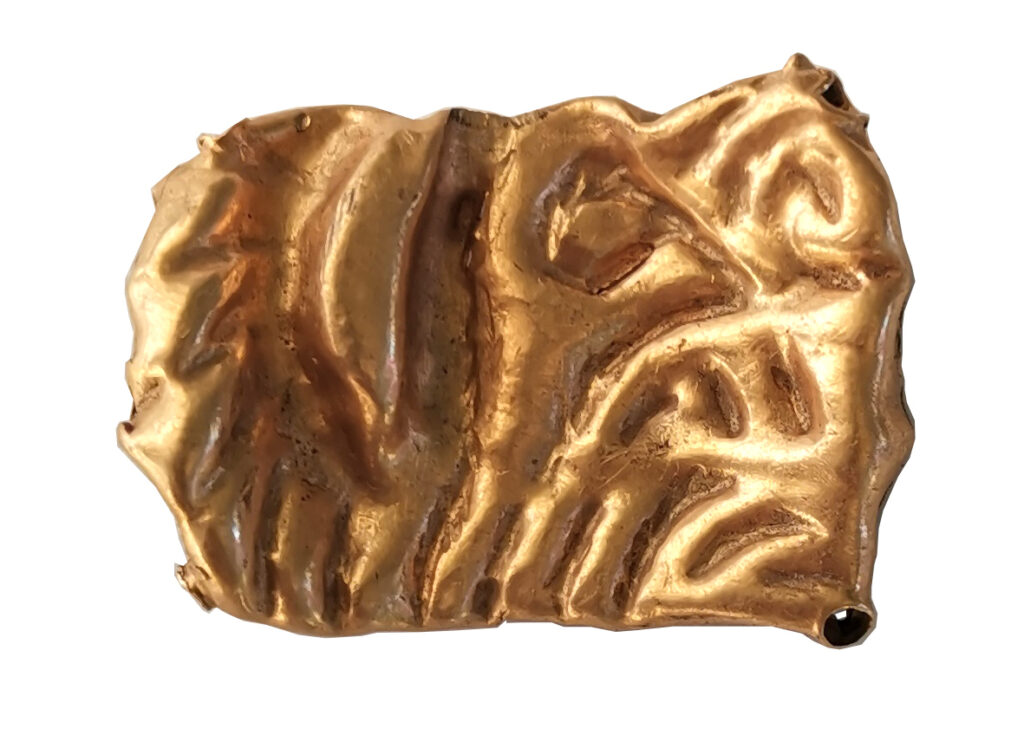
ORENBURG, RUSSIA—According to the Greek Reporter, the Russian Academy of Sciences (RAS) announced the discovery of a remarkable and unparalleled sacrificial complex in the Orenburg region of the Southern Urals. A team from the RAS’ Institute of Archaeology unearthed the site while working at the Vysokaya Mogila–Studenikin Mar necropolis, which contains a group of monumental kurgans built by the nomadic Flippovka Culture. The find was not made within one of the burial mounds however, but in an interspace area near one of the tallest kurgans. The archaeologists uncovered a sacrificial pit containing hundreds of objects, including decorative bridle ornaments, bronze pendants, and bronze plate-style horse frontlets. The most extraordinary artifact, though, was a small gold plaque depicting a tiger’s head and foreleg, which is a rare artistic motif in the region and suggests long-distance influence from Eastern cultural traditions. Researchers believe that the site dates to the fourth or third century b.c. They posit that it not only served as an important burial ground for nomadic tribes, but also as a ceremonial center where religious offering rituals were performed and where horses held profound symbolic meaning. To read about the relationships between people buried in a necropolis south of the Urals some 3,800 years ago, go to "Ancient DNA Revolution: A Bronze Age Family Tree."