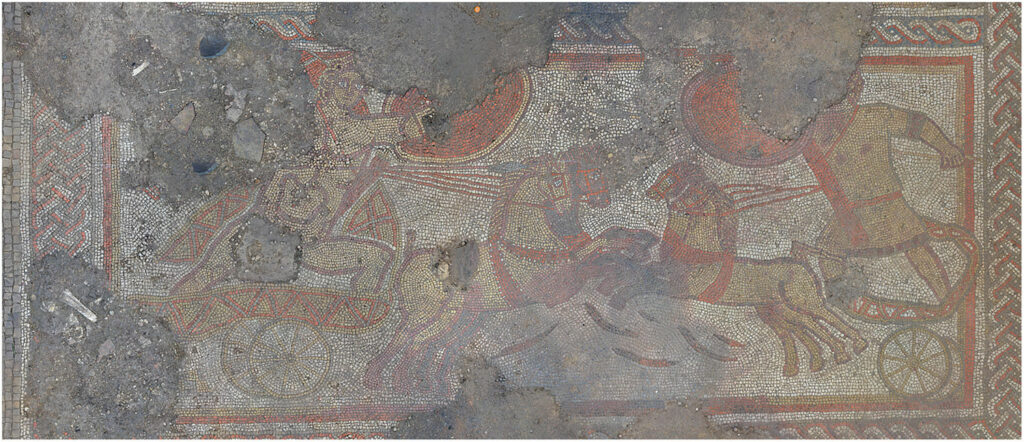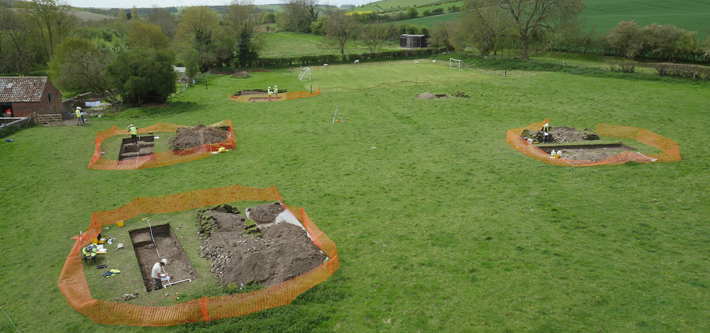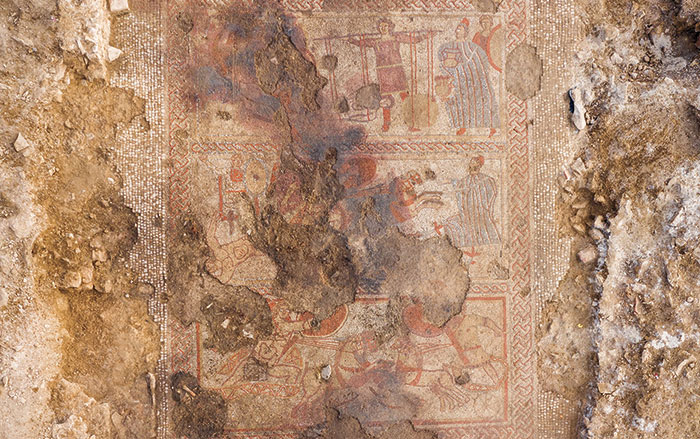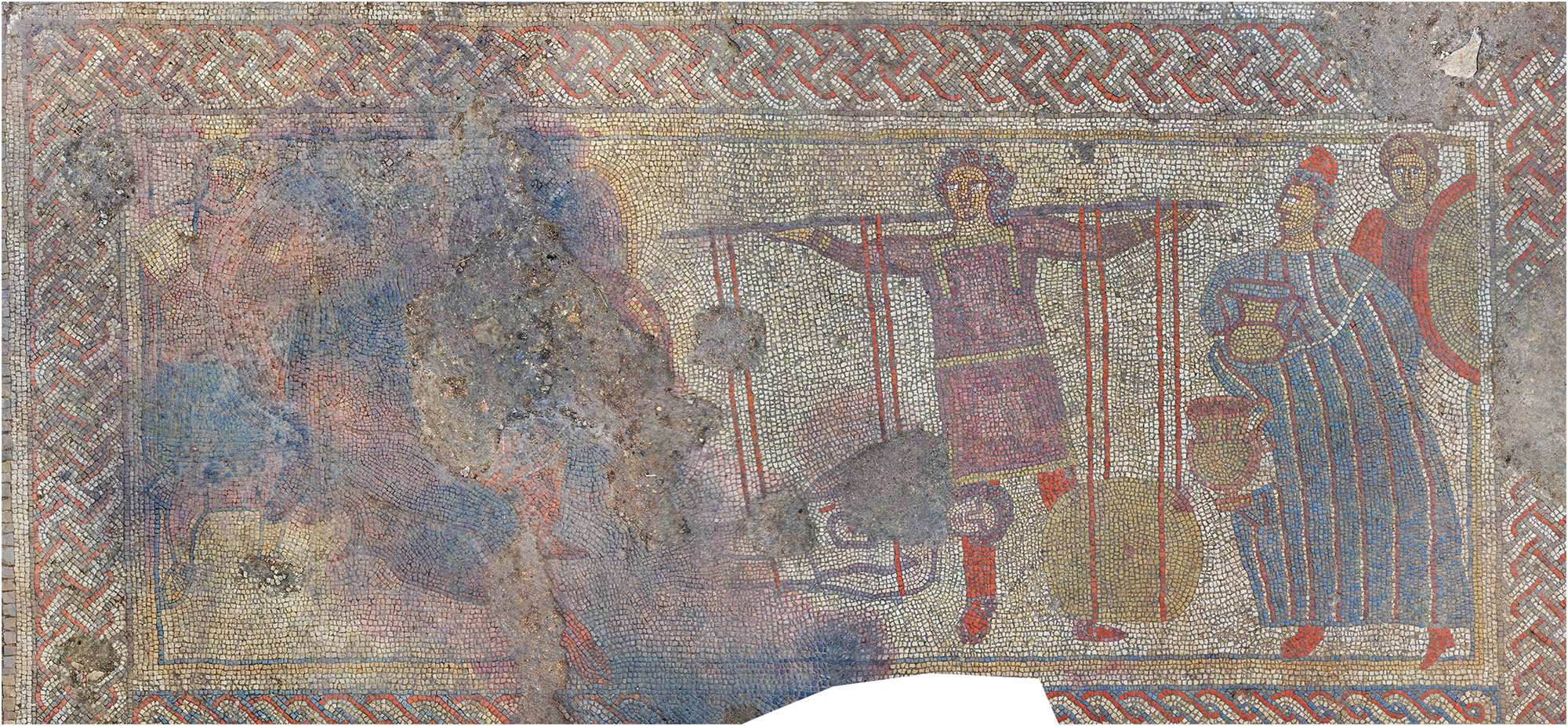
KETTON, ENGLAND—In 2020, a farmer in England's Rutland county notified authorities about the possibility that there was a Roman villa located on his property. A subsequent investigation carried out by the University of Leicester Archaeological Services not only confirmed the landowner’s suspicions, but revealed an extraordinary fourth-century a.d. mosaic that has been celebrated as one of the most significant Roman mosaics ever discovered in the United Kingdom. Now known as the Ketton Mosaic, the decorative artwork features three scenes from the Trojan War: the duel between Hector and Achilles, the dragging of Hector’s body, and the ransom of Hector’s body by King Priam. Experts immediately assumed that these vignettes were based on Homer’s Iliad, the most famous literary work about the mythological Trojan War. According to a statement released by the University of Leicester, however, new analysis suggests that this assumption is incorrect. The scenes include certain details that are not consistent with Homer’s telling of the tale. For example, in the mosaic, Hector and Achilles do battle from chariots, while in the Iliad they fight on foot. Instead, experts believe that the mosaic narrative scenes are taken from an alternative version of the Trojan War—a lost tragic play by Aeschylus called Phrygians. Read the original scholarly article about this research in Britannia. To read about an inscribed brick uncovered at Olympia that contains an excerpt from Homer's Odyssey, go to "Epic Find," one of ARCHAEOLOGY's Top 10 Discoveries of 2018.