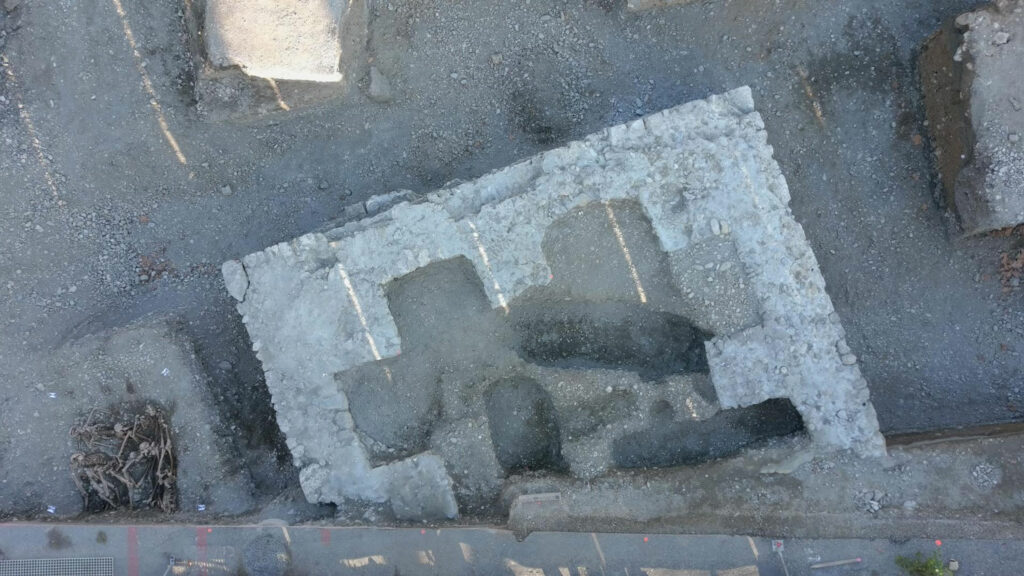
GRENOBLE, FRANCE—Live Science reports that traces of sixteenth-century gallows and 10 burial pits have been uncovered in southeastern France by researchers from the French National Institute of Preventive Archaeological Research (INRAP). The gallows was represented by a square brick structure originally thought to be a building in a leper colony or a graveyard chapel. A review of historic construction records revealed that timber-framed gallows stood in what had been the town’s public execution area. It measured about 27 feet long with stone pillars standing more than 16 feet tall. A gibbet, formed with crossbeams jutting out from the pillars, could be used to execute prisoners and display the bodies of as many as eight people at once. The remains of 32 people, most of them men, were recovered from the burial pits. Some of the remains had been dismembered or decapitated. The gallows fell out of use by the early seventeenth century. For more on French archaeology, go to "Letter from France: Neolithic Cultural Revolution."