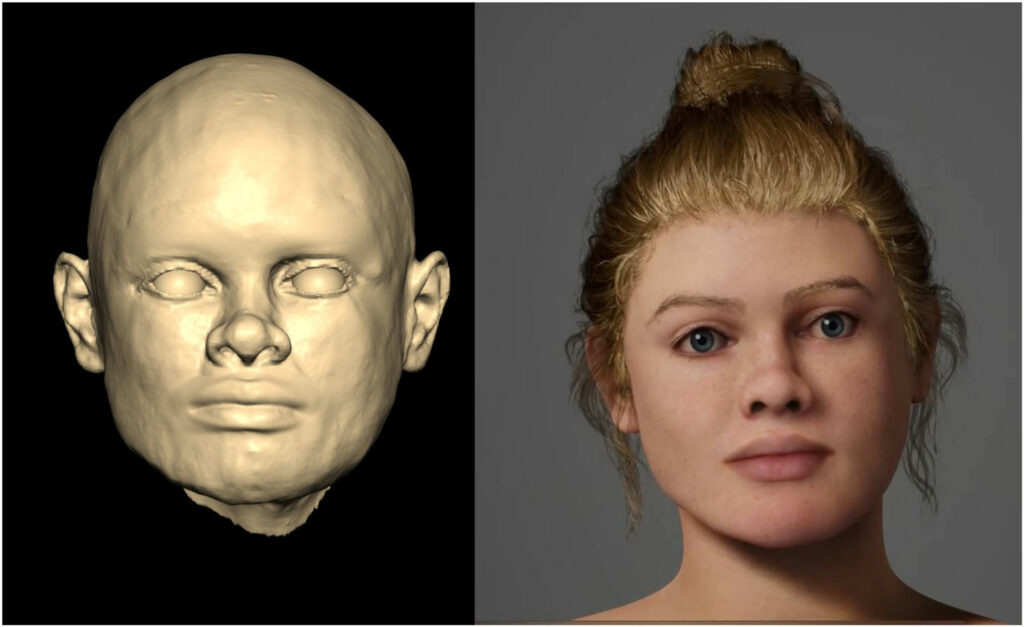
EASTBOURNE, ENGLAND—New DNA analysis of the remains of a Roman-era individual known as Beachy Head Woman indicates that she came from southeastern England, according to a report in The Guardian. The bones were discovered in the 1950s at Beachy Head, and were stored at Eastbourne town hall, where they were recovered in 2012. Radiocarbon dating revealed that the woman died between A.D. 129 and 311. Examination of the bones showed that she was between 18 and 25 years old at the time of death, and stood about five feet tall. Analysis of carbon and nitrogen isotopes in her bones indicated that she ate a lot of seafood and lived in the region where the bones had been discovered. It had been previously suggested that the woman may have come from sub-Saharan Africa, based upon an analysis of her skull, or that she was of Cypriot descent, based on an initial DNA study. The new analysis implemented an improvement in DNA technology known as capture arrays to amplify and analyze small segments of Beachy Head Woman’s degraded genetic material. “It doesn’t alter the story of Britain,” said Selina Brace of the Natural History Museum in London. “It just alters her story and we owed it to her to put that right,” Brace concluded. Read the original scholarly article about this research in the Journal of Archaeological Science. For more on the archaeology of Roman southwest England, go to "Where's the Beef?"