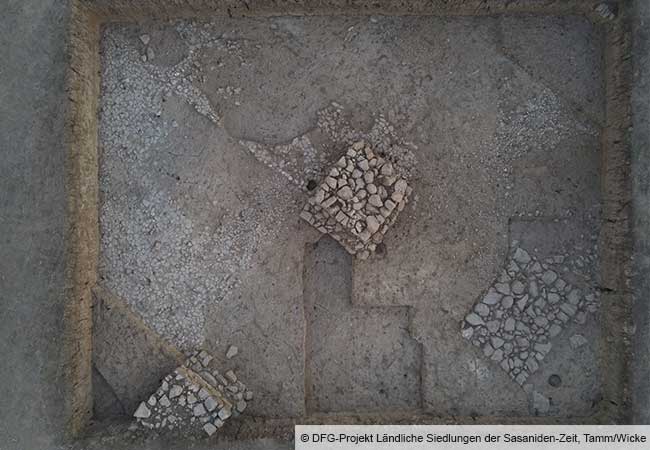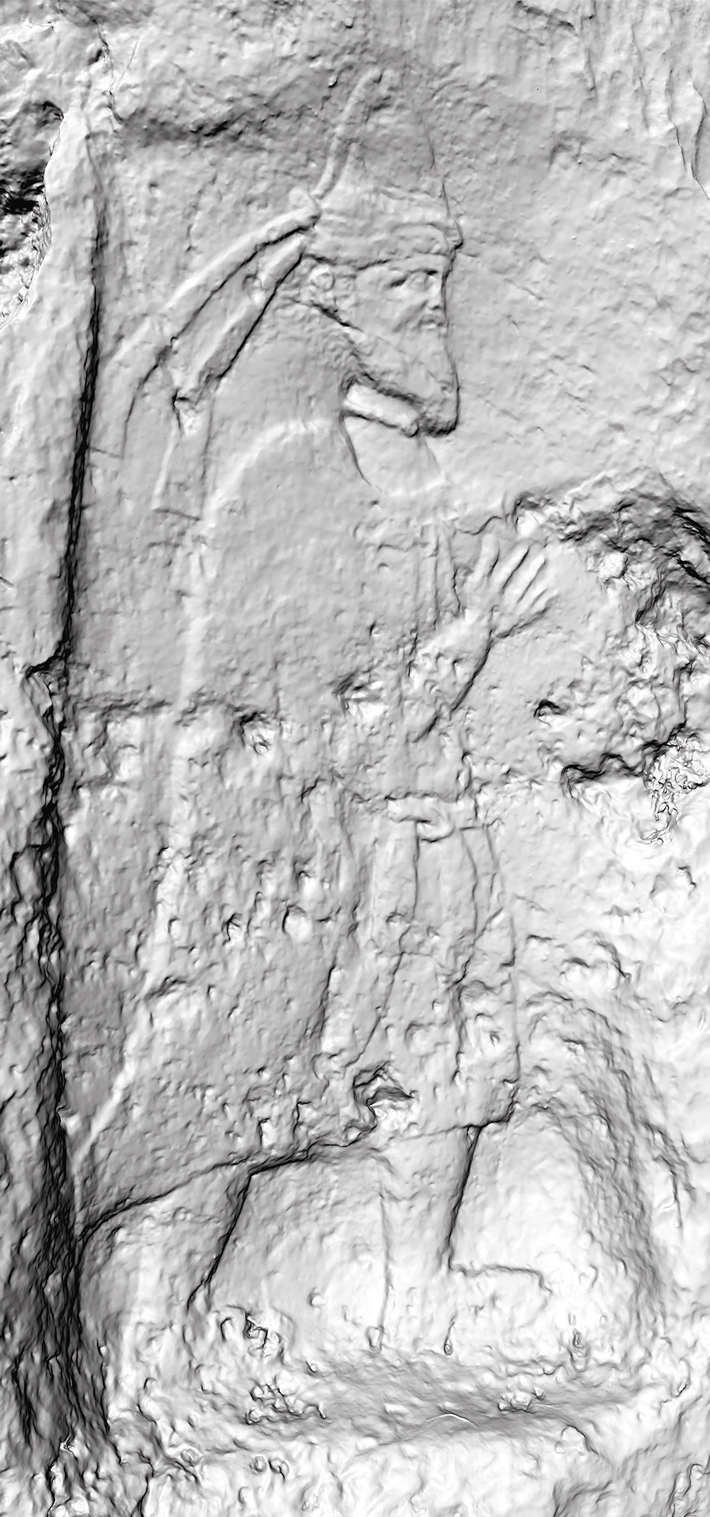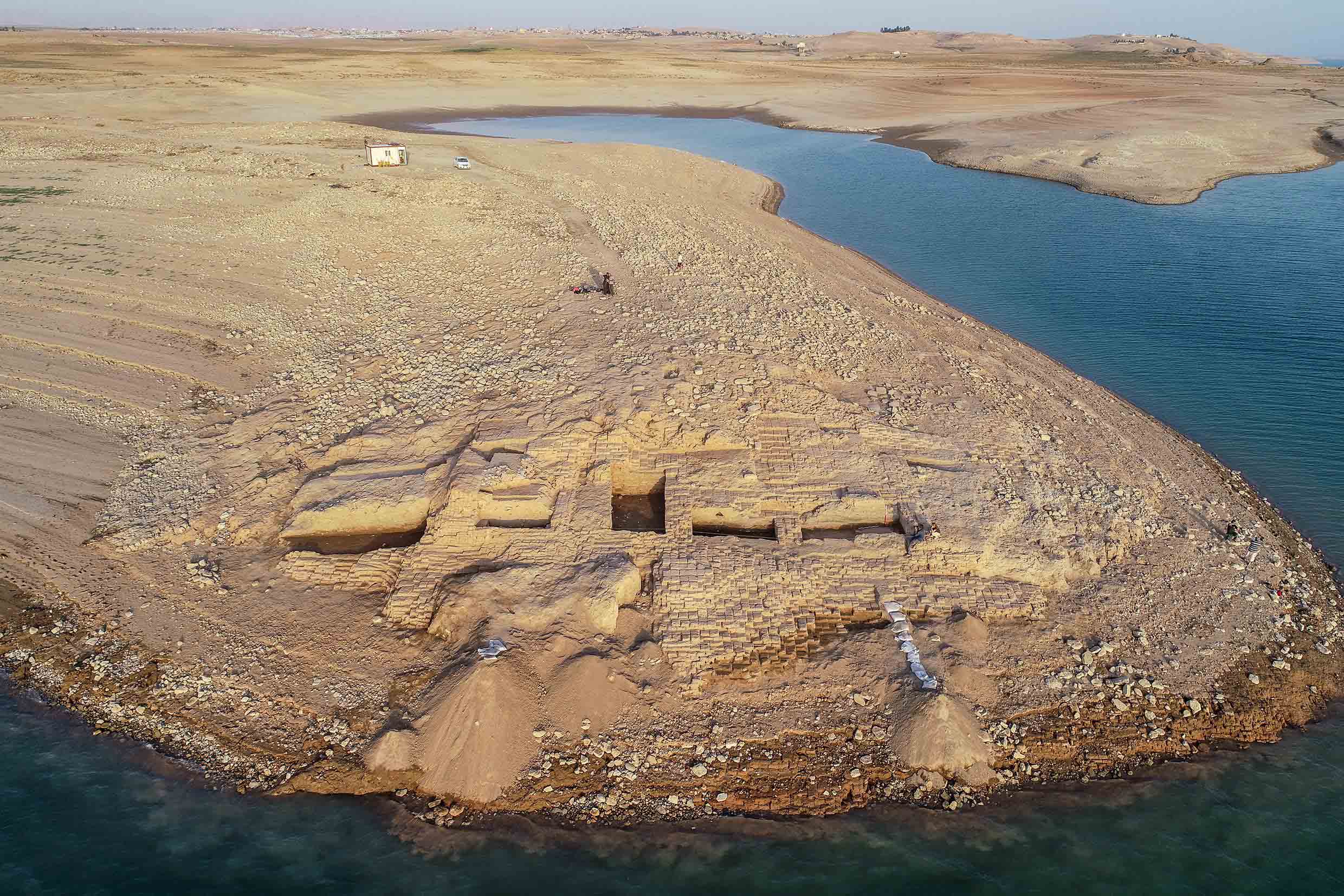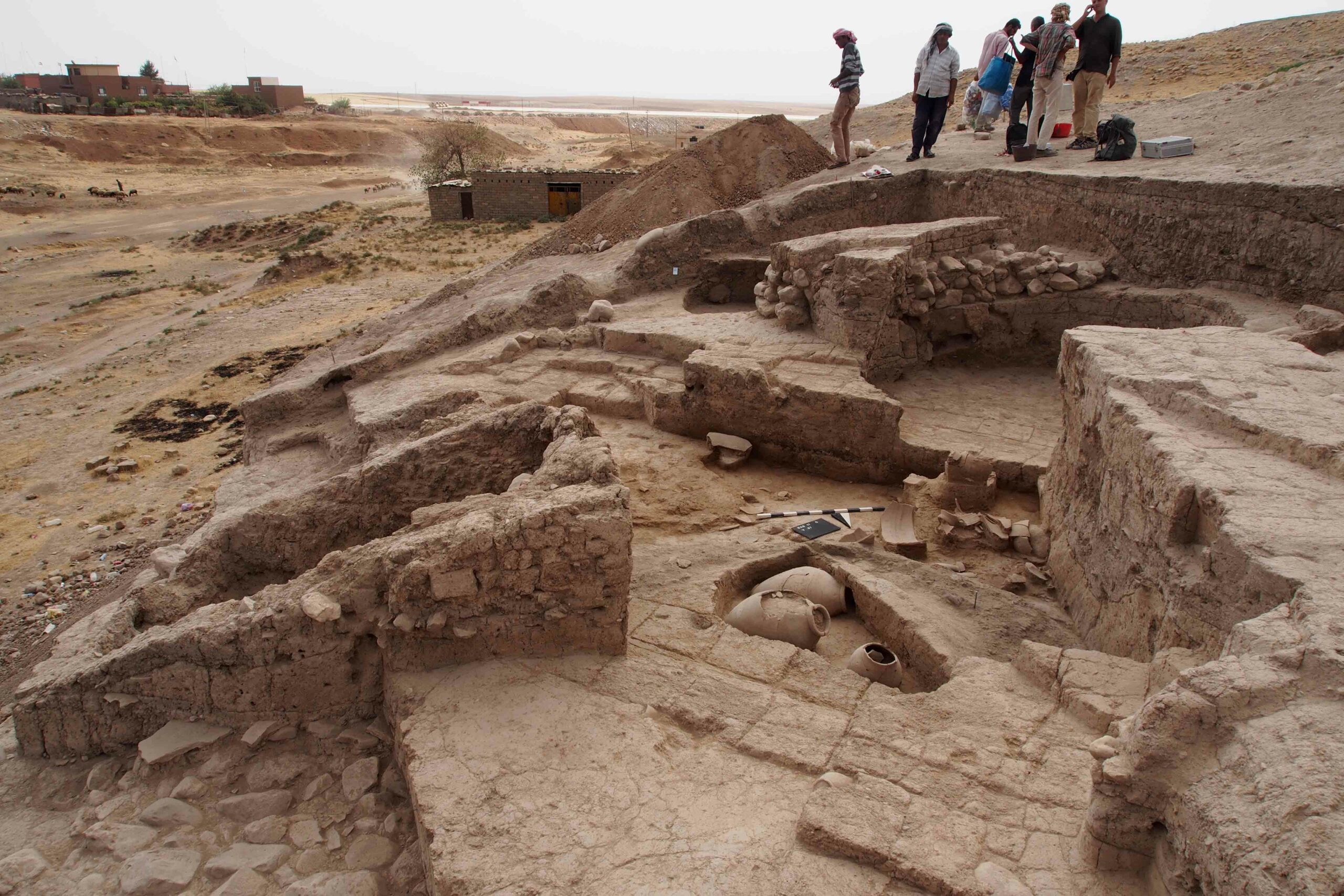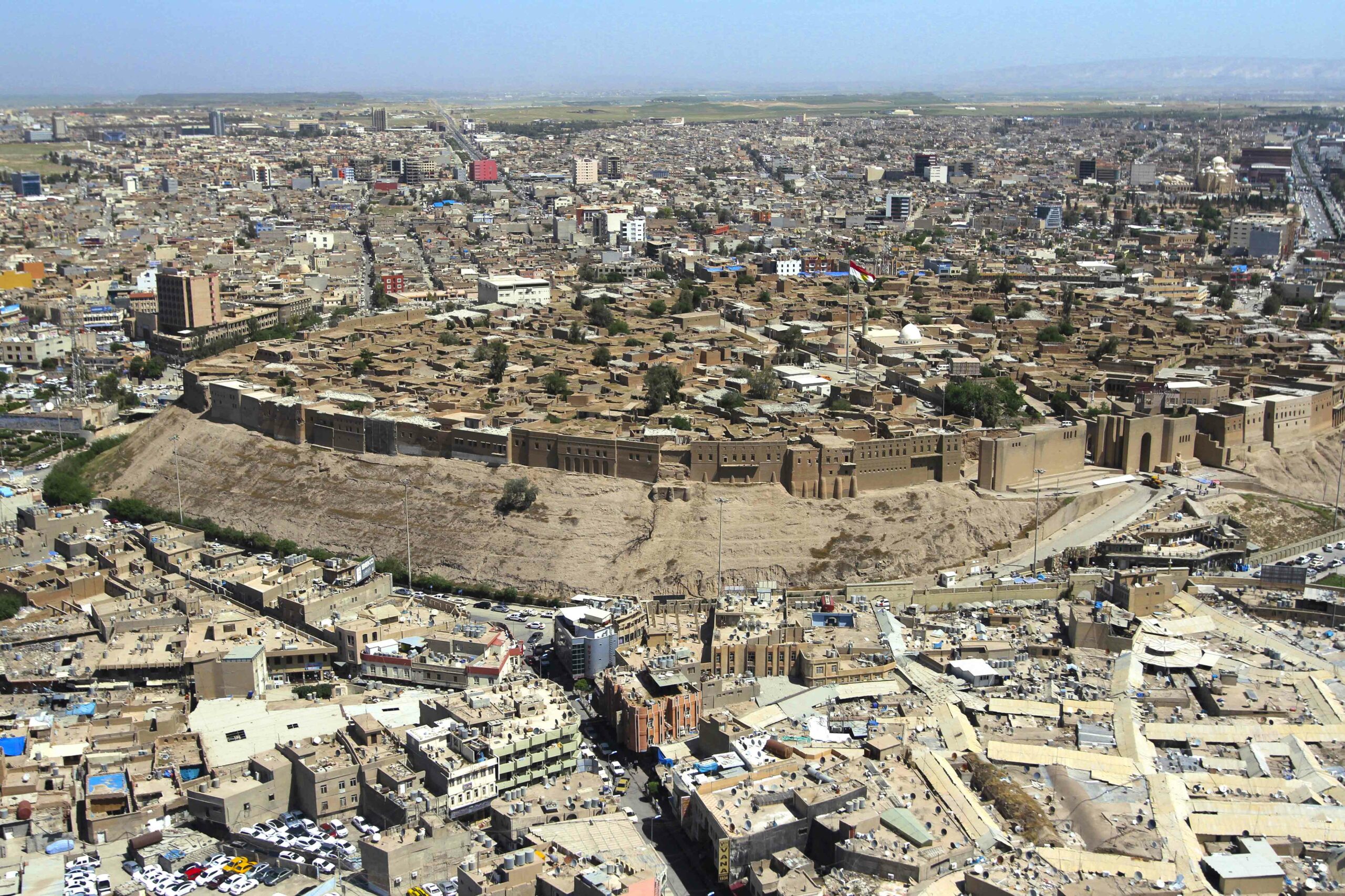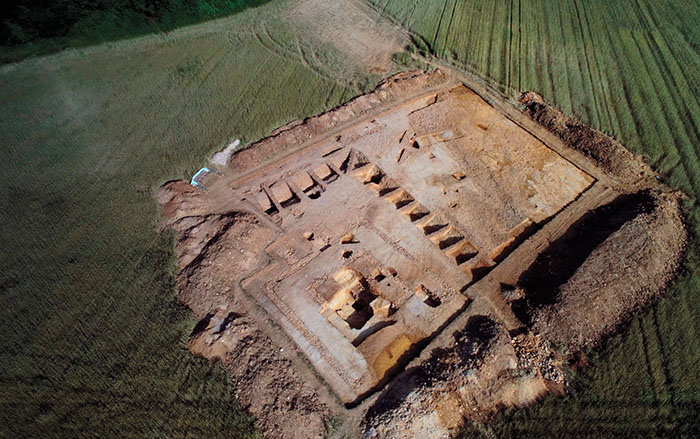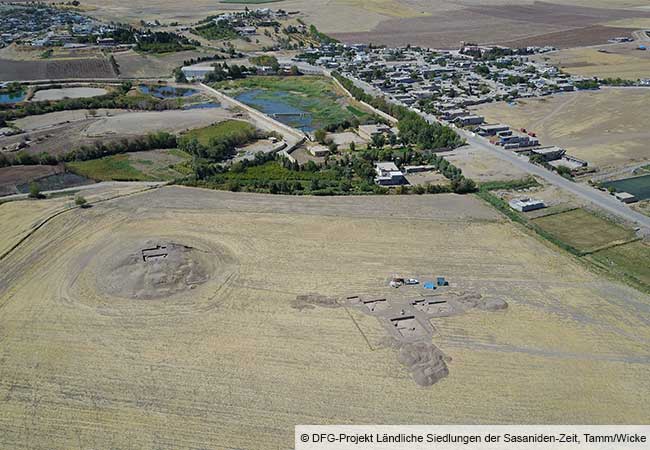
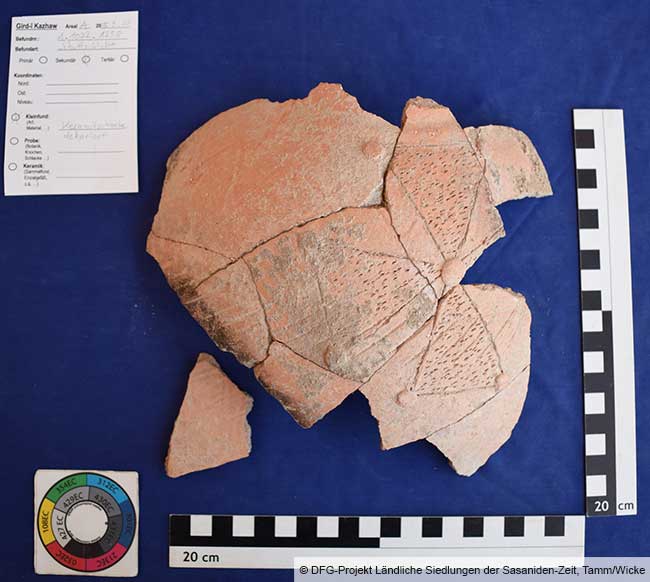
KURDISTAN, IRAQ—According to a statement released by Goethe University Frankfurt, a building complex at the Gird-î Kazhaw site in northern Iraq has been identified as a Christian church and possible monastery by Alexander Tamm of Friedrich-Alexander University and Dirk Wicke of Goethe University Frankfurt. The complex is located near a settlement mound and a small fortification site attributed to the Persian Sasanian Empire and dated to the fifth and sixth centuries A.D. The Persians of the Sasanian Empire established Zoroastrianism as their state religion. The possible church, dated to around A.D. 500, features five square pillars made of quarried stone that were partially plastered with white gypsum. The room has a floor made of fired bricks with the outline of a semicircle at one end. Pottery decorated with a Maltese cross was also unearthed in the room. If this church was in use at the time of the Sasanian fortification, it would suggest that Sasanian Zoroastrians lived side by side with Christians. The later Islamic cemetery at the site indicates that the people of the region eventually converted to Islam. To read about another city that was home to Christian and Zoroastrian communities under Sasanian rule, go to "Erbil Revealed."