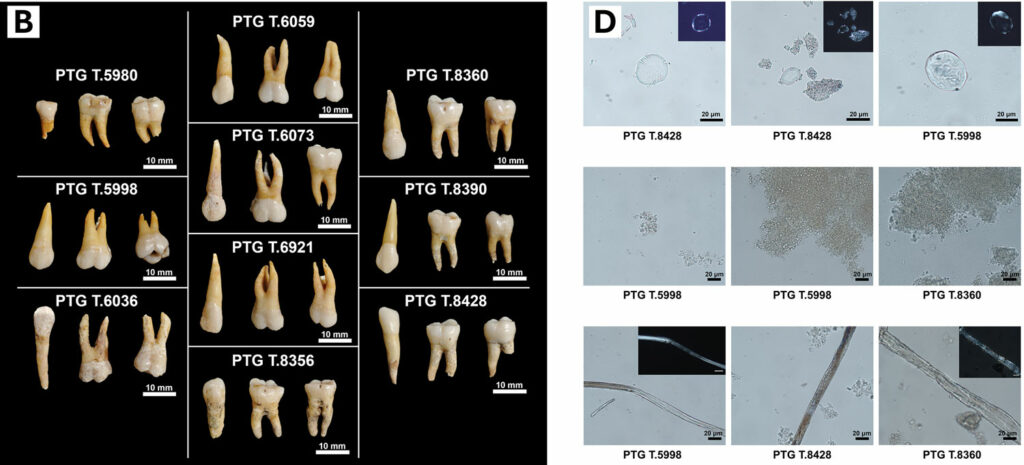
ROME, ITALY—According to a statement released by the Public Library of Science, Roberto Germano of Sapienza University and his colleagues analyzed the teeth and dental calculus of 10 people who lived at the site of Pontecagnano in southwestern Italy between the seventh and sixth centuries B.C. Tooth enamel is laid down during childhood, and can thus provide a record of an individual’s health and the influence of the surrounding environment. Examination of the enamel from canine and molar teeth detected minor stress at about one year and four years of age. Germano said these ages are marked by changing behavior and diet, as well as susceptibility to disease. Analysis of plaque on the teeth showed that as adults, the individuals consumed carbohydrates including cereals and legumes, and fermented foods and beverages. Future studies of the Pontecagnano population could examine a larger number of individuals and employ isotopic analysis of their tooth enamel, Germano said. Read the original scholarly article about this research in PLOS One. To read about the burials of an Iron Age people who migrated to eastern Italy, go to "Fit for a Prince."