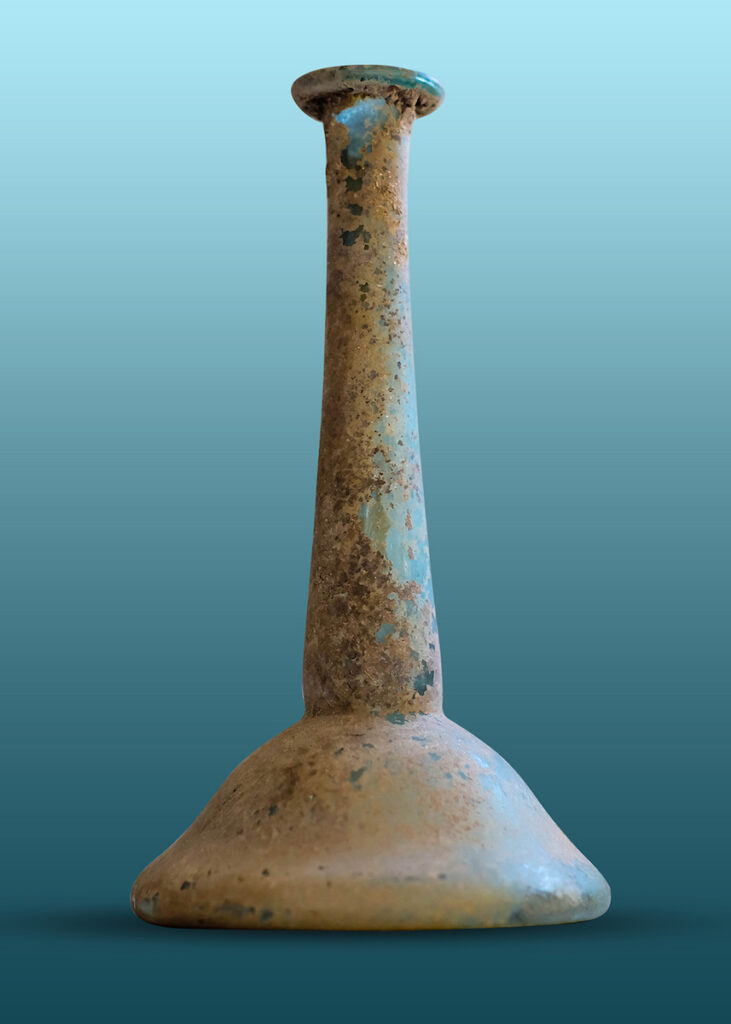
SIVAS, TURKEY—Live Science reports that archaeologist Cenker Atila of Sivas Cumhuriyet University, chemist İlker Demirbolat of Istanbul Kent University, and medical historian Rana Babaç Çelebi of Istanbul Medipol University analyzed residues in Roman glass vials held at western Turkey’s Bergama Museum with gas chromatography-mass spectrometry. Conclusive results were obtained from the contents of just one vessel, a sealed unguentarium recovered from a tomb in the ancient city of Pergamon, which had been the home of the Roman physician Galen in the second century A.D. The tests identified two organic compounds, coprostanol and 24-ethylcoprostanol, which are found in the digestive tracts of animals that metabolize cholesterol. The ratio of these two substances suggests that the feces were human. The study also determined that the material had been mixed with thyme, likely to mask strong odors. “Because we are well-acquainted with ancient textual sources, we immediately recognized this as a medicinal preparation used by the famous Roman physician Galen,” Atila said. Preparations containing feces are thought to have been used to treat inflammation, infection, and reproductive disorders. Herbs, wine, or vinegar were added to these formulations to make them more acceptable to patients. Medicines described in the writings of Galen and other ancient authors were therefore likely based on practice, Atila and his colleagues concluded. To read more about Galen's writings, go to "The Pursuit of Wellness: Exercise."