

ALCALÁ DE HENARES, SPAIN—According to a Live Science report, Lucía Villaescusa Fernández of the University of Alcalá and her colleagues analyzed the skulls of horned and antlered animals that had been placed in Des-Cubierta Cave, which is located in central Iberia. The 35 large skulls were discovered in 2023, along with more than 1,400 stone tools made in the Mousterian style attributed to Neanderthals. “At first glance, the deposit appears chaotic,” Villaescusa Fernández said. But the researchers soon realized that many rockfalls had occurred in the cave after the Neanderthal activity took place, some 43,000 years ago. The team members mapped the positions of the skulls and tools, and compared their distribution to that of the rockfall debris. “These materials had different origins and were not introduced into the cave by the same process,” Villaescusa Fernández concluded. The study also suggests that Neanderthals placed the animal skulls in specific areas of the cave over centuries and generations. “This has important implications for how we understand Neanderthal societies, particularly in terms of cultural transmission and shared traditions,” she explained. Read the original scholarly article about this research in Archaeological and Anthropological Sciences. To read more about Europe's Neanderthal population, go to "Neanderthal Smorgasbord."
Scientists Examine Neanderthal Collection of Animal Skulls
News February 2, 2026
Recommended Articles
Digs & Discoveries September/October 2021
Neanderthal Hearing
Digs & Discoveries September/October 2012
A Portrait of the Artist as a Young Neanderthal?
Digs & Discoveries January/February 2026
Full Nesters

More to Discover
Features January/February 2026
Top 10 Discoveries of 2025
ARCHAEOLOGY magazine’s editors reveal the year’s most exciting finds

-
Features January/February 2026
The Cost of Doing Business
Piecing together the Roman empire’s longest known inscription—a peculiarly precise inventory of prices
 Ece Savaş and Philip Stinson
 -
Features January/February 2026
The Birds of Amarna
An Egyptian princess seeks sanctuary in her private palace
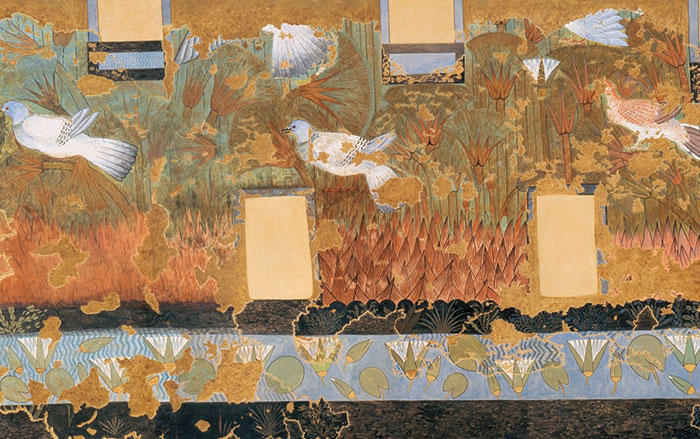 The Metropolitan Museum of Art, New York/ Rogers Fund, 1930
 -
Features January/February 2026
Taking the Measure of Mesoamerica
Archaeologists decode the sacred mathematics embedded in an ancient city’s architecture
 Courtesy Claudia I. Alvarado-León
 -
Features January/February 2026
Stone Gods and Monsters
3,000 years ago, an intoxicating new religion beckoned pilgrims to temples high in the Andes
 Courtesy John Rick