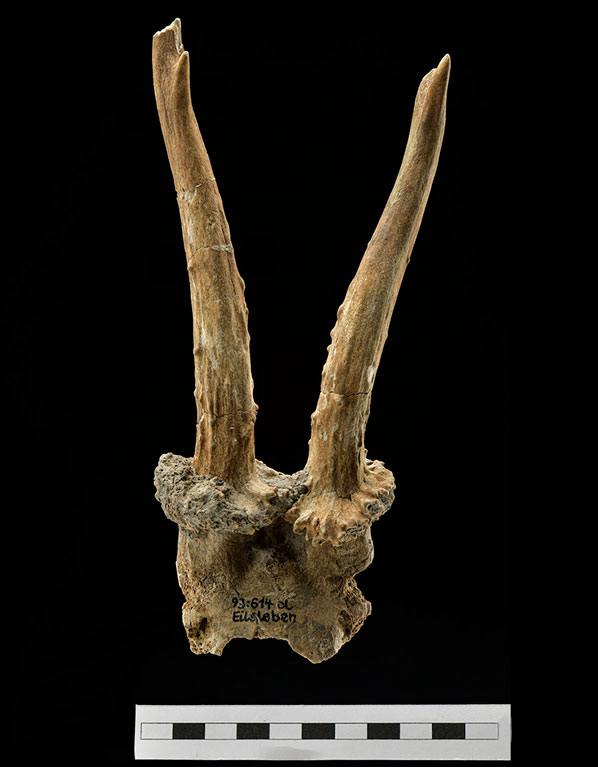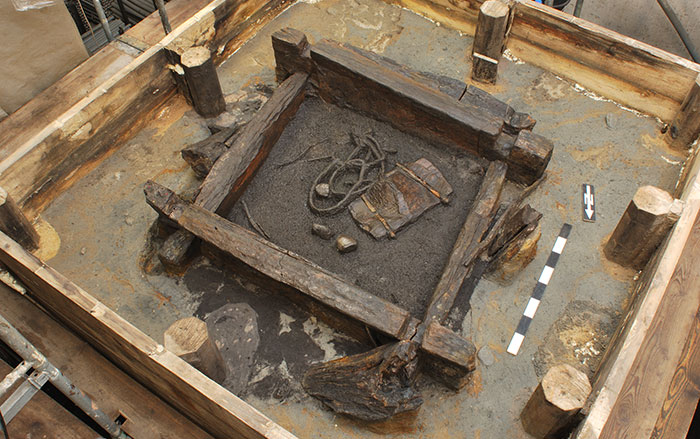
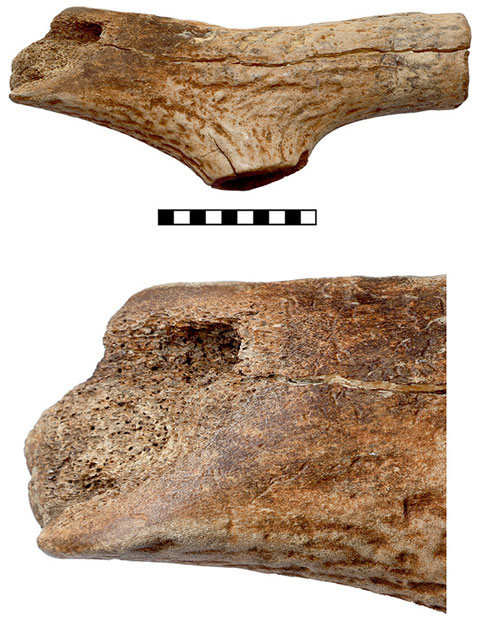
EILSLEBEN, GERMANY—Live Science reports that excavations at an ancient farming village near Eilsleben in northern Germany have uncovered intriguing new evidence about interactions between the region’s preexisting hunter-gatherers and Europe’s earliest farmers. Archaeologists believe the site served as a kind of frontier outpost for the first wave of Neolithic agriculturists who migrated to central Europe from Anatolia and established the site around 5375 b.c. Recent fieldwork has uncovered houses, burials, pits, and cultural material belonging to the so-called Neolithic Linear Pottery culture, or LBK. However, archaeologists were also surprised by the presence of patently Mesolithic objects, including a deer skull headdress, that are known from other hunter-gatherer sites throughout Europe. Additionally, the team found tools crafted from antler, a material not commonly associated with LBK farmers. According to Laura Dietrich, an archaeologist at Martin Luther University Halle-Wittenberg, the juxtaposition of both Mesolithic and Neolithic artifacts at the same site is unexpected. She suggests that the ancient village may have been a place where the two distinct communities—newcomers and long-time residents—exchanged objects, ideas, and technology. Read the original scholarly article about this research in Antiquity. For more on the Linear Pottery culture, go to "Letter from France: Neolithic Cultural Revolution."