


Neolithic farmers built some of Europe’s earliest houses in villages spread across the Pelagonia Valley in what is today the country of North Macedonia. Dating to around 6400 b.c., these houses were eventually dismantled, and subsequent generations built new homes again and again on the footprints of the original pioneer buildings. Archaeologists excavating these Neolithic settlements have found evidence that as many as 12 houses were built in the same location one above another. “Each house appears to have a relationship with the older houses beneath it,” says archaeologist Goce Naumov of the Center for Prehistoric Research. His team found that in five houses built on the same footprint, inhabitants kept their grindstones in the exact same spot. “That means that for hundreds of years,” says Naumov, “the memory persisted that there was one place in the house where they ground cereals.”
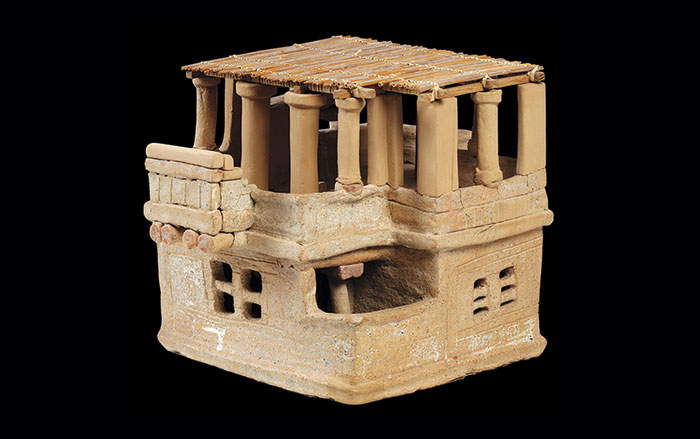
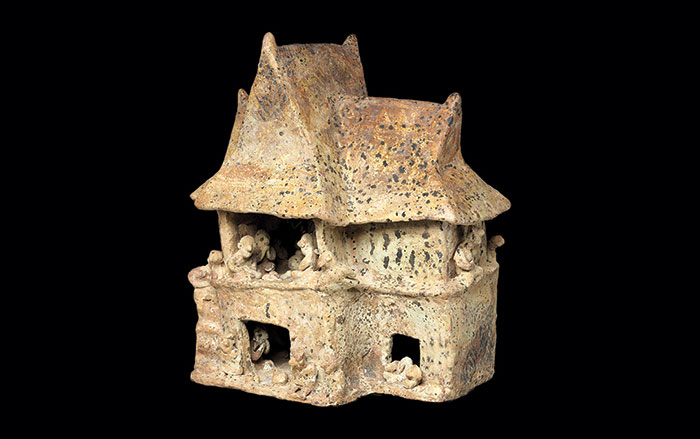
Evidence that Pelagonia Valley farmers were house proud has emerged in the form of hundreds of clay architectural models. Among these is a set of houses with human heads and torsos. These anthropomorphic buildings appear to have been used as lanterns, and Naumov suspects they represent ancestors, perhaps the founders of the original houses that lay below the homes that came later. He suggests that the melding of houses and the human form reflects a sea change in how people related to the world around them. “In the beginning of the Neolithic, there was a symbolic domestication of the human body, as well as of plants and animals,” says Naumov. “Now that people lived in houses in a village and weren’t moving across the landscape with the seasons, they came to a new understanding of the human body as something that created and controlled new environments.” He proposes that Neolithic people gradually identified their homes with some or all of their inhabitants, a belief captured in the lanterns that depict half-human, half-house beings.