Traces of Roman Cologne Uncovered

News February 12, 2026

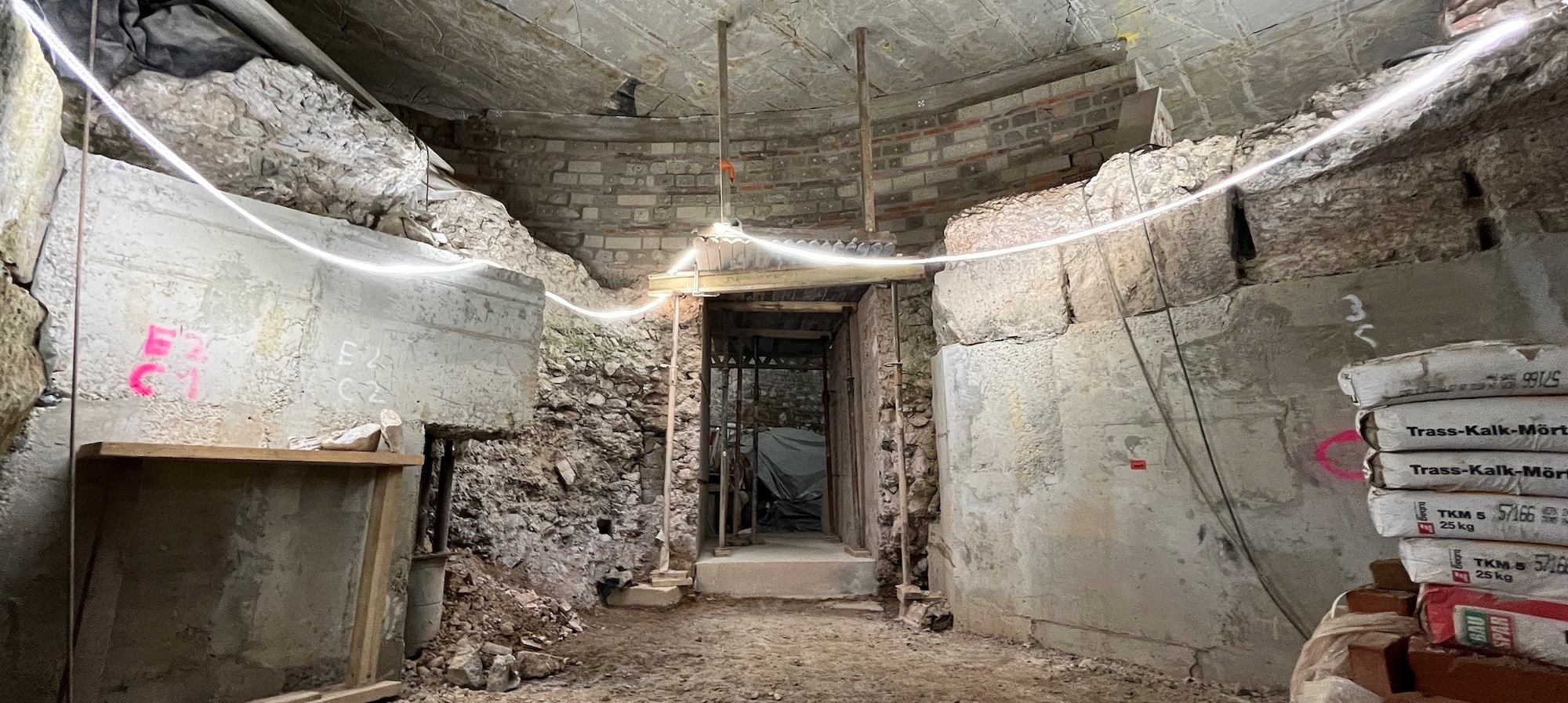
Apse of Roman basilica, Cologne, Germany
© City of Cologne/Roman-Germanic Museum, Michael Wiehen
SHARE:

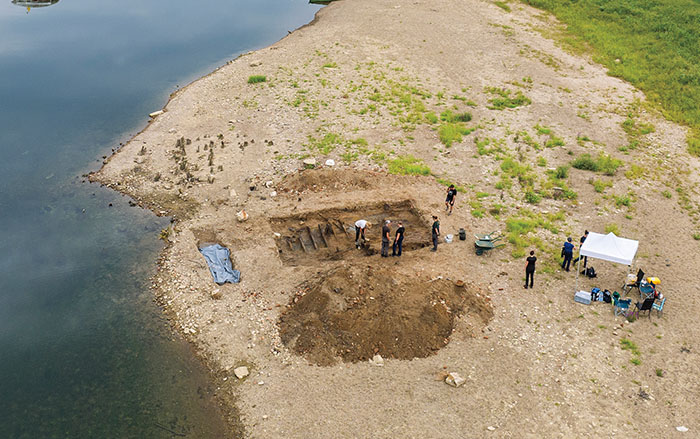
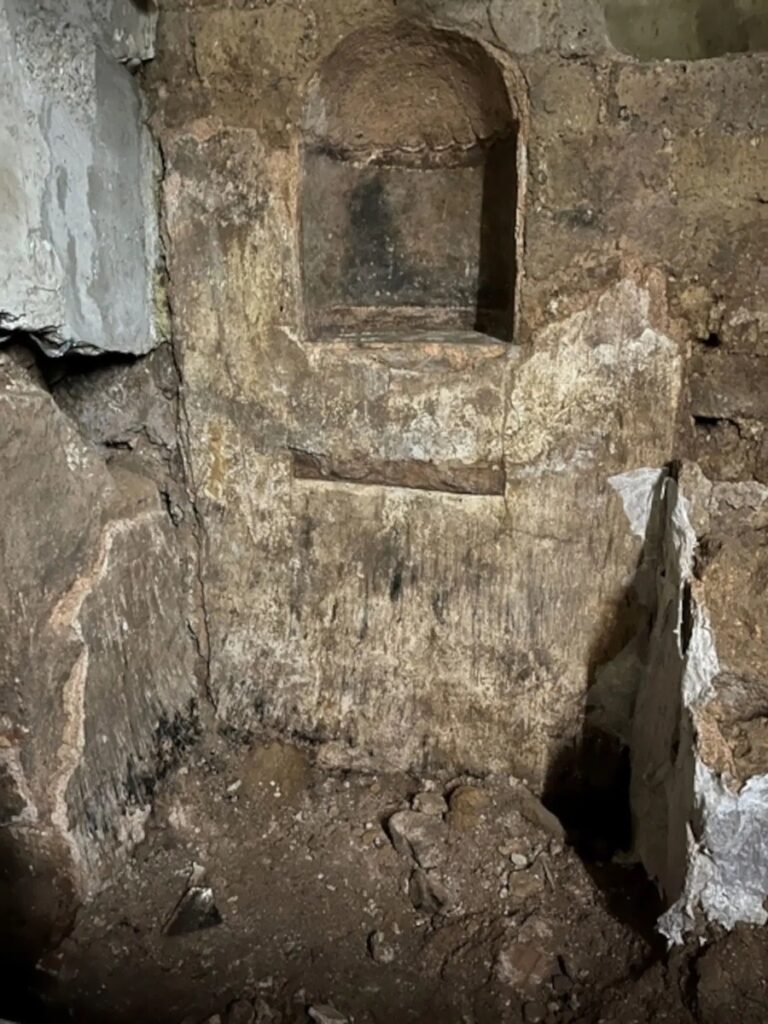
COLONGE, GERMANY—Finestre Sull’Arte reports that during new construction work for MiQua, the future LVR-Jewish Museum currently being built near the city’s historic center, excavations revealed several important and well-preserved structures associated with the site’s early Roman settlement. These include an exceptional second-century a.d. lararium, a type of domestic shrine dedicated to protective household deities known as Lares. This altar was located in the area of the former Praetorium, which served as the palace for the Roman governor, and is the first of its kind ever found north of the Alps. The archaeological team also uncovered the remains of a fourth-century a.d. basilica and a late first-century a.d. staircase that would have connected the very earliest sections of the Roman city with the banks of the Rhine River. To read more about Cologne's importance in the Roman empire, go to "Beauty Endures."
  • Features January/February 2026

    The Cost of Doing Business

    Piecing together the Roman empire’s longest known inscription—a peculiarly precise inventory of prices

    Read Article
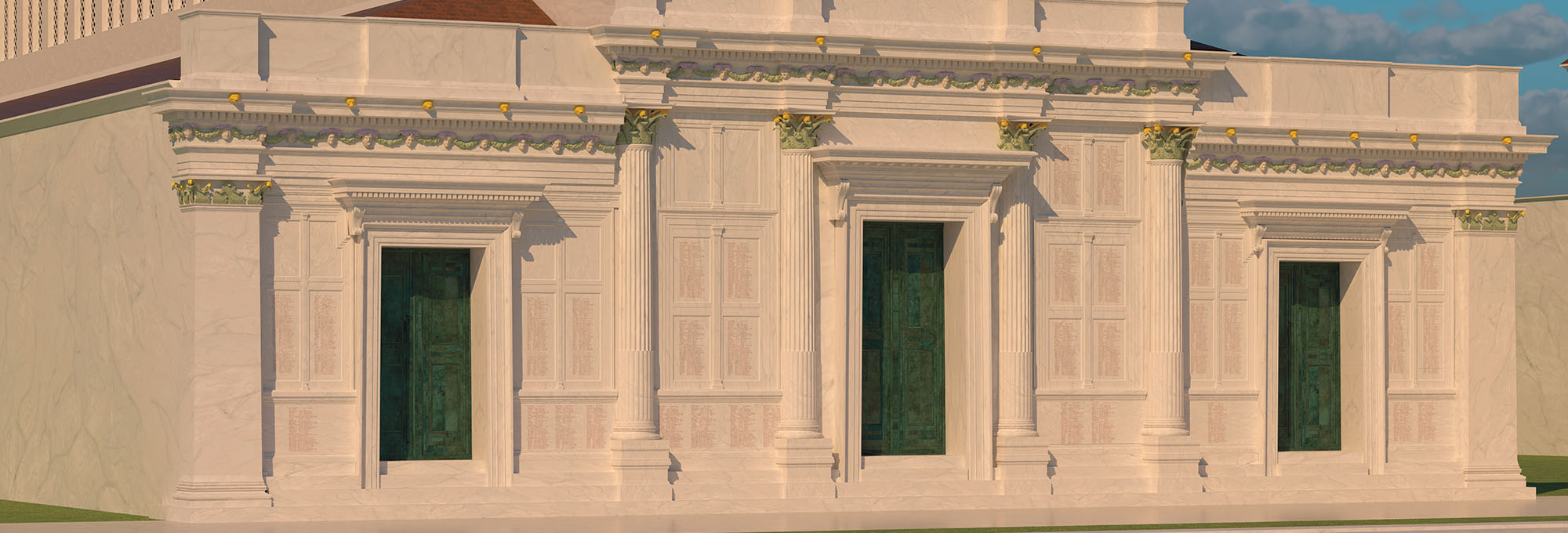
    A digital reconstruction shows how the Civil Basilica in the city of Aphrodisias in southwestern Anatolia would have appeared with the Edict of Maximum Prices inscribed on its facade.
    Ece Savaş and Philip Stinson
  • Features January/February 2026

    The Birds of Amarna

    An Egyptian princess seeks sanctuary in her private palace

    Read Article
    The Metropolitan Museum of Art, New York/ Rogers Fund, 1930
  • Features January/February 2026

    Taking the Measure of Mesoamerica

    Archaeologists decode the sacred mathematics embedded in an ancient city’s architecture

    Read Article
    Courtesy Claudia I. Alvarado-León
  • Features January/February 2026

    Stone Gods and Monsters

    3,000 years ago, an intoxicating new religion beckoned pilgrims to temples high in the Andes

    Read Article
    The ritual center of Chavín de Huántar flourished in northern Peru.
    Courtesy John Rick