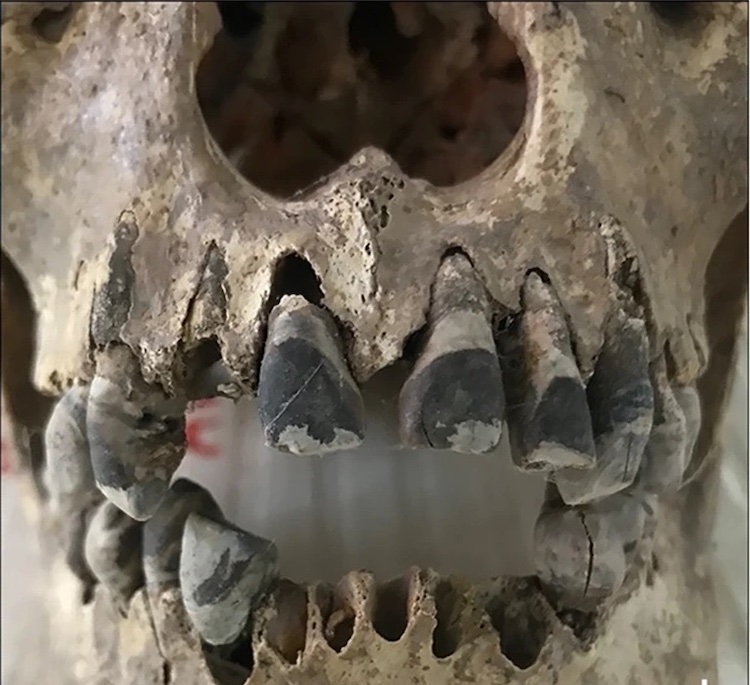
DONG XA, VIETNAM—Although many people across the world today strive to maintain pearly white teeth, this has not always been the case everywhere. For centuries, in various parts of Asia, Africa, Oceania, and the Americas, certain cultures actually viewed blackened teeth as a sign of beauty. This is particularly the case in Vietnam, where tooth blackening has been well documented in modern times, but archaeologists have long wondered about when the practice first began. According to a Science report, a new study suggests it dates back at least 2,000 years. A research team recently examined examples of discolored teeth found on individuals buried at the late Dong Son–period site of Dong Xa to determine whether the staining was intentional or the unintended outcome of dietary habits, such as chewing betel seeds. Chemical analysis of tooth enamel detected traces of iron and sulfur—the chemical signatures of iron salt, which is a known ingredient in many deep black pigments. The researchers determined that iron salts were likely heated with extracts from plants rich with tannins, which would chemically react to create a black paste that was cosmetically applied to the tooth repeatedly over several weeks. The earliest evidence of this process dates to the Iron Age in Vietnam two millennia ago, when ancient communities had increased access to iron tools and weapons. Read the original scholarly article about this research in Archaeological and Anthropological Sciences. To read about hunter-gatherer burials found in a Vietnamese cave, go to "Oldest Mummified People," one of ARCHAEOLOGY's Top 10 Discoveries of 2025.