

LEIDEN, THE NETHERLANDS—According to a statement released by Leiden University, a groundbreaking ancient DNA study has provided new information about a pivotal transitional period in prehistoric Europe. The research underscored the remarkable genetic stability in the Low Countries and shed new light on the mysterious origins of the so-called Bell Beaker culture. A team of geneticists and archaeologists analyzed the genomes of 112 individuals who lived in the Rhine–Meuse region of the Low Countries—today’s Netherlands, Belgium, and northwestern Germany—between 8500 and 1700 b.c. The data revealed that when Europe’s first farmers arrived from Anatolia around 4,500 years ago, Low Countries hunter-gatherers remained largely unaffected, even though there was a major shift in the genetic composition of other similar populations throughout western Europe. Experts believe that it took longer for large-scale farming to take hold here because the region was abundant with natural food resources such as fish, wildlife, fruits, and seeds. One striking revelation from the study was that when hunter-gatherers and farming communities did intermingle, it was predominantly through immigrant women, who moved into indigenous communities and may have helped introduce agricultural knowledge. Hunter-gatherer ancestry surprisingly persisted in the Rhine-Meuse region until around 2500 b.c., when other newcomers arrived from the Russian steppe and finally mixed with native populations. Later, this new genetically diverse group, known as the Bell Beaker culture, spread into Britain, where they rapidly and almost completely replaced the Neolithic peoples who lived there. For more on the Bell Beaker culture, go to "Letter from Woodhenge: Stonehenge's Continental Cousin."
DNA Study Reveals Survival and Persistence of Low Countries Hunter-Gatherers
News February 13, 2026
Recommended Articles

Features November/December 2021
Italian Master Builders
A 3,500-year-old ritual pool reflects a little-known culture’s agrarian prowess
Digs & Discoveries July/August 2019
You Say What You Eat
Letter From the Philippines May/June 2018
One Grain at a Time
Archaeologists uncover evidence suggesting rice terraces helped the Ifugao resist Spanish colonization

More to Discover
Features January/February 2026
Top 10 Discoveries of 2025
ARCHAEOLOGY magazine’s editors reveal the year’s most exciting finds

-
Features January/February 2026
The Cost of Doing Business
Piecing together the Roman empire’s longest known inscription—a peculiarly precise inventory of prices
 Ece Savaş and Philip Stinson
 -
Features January/February 2026
The Birds of Amarna
An Egyptian princess seeks sanctuary in her private palace
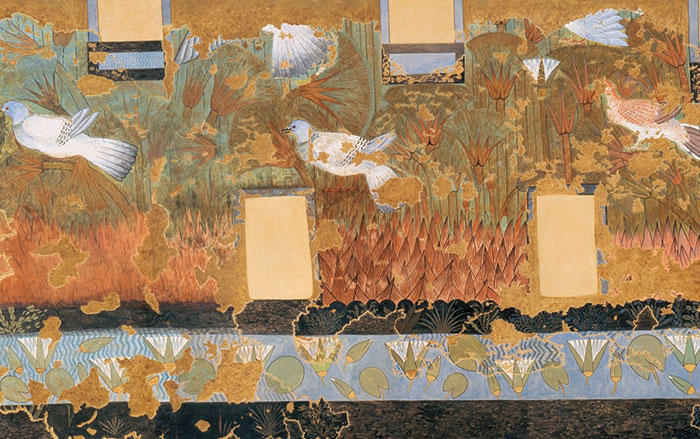 The Metropolitan Museum of Art, New York/ Rogers Fund, 1930
 -
Features January/February 2026
Taking the Measure of Mesoamerica
Archaeologists decode the sacred mathematics embedded in an ancient city’s architecture
 Courtesy Claudia I. Alvarado-León
 -
Features January/February 2026
Stone Gods and Monsters
3,000 years ago, an intoxicating new religion beckoned pilgrims to temples high in the Andes
 Courtesy John Rick