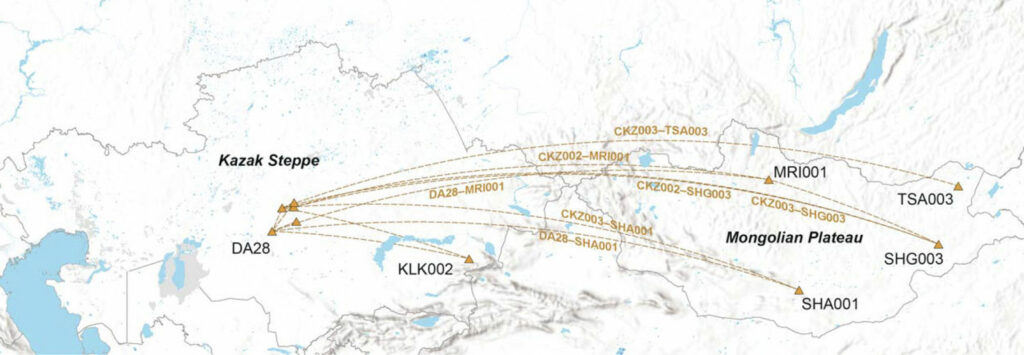
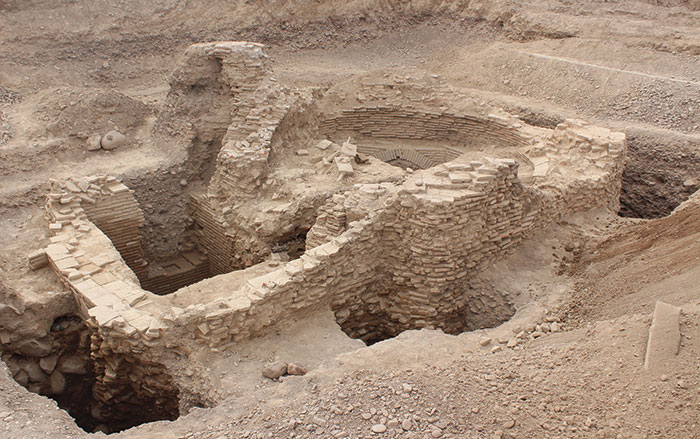
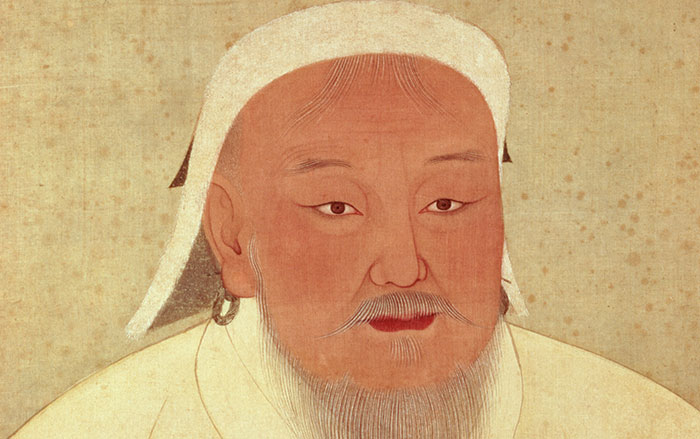
MADISON, WISCONSIN—Tradition holds that the eldest son of Genghis Khan, ruler of the Mongol Empire, founded the Golden Horde and was buried in Kazakhstan with his descendants. According to a statement released by the University of Wisconsin–Madison (UW–Madison), an international team of researchers led by Ayken Askapuli of UW–Madison analyzed genomes taken from remains found in four Golden Horde tombs in Kazakhstan, and determined that their ancestors could be traced to the Mongolian plateau through their Y-chromosomes. “We saw evidence that their Y-chromosomes are part of a branch of the C3* cluster,” Askapuli said. Some 20 years ago, fragments of DNA on this C3* cluster were traced back to medieval inhabitants of the Mongolian plateau and the Mongol Empire. This cluster is still found in many men in central Eurasia today, and some have thought these genes may have spread so widely because Genghis Khan controlled such a vast territory. “With ancient DNA results, we can distinguish different branches of the genome that are close to each other but are not identical,” said team member John Hawks of UW–Madison. Askapuli explained that the branch of the C3* cluster identified in the medieval ruling elites of the Golden Horde is not as common in the modern population of the Mongolian plateau. For more on the Mongol Empire, go to "Searching for Lost Cities: Palaces of the Golden Horde."