What is it?
Early Christian illustrated Manuscript
Culture
Early Christian, Irish
Date
A.D. 700-800
Material
Tanned leather, vellum
Found
July 2006, bog in County Tipperary, Ireland
Dimensions
Folio size of approximately 12 x 10 inches
Currently Located
National Museum of Ireland, Dublin
The faddan more psalter offers a tantalizing glimpse of the extraordinary efforts that early Christians in Ireland invested in illustrating their religious manuscripts. This manuscript was most likely handcrafted in a monastery where Irish monks and missionaries combined copies of Biblical text with both traditional and nontraditional iconography.
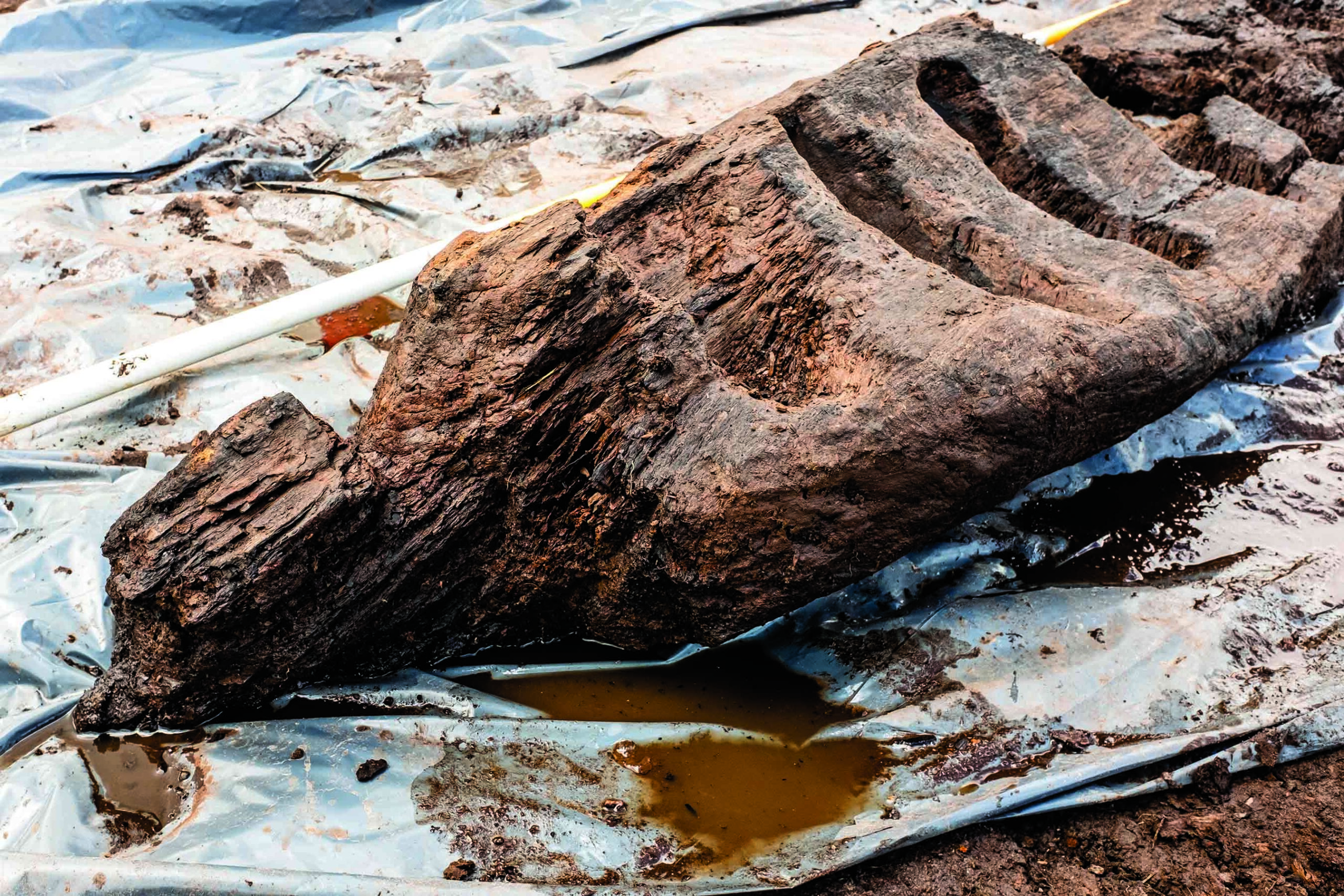
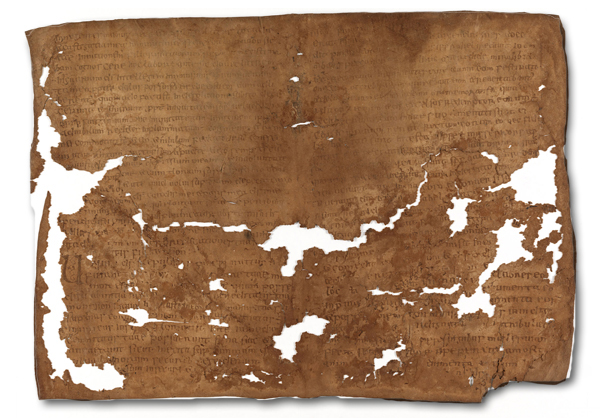
In very poor condition when first discovered in an Irish bog (bogs were often used to hide valuables during Viking raids), the tanned leather volume was immediately taken away and stored at 39 degrees Fahrenheit for preservation. The condition of the manuscript's pages, which are made of vellum (cured calfskin), varies from full legibility to complete loss. According to Eamonn Kelly, director of antiquities at the National Museum of Ireland, the fact that there's any vellum that survived is unprecedented, given the wet conditions of the bog and Ireland.
Conservators from the museum and Trinity College Dublin carried out various drying techniques, degradation analysis, and high-definition filming to reveal elements of the book's design. These include the remains of an illuminated page with elaborate, decorative text and illustrations. The page shown here, written in Latin, features a style of lettering that suggests it dates back to the eighth century, an estimate confirmed by radiocarbon dating.
Traces of gold have been found on the outside cover of the Faddan More Psalter, and papyrus was used in fashioning the inside of the cover. These two materials were also commonly used in Coptic (Egyptian Christian) Church texts. Kelly notes this similarity doesn't necessarily link the Irish and Egyptian churches.