

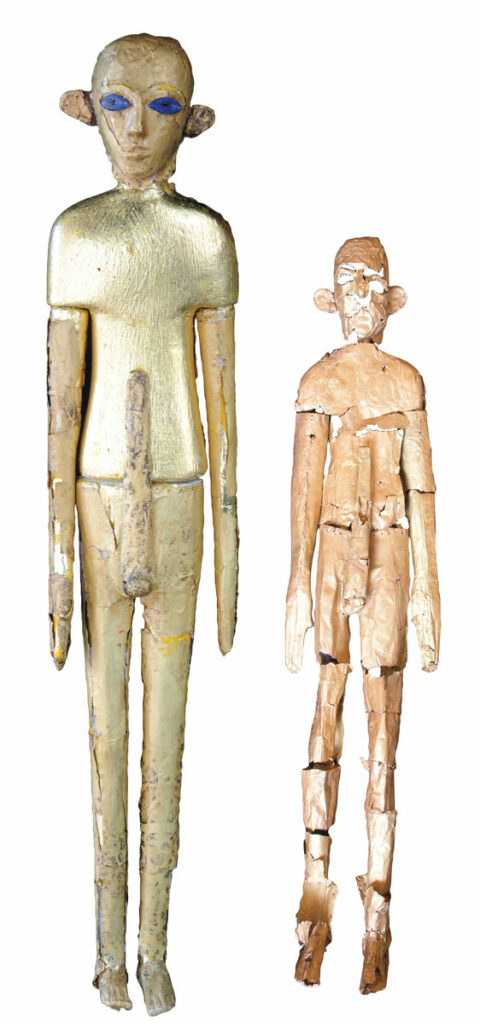
On a hot, humid day two decades ago, a team of Polish archaeologists was working in a village deep in northern Egypt’s Nile Delta at a site known as Tell el-Farkha, Arabic for “chicken hill.” A hush fell over the site. “It was completely quiet,” says Jagiellonian University archaeologist Marcin Czarnowicz. The archaeologists looked down from a small hill where they were digging and saw team members drifting toward a trench at the edge of the excavation area. Rushing over, they watched in nervous silence as a colleague brushed silty soil from a buried flint blade measuring more than two feet long. Near the blade, something gold glinted in the sun. Within hours, the team had unearthed a spectacular find. The gold turned out to be fragile foil, flattened by accumulated soil pressing down on it. At first, archaeologists thought the foil might be the remnants of gilded knife handles. Then, one team member noticed a face and hands in the foil’s folds.