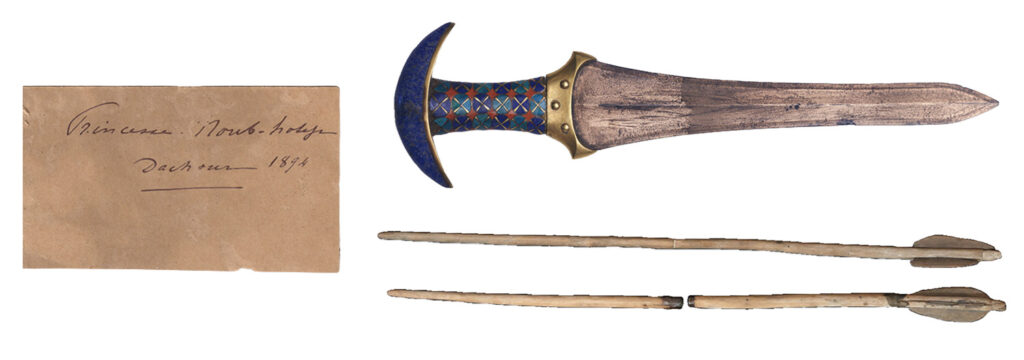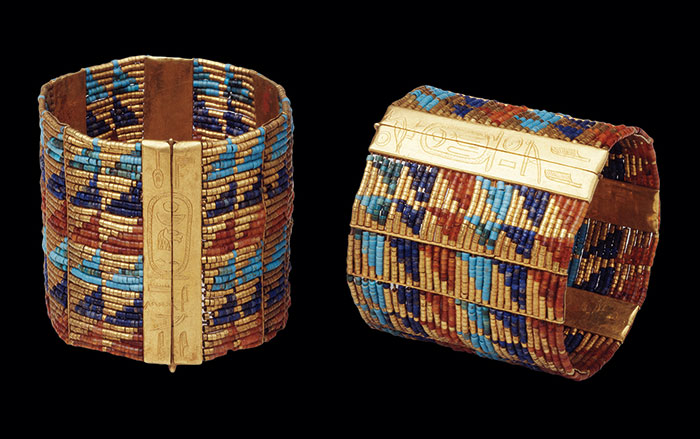
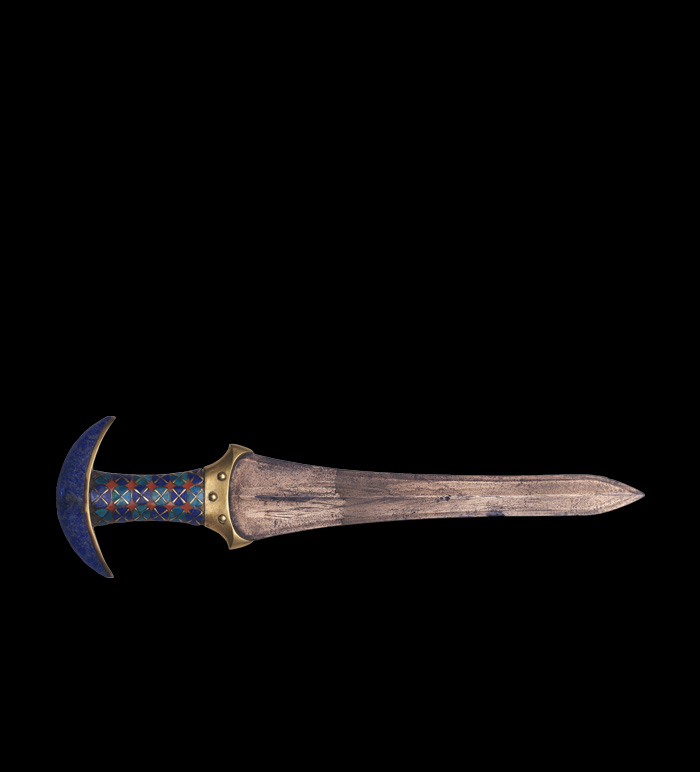
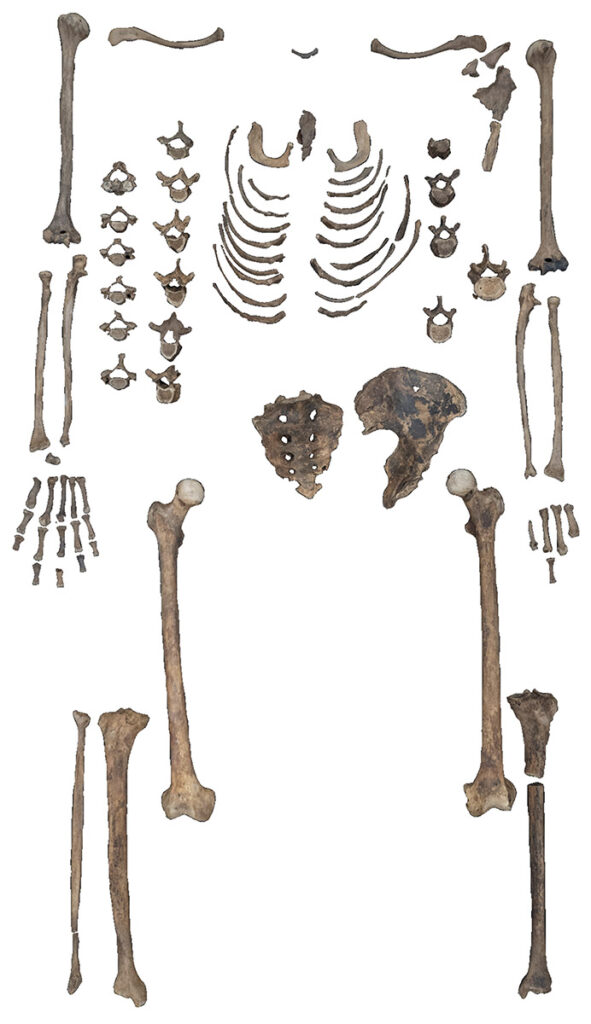
A new study of the skeletal remains of five ancient Egyptian princesses reveals that they were dedicated archers. The women’s burials were excavated in the 1890s from the Dahshur pyramid complex in Memphis, near the burials of the 12th Dynasty (ca. 1981–1802 b.c.) pharaohs Amenemhat II and Amenemhat III. Among the grave goods interred with the princesses were bows and arrows as well as other weapons such as maces and daggers. “Egyptologists have generally interpreted weapons in women’s tombs as purely symbolic, votive, or token items intended to associate the deceased with the god Osiris or to provide protection in the afterlife,” says bioarchaeologist Zeinab Hashesh of Beni-Suef University.
Hashesh has found physical evidence countering these assumptions. For example, a bone in the right palm of Princess Noub-Hotep, who was buried with a set of arrows, is bowed in a manner known as the archer’s grip. “This is a biomechanical response to the intense, repetitive pressure required to stabilize a heavy bow,” says Hashesh. “This change typically begins during the developmental years while the bone is still plastic.” In addition, Princesses Khenmet and Itaweret have pronounced development at the points where several muscles and tendons attach to their right forearms, a sign of repeatedly drawing a bow. Hashesh believes the princesses used their archery skills in royal hunting outings and ceremonial displays of power intended to protect the divine order.