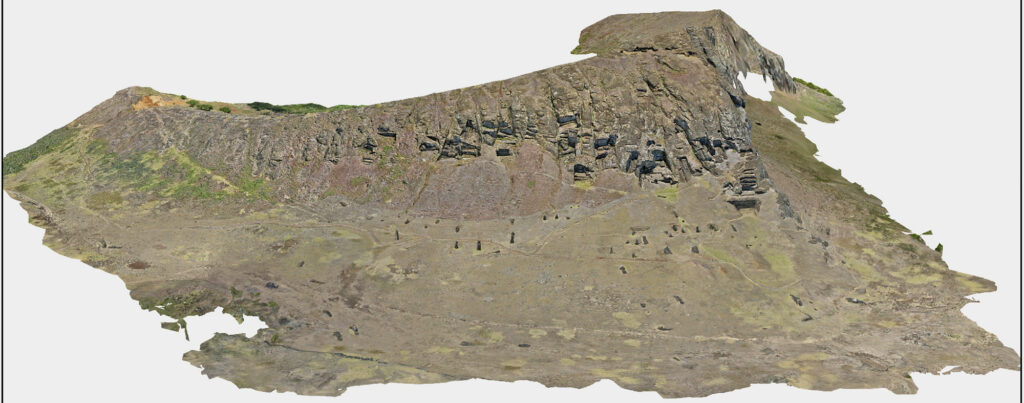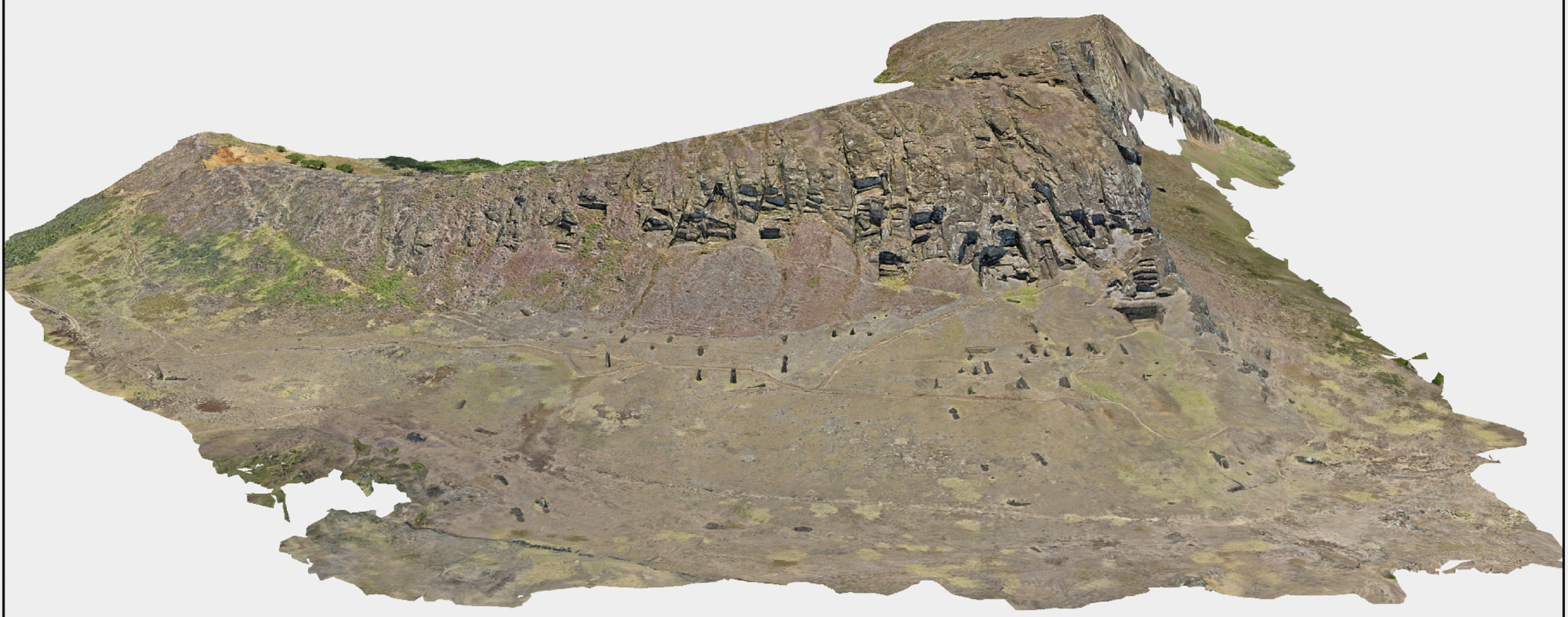
BINGHAMTON, NEW YORK—According to a SciNews report, Carl Lipo of Binghamton University and his colleagues have used 11,000 images to create a 3D model of Rano Raraku, the Easter Island quarry that served as the source of stone for the more than 1,000 moai, or monumental statues created by the Rapa Nui. Accounts written by early visitors to the island suggest that the Rapa Nui lived in small, autonomous groups and maintained distinct territories. Likewise, analysis of the new 3D model identified 30 separate centers of quarrying activity. “We see separate workshops that really align to different clan groups that are working intensively in their specific areas,” Lipo said. “You can really see graphically from the construction that there’s a series of statues being made here, another series of statues here and that they’re lined up next to each other. It’s different workshops.” It also appears that moai were transferred out of the quarry in many different directions, supporting the idea that construction of the statues was not organized by a single group. Similarities between the sculptures are likely the result of cultural sharing, Lipo concluded. Read the original scholarly article about this research in PLOS One. To read about a new moai uncovered in 2023, go to "Around the World: Chile."