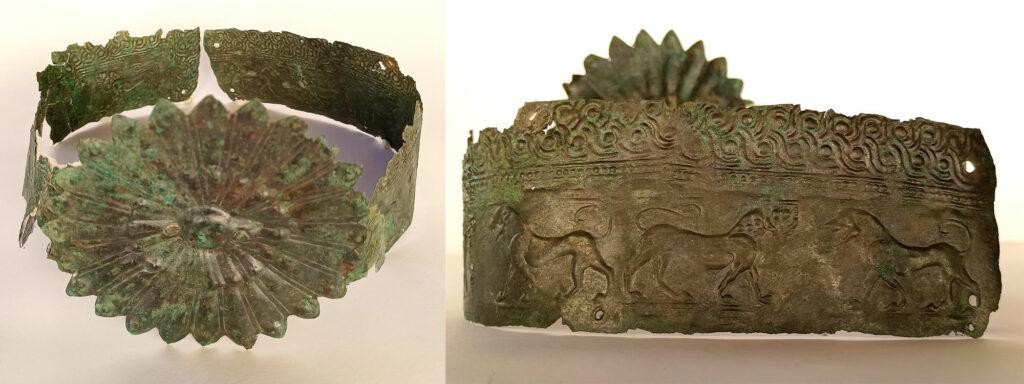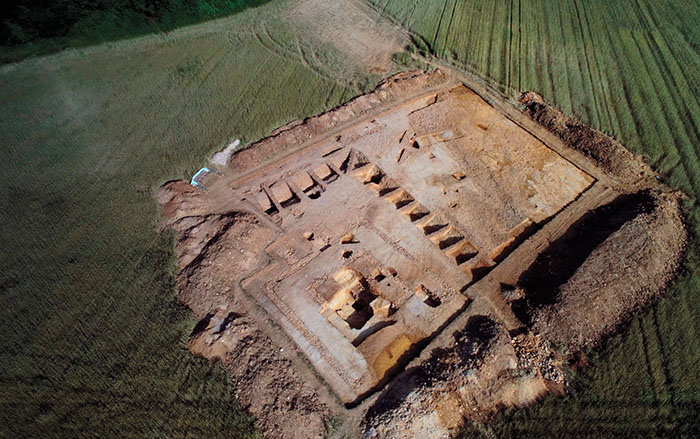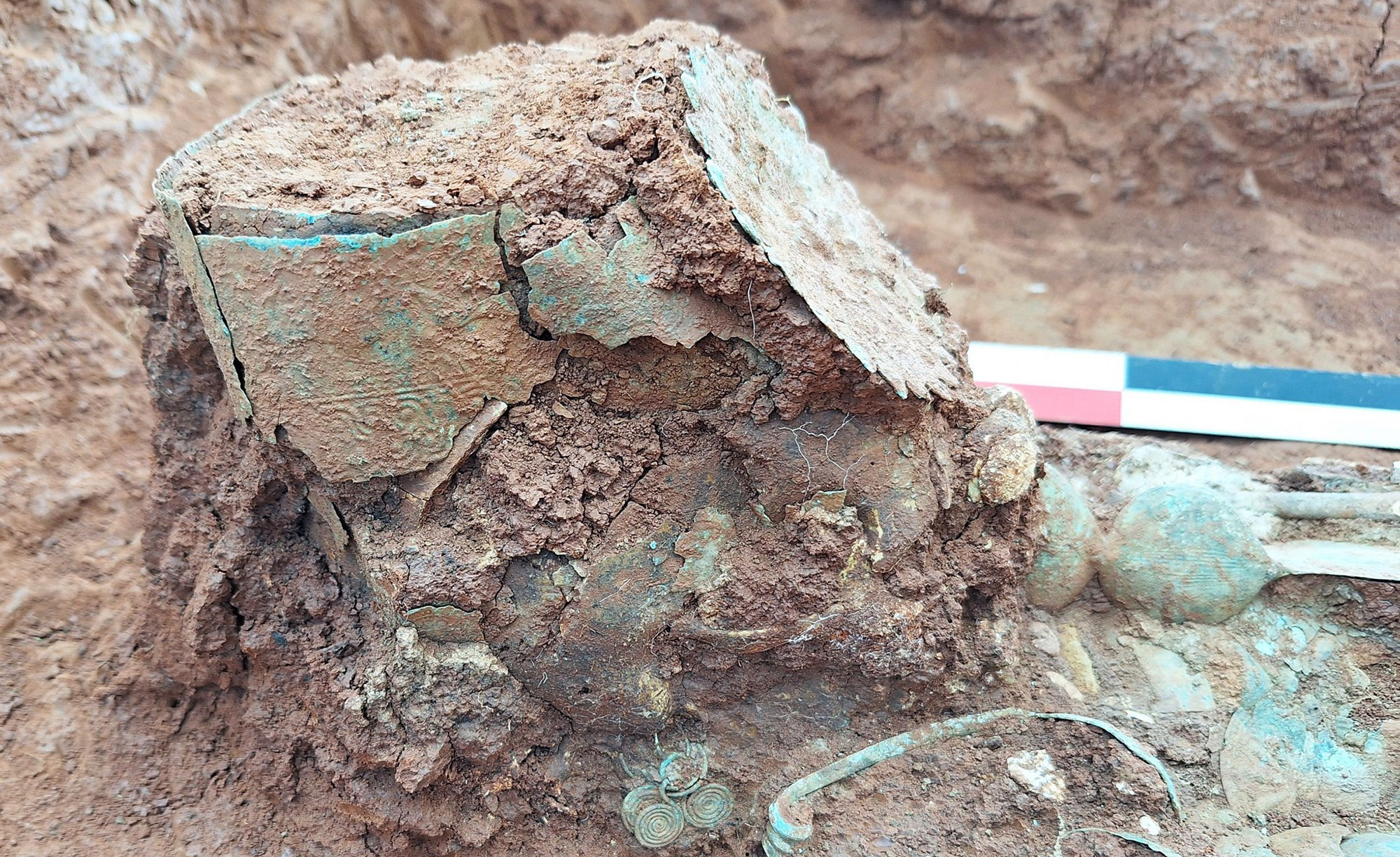
ATHENS, GREECE—Traces of a fortified settlement and a cemetery containing about 40 graves dating to approximately 800 to 323 B.C. are being investigated in east-central Greece by Maria Papageorgiou of the Ephorate of Antiquities of Phthiotis and Evrytania and her colleagues, Live Science reports. One of the burials contained the remains of a woman who died between the ages of 20 and 30 in the second half of the seventh century B.C., a time known for social and political changes before the founding of Athenian democracy in the early sixth century B.C. Dubbed “The Lady with the Inverted Diadem,” she was interred with a bronze crown that had been placed upside down on her head, perhaps to mark the end of her reign through resignation or removal. The front of this diadem is decorated with a large rosette resembling the sun, while the back features embossed images of facing pairs of male and female lions. Other items in the grave include buckles, a bronze pin with geometric-style horses, a bronze necklace with a vase-shaped amulet, bone and ivory beads, copper earrings, a bracelet, and spiral rings that were found on each of the noblewoman’s fingers. To read about a Mycenaean chamber tomb uncovered in central Greece, go to "A Monumental Find."