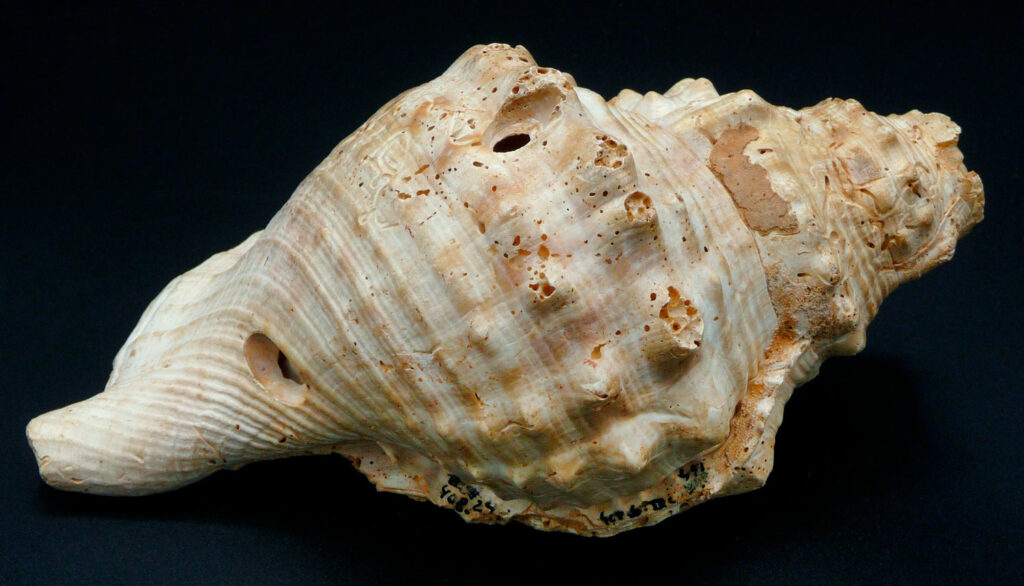
CATALONIA, SPAIN—The Guardian reports that conch shells unearthed at Neolithic sites in northeastern Spain may have been used to communicate over long distances and played as musical instruments some 6,000 years ago. Archaeologists Miquel López-Garcia and Margarita Díaz-Andreu of the University of Barcelona said that the 12 large Charonia lampas shells they examined had been collected after the sea snails had died, and were therefore not used for food. Removal of the shells’ pointed tip suggests that they had been used as trumpets, the researchers added. López-Garcia, who is also a professional trumpet player, was able to produce a “really powerful, stable tone” from eight of the ancient shells. “It’s quite amazing that you get that very recognizable tone from a simple instrument that is just a very slightly modified animal body,” he said. “I think the closest instrument today in terms of tone is the French horn.” He determined that he could shape the notes and tone produced by the instruments by putting a hand into the shells’ openings and blowing with a 't' or an 'r' sound. Such sounds may have been used by members of Neolithic communities to communicate with other settlements, people farming in surrounding fields, or workers in different galleries in the greenstone mines where six of the shells were discovered, López-Garcia and Díaz-Andreu said. Read the original scholarly article about this research in Antiquity. To read about an 18,000-year-old instrument made out of a sea snail shell, go to "Artifact: Magdalenian Wind Instrument."