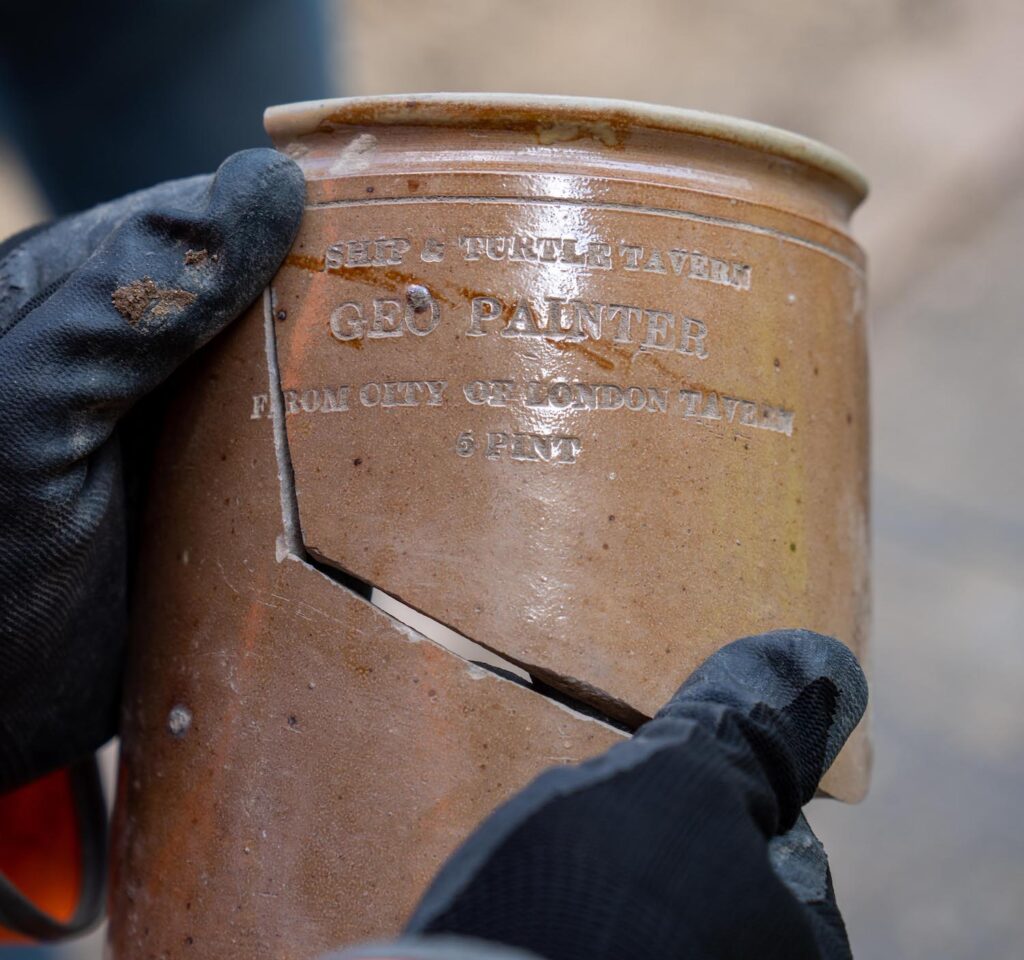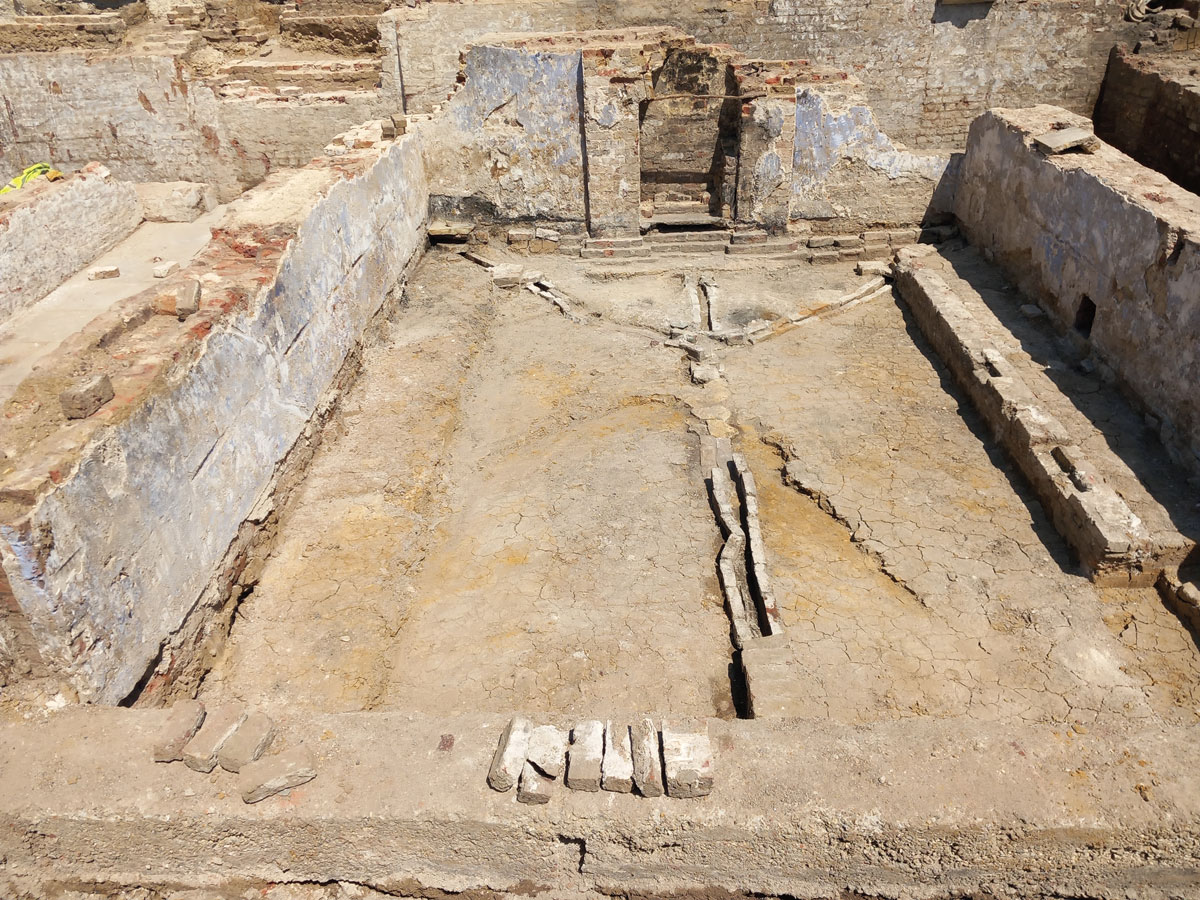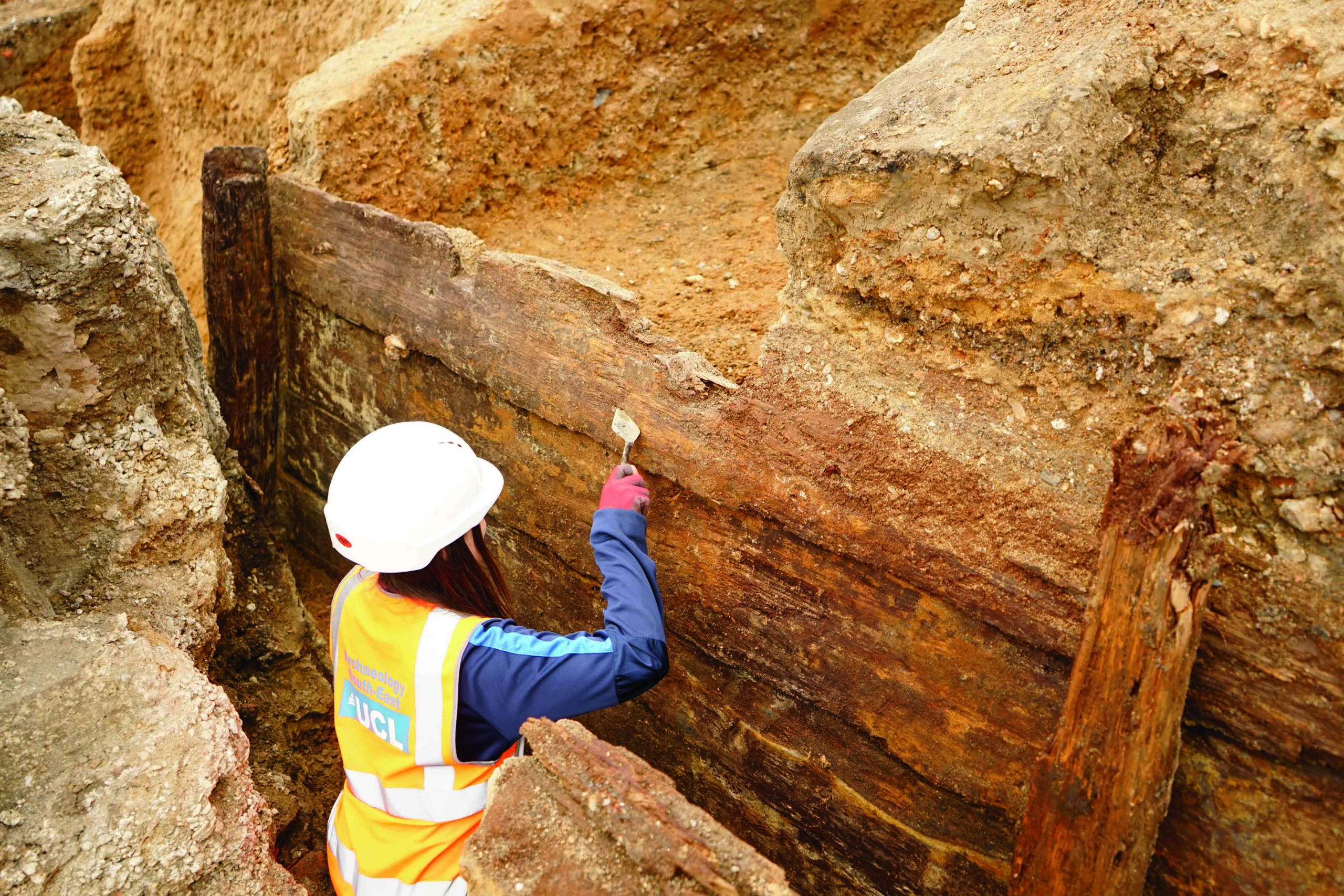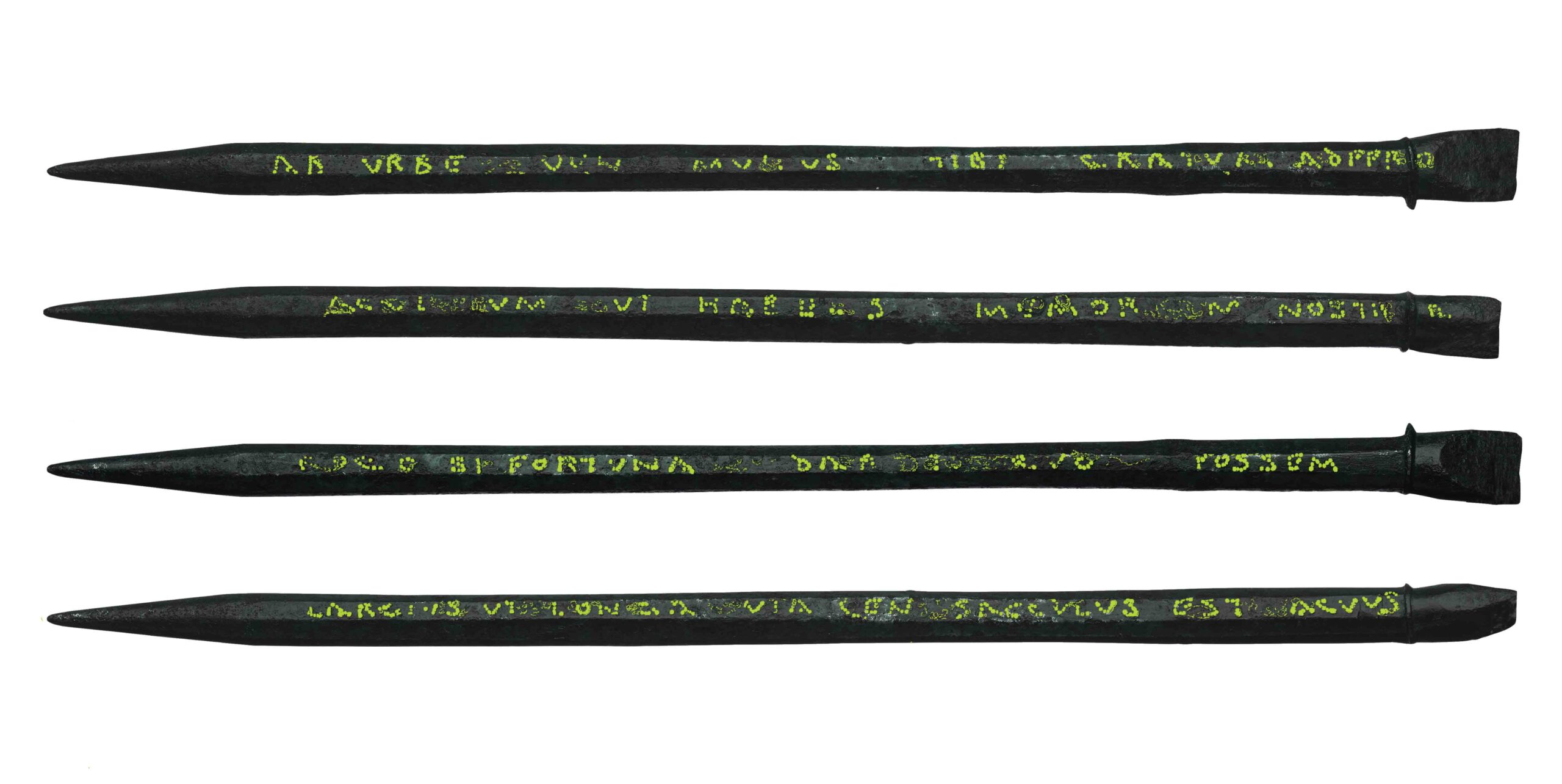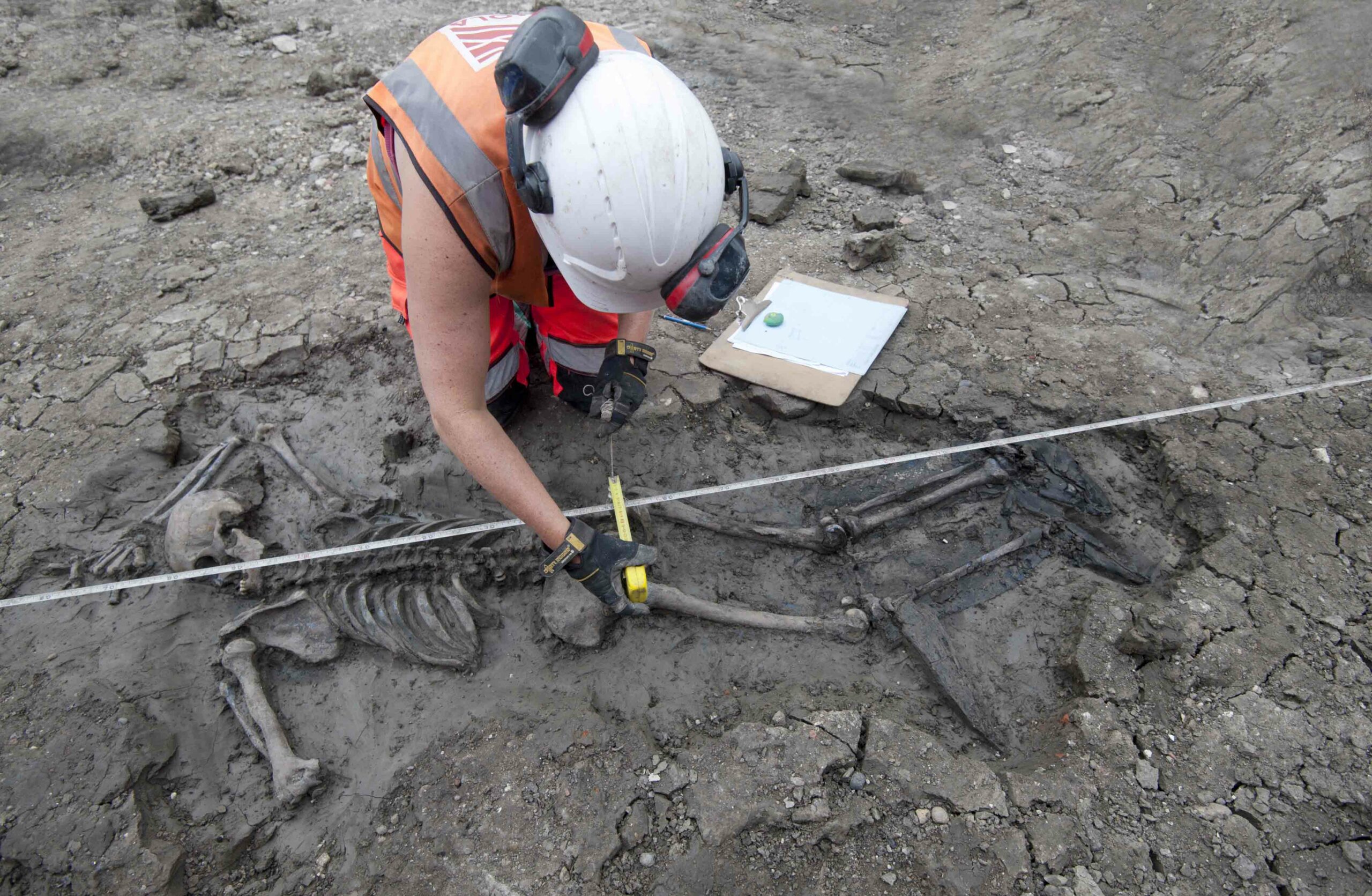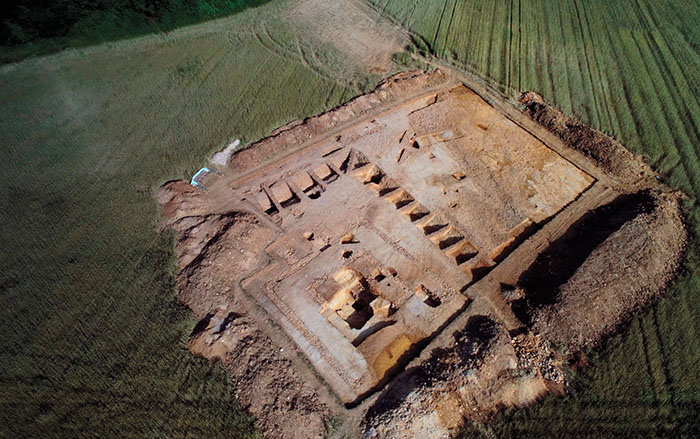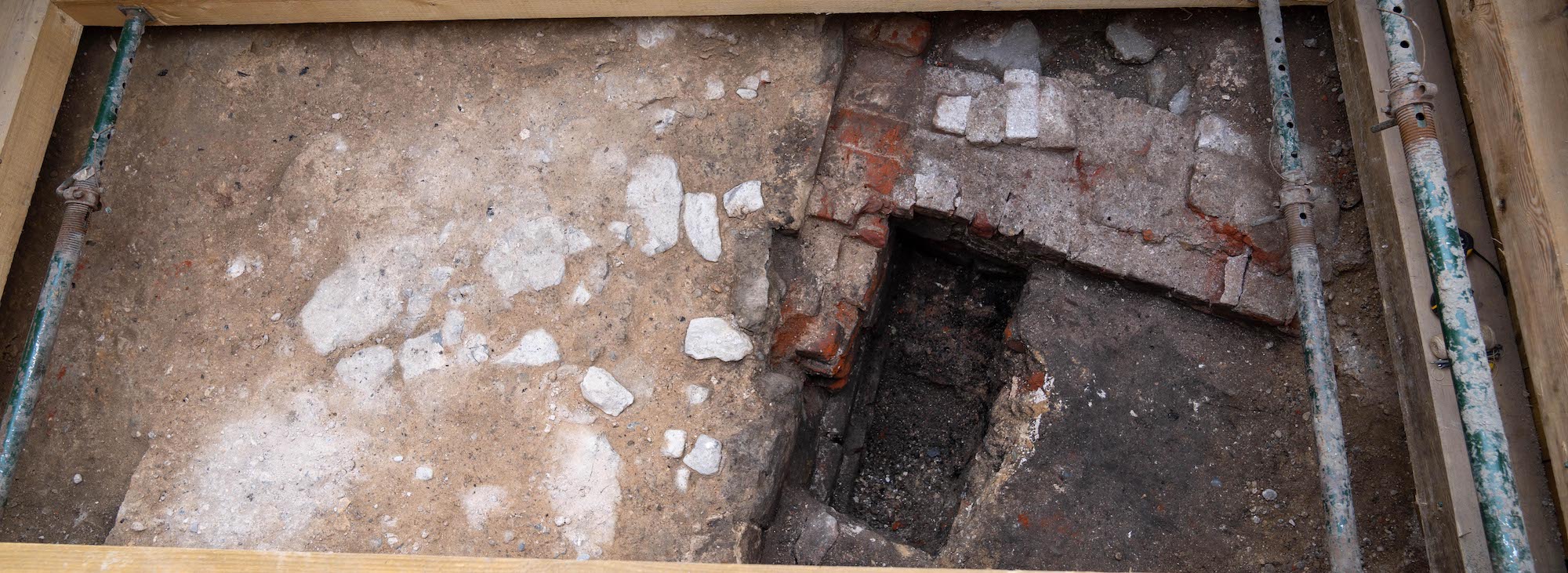

LONDON, ENGLAND—Famous today for housing England’s Houses of Parliament, archaeological excavations beneath London’s Palace of Westminster have revealed over 6,000 years of the site’s history, according to statement released by the Houses of Parliament Restoration and Renewal Delivery Authority. The work, which is part of a preliminary investigation in advance of planned renovations, is being carried out by the Museum of London Archaeology. The oldest material, consisting of 60 flint flakes, dates to around 4300 b.c., when the area was part of Thorney Island, a spot where late Mesolithic and early Neolithic communities fished, hunted, and gathered food. Other notable finds include a Roman altar fragment, a medieval leather boot, and a five-pint beer jug inscribed with the words “Geo Painter,” which can be linked to George Painter, a tavern keeper of the historic Ship and Turtle Tavern in London’s Leadenhall area. The team also surprisingly uncovered parts of the medieval Lesser Hall, also known as White Hall, which was thought to have been destroyed by the Great Fire of 1834. The structure dates to 1167 and once served as a royal dining space. “The initial finds from archaeological investigations confirm the richness of Westminster as a site. They testify to the variety of human experience on this site,” said Historic England’s David Brock. “The locating of the Lesser Hall walls is particularly exciting.” To read about 700 years of material uncovered during renovations of another famed London landmark, go to "Westminster Abbey's Hidden History."