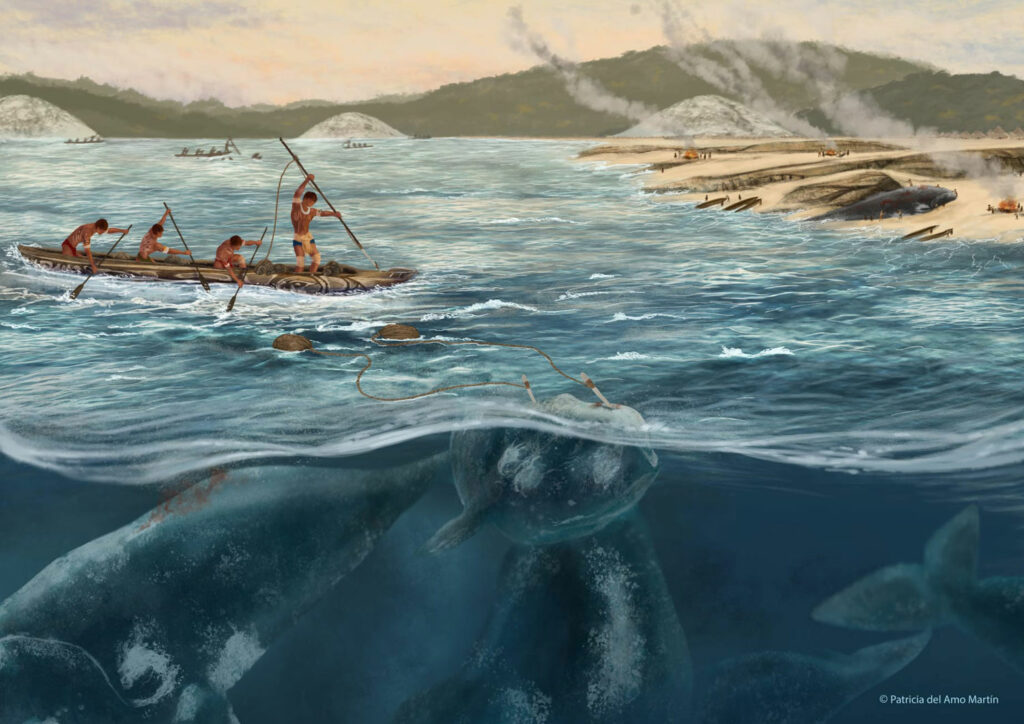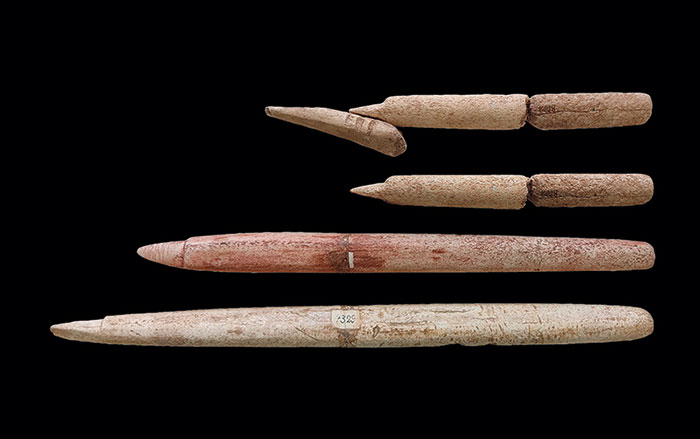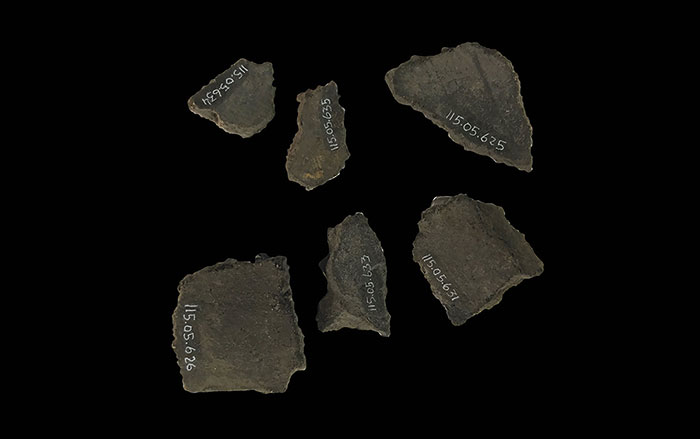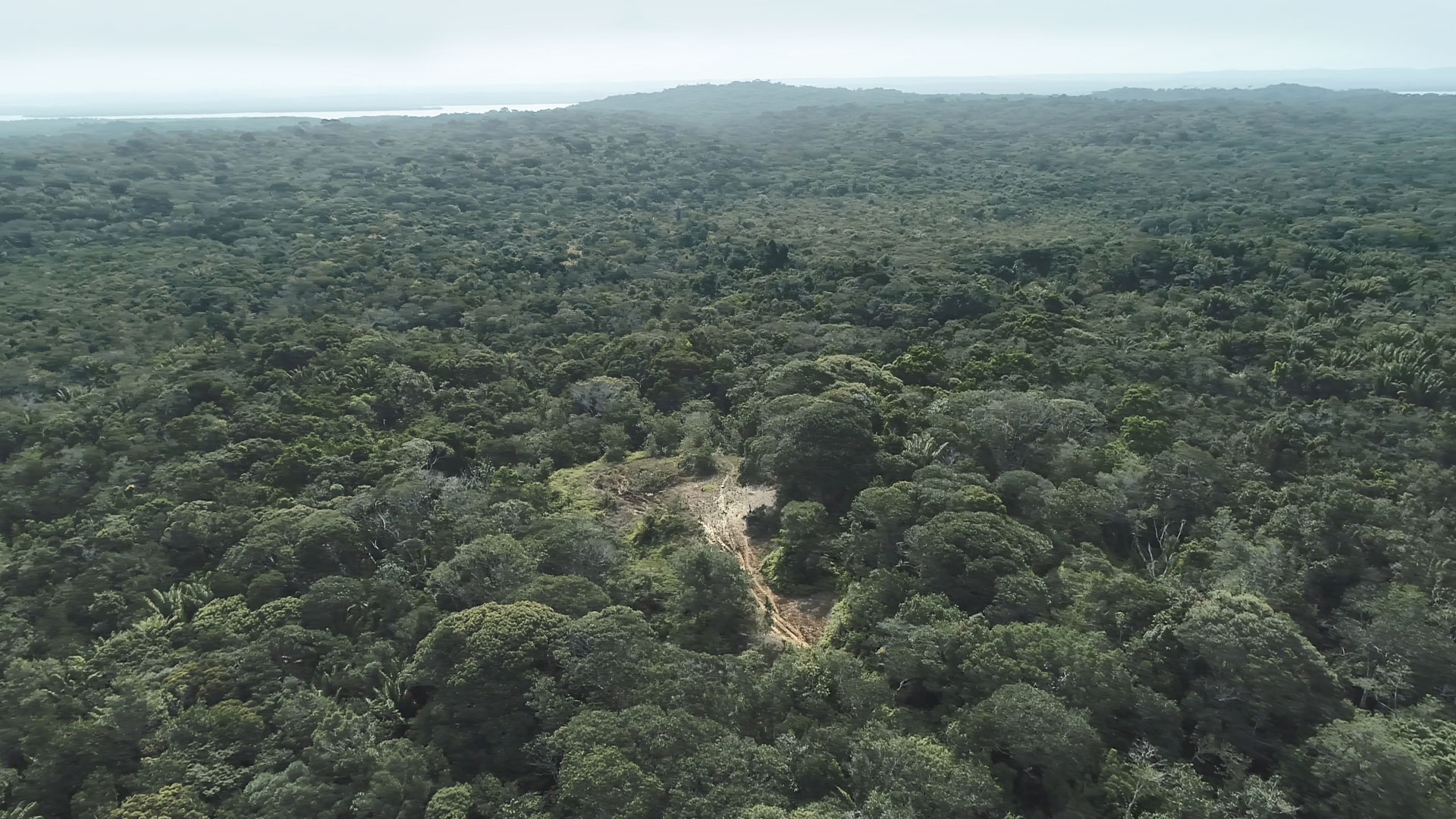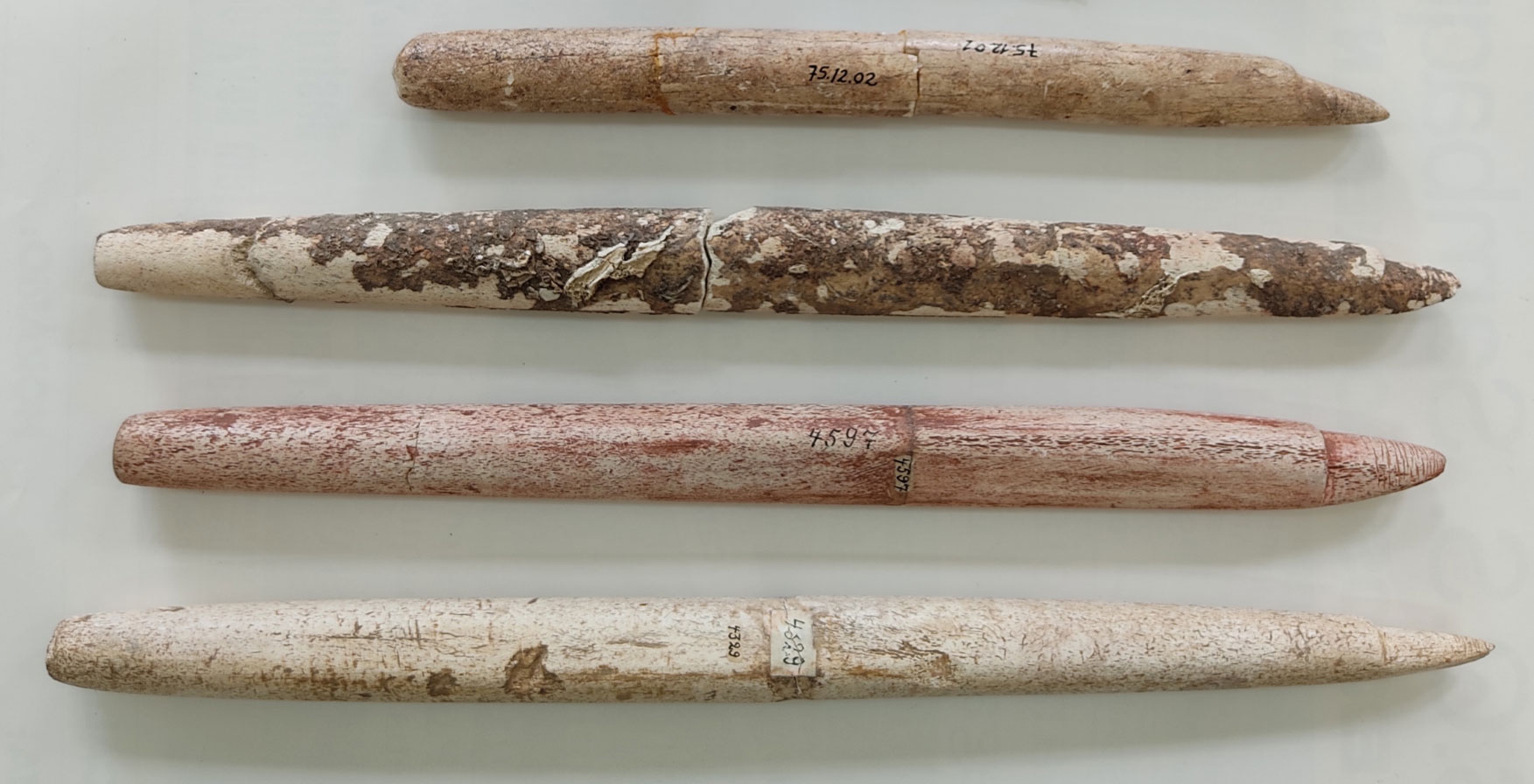
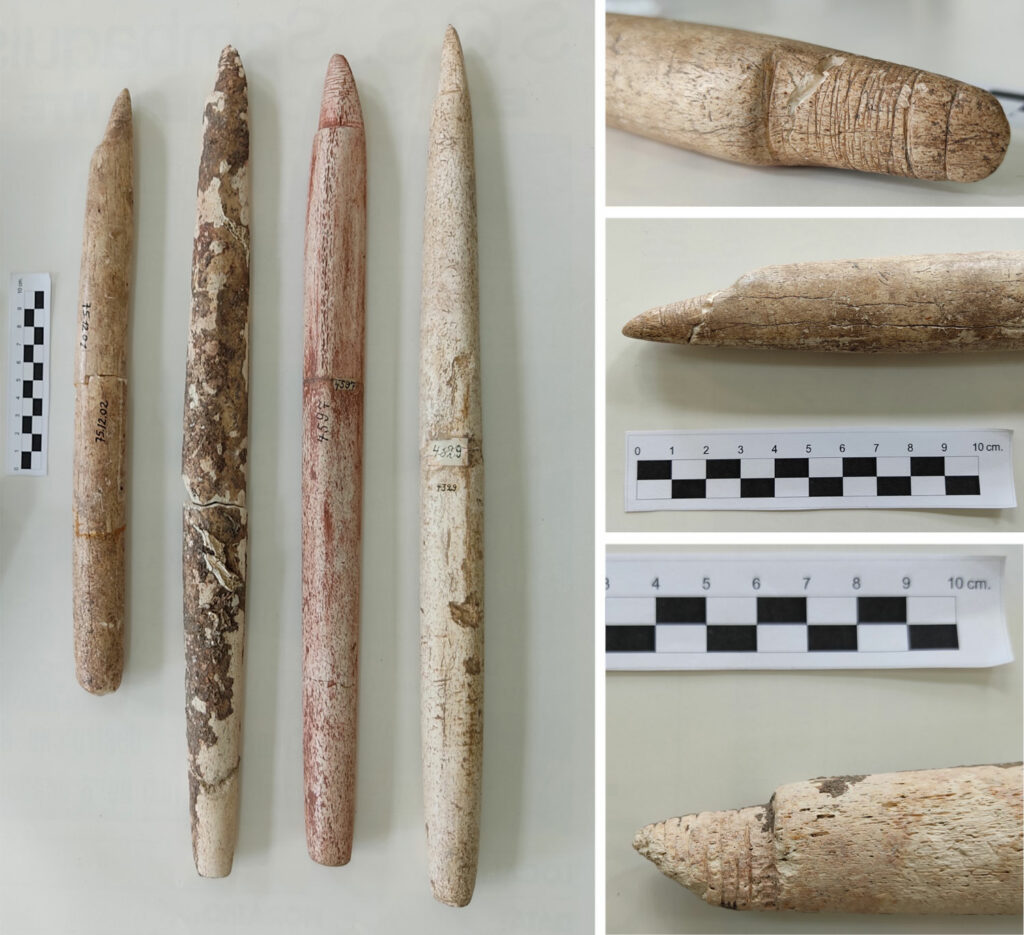
BARCELONA, SPAIN—According to a statement released by the Autonomous University of Barcelona, people living some 5,000 years ago in the Babitonga Bay area on the southern coast of Brazil hunted whales. An international team of researchers led by Krista McGrath and André Colonese of the Autonomous University of Barcelona analyzed whale bones and bone tools recovered from sambaquis, or shell mounds, in Babitonga Bay. These artifacts are now housed at the Archaeological Museum of Sambaqui of Joinville. The researchers identified the remains of southern right whales, humpback whales, blue whales, sei whales, sperm whales, and dolphins in the collection. Many of these bones showed signs of butchering. McGrath, Colonese, and their colleagues also identified large whalebone harpoons, which indicates that the cetaceans were hunted and not scavenged. “The data reveals that these communities had the knowledge, tools, and specialized strategies to hunt large whales thousands of years earlier than we had previously assumed,” McGrath said. Read the original scholarly article about this research in Nature Communications. To read about the wreck of a nineteenth-century whaling ship identified in the Gulf of Mexico, go to "1,000 Fathoms Down."